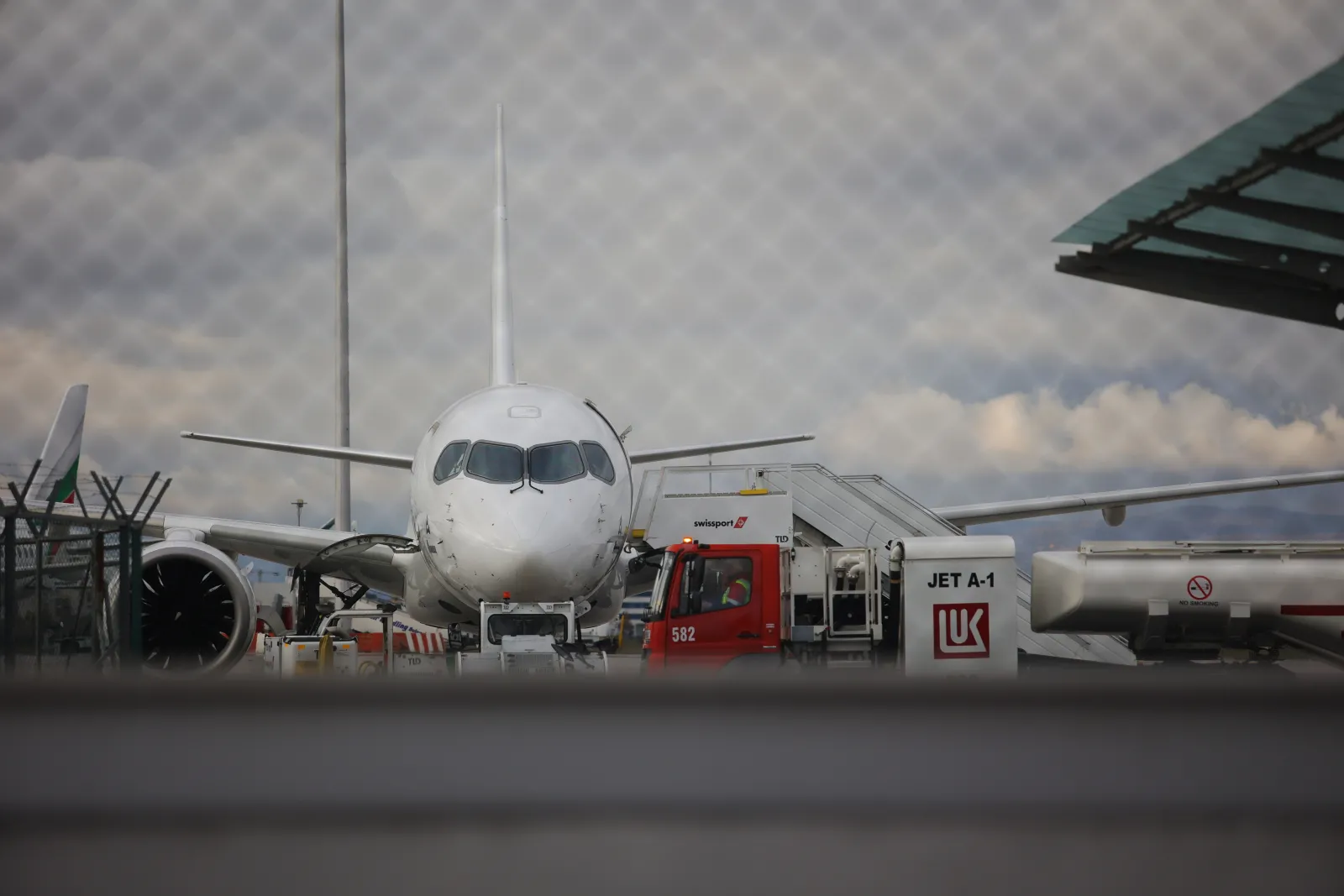
Last Tuesday, Europe began suffering a wave of bomb threats against commercial passenger airlines, causing delays, confusion and disruption across the continent. This disruption continued on Thursday and Friday. The bomb threats targeted over fifty separate flights, to or from Spain, Italy, Poland, Finland, the United Kingdom and several different countries.
No explosives were found during these security incidents. All passengers, crew members and aircraft remained entirely unharmed. Nonetheless, the Europe-wide turmoil was considerable, as were the attendant costs and delays incurred to ensure safety.
Hardest to calculate is the psychological impact of uncertainty and the possible loss of confidence in air transportation or travel generally. Airline hijackings, historic bombings like Pan Am 103 in 1988, not to mention 9/11, may have seemed distant memories, but memories quickly revived by last week events.
Ongoing Investigations Into Coordinated Disruption
European and national authorities are conducting extensive investigations into the security breaches. On Friday, Ireland faced several bomb threats to media outlets, including its state radio and television broadcaster, RTE. No real bombs were found, but the Irish government nonetheless said publicly that it seems likely that this is a coordinated campaign of disruption. Since Ireland is the current president of the European Council, it is the locus for considerable high-level European Union activity at the moment.
These provocations are serious. So far, there is no publicly available evidence for which state or terrorist actor was responsible, or for what the objective was. But Russia comes immediately to mind as a potential perpetrator.
Context Of Russian And Iranian Harassment
Since the Kremlin 2014 and 2022 invasions of Ukraine, nearby countries such as Poland, Romania and the Baltics have been subjected to continuing harassment through airplane, missile and drone overflights, not to mention cyberattacks. Moscow has repeatedly denied all such allegations, instead attributing at least some of the overflights and hacks to Ukraine.
In August, explosives-laden drones attacked planes at the Leipzig, Germany commercial airport, which is also used by NATO for certain purposes. Berlin blamed Moscow, and closed Russia consulate in Bonn in response. Russia argued that Germany had invented the incident. Moscow has also repeatedly denied involvement in a series of hacks across Europe in recent weeks against the cold-food supply-chain, sabotaging facilities and ruining considerable quantities of frozen or thawing food.
Another potential perpetrator is Iran, perhaps acting on its own, perhaps coordinating with Russia. Iran has threatened retaliation well outside the Gulf region if the United States and Israel resume significant strikes against it. Tehran terrorist reach in Europe and America is already well known, and its joint interests with Moscow are a strong incentive to work together. On Monday, France blamed Iran for the attacks on the cold-storage chain.
Security Deficits And Diplomatic Approaches
Whether the West is facing Russian hybrid warfare, Iranian terrorism, or both, its collective response has been wholly inadequate. First, the bomb threats and other disruptions are being conducted in the seam between NATO alliance defense responsibilities and law-enforcement authorities which Europeans still largely retain in national hands. The European Union murky authorities only further confuse the picture.
Second, the Trump administration focus on United States elections has until recently distracted it from foreign matters. This significant and growing pattern of threats, hacks and disruptions is too extensive to ignore or brush aside any longer, even if it only represents probing or testing by Russia.
Unfortunately, there is an even graver problem. In his unending quest for a Nobel Peace Prize, Trump continues pursuing a Russia-Ukraine peace deal. During the 2024 campaign, he said he could solve the war in 24 hours, even before he took office. Always selling, Trump said last week that it is going to involve more than Ukraine, and I could even say it might involve all of Europe. It is going to be a big, beautiful agreement, and everyone is going to be thrilled. Details on this thrilling development remain scarce and closely held.
Challenges In Reaching Regional Agreements
The idea that broad changes to European security arrangements are possible amid ongoing, accelerating hybrid warfare by Russia against the West is dubious at best. Instead, today threats highlight the fallacy underlying Trump entire negotiating approach, whether in Ukraine, Gaza or Iran. It centers on investment opportunities that will supposedly arise once peace is achieved, but without troubling unnecessarily with the messy of problem of how to achieve that peace.
Combatants in every known conflict doubtless hope for massive aid and investment after hostilities end, to rebuild their respective economies. That incentive is universal. The hard point, though, is that until the underlying issues giving rise to the conflict in the first place are resolved, there aren't going to be any investment deals.
Trump and his negotiators disdain the idea of learning more about the conflicts and the interests at stake, such as independence and freedom for Ukraine, peace and security for Israel, ending the Iranian terrorist and nuclear threats, because they view this as a form of getting bogged down. Good luck with that approach.
Urgent Need For Strategic Response
Airplane or media bombing threats, food-chain hacks and the like may seem mundane. But if the West fails to deal seriously with the here and now, the consequences will be grave. The United States National Security Council and NATO should be addressing these issues urgently, not considering oil deals with Russia.
John Bolton was national security adviser to President Trump from 2018 to 2019 and United States ambassador to the United Nations from 2005 to 2006. He held senior State Department posts at times between 1981 and 2005.