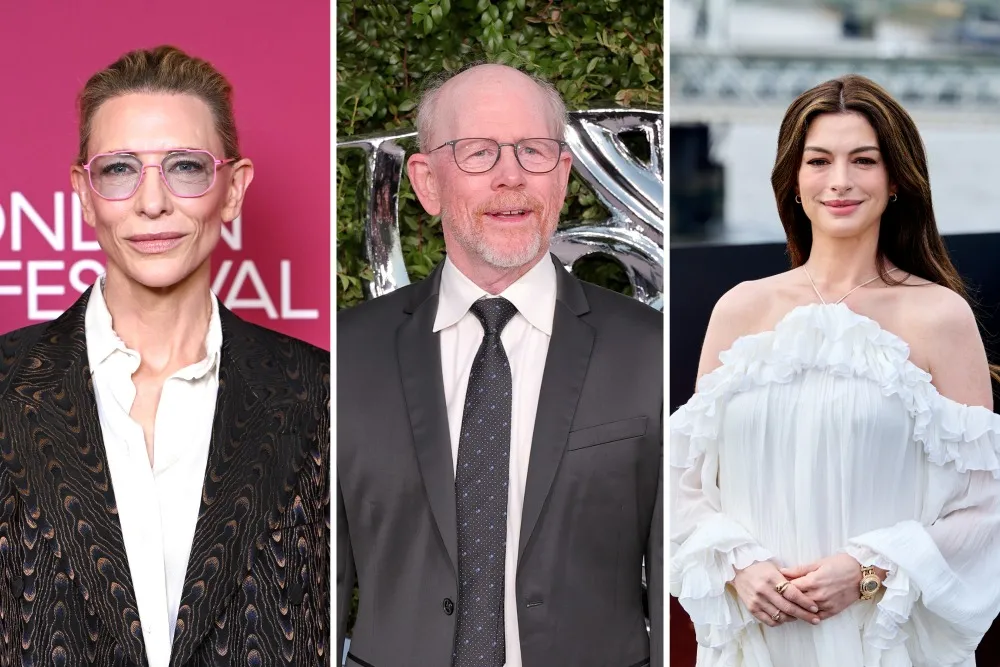
The Human Consent Foundation, a nonprofit backed by Cate Blanchett that aims to safeguard individuals' likenesses from AI scraping, teamed with a host of Hollywood organizations to submit an amicus brief in the New York Times' case against OpenAI and Microsoft. The filing argues that the defendants' claim of an absent licensing market is inaccurate because the creative sector already possesses a functional infrastructure for clearing rights at scale.
The 31-page brief was lodged in the Southern District of New York late Friday. Signatories included the Creative Artists Agency, the Music Artists Coalition, the National Association of Voice Actors, Writer, Inc, and the Creative Coalition on AI. An appendix listed supporting stars such as Anne Hathaway, Emma Thompson, Dan Levy, Ron Howard, Madonna, Olivia Wilde and others.
"Defendants have argued that licensing creative works for AI training is cost-prohibitive," the brief stated. "Defendants also claim there is no settled means of valuing training data. The facts demonstrate otherwise. The creative industries already have in place a proven infrastructure and workflows to clear rights for dispersed works at scale and cost-effectively."
In a comment, HCF co-founder and CEO Nikki Hexum said the submission was meant to illustrate "how the creative industry actually works and acknowledge the solutions that have been built and are continuing to develop for this new digital era."
Hexum added, "Our goal is to ensure that as the market for AI data licensing grows, the humans who create the value in that market are protected and have a meaningful choice. We are not starting from scratch. There is already a functioning market and infrastructure for licensing creative work. We just need to ensure that new AI technology respects those boundaries and choices, including the choice not to participate."
The brief follows a filing by SAG-AFTRA, the Writers Guild of America and the American Federation of Musicians, which urged the court that the defendants' fair-use argument would undermine union-negotiated terms.
"It would harm not just the copyright owners, but the people who create the work," that brief read.
More to come...