Helena Třeštíková, honoured at the Ji.hlava Documentary Film Festival, said Bára Basiková is a "truly fascinating singer" as she promotes her new 50-year time-lapse documentary "Bára - Diary of a Rockstar."
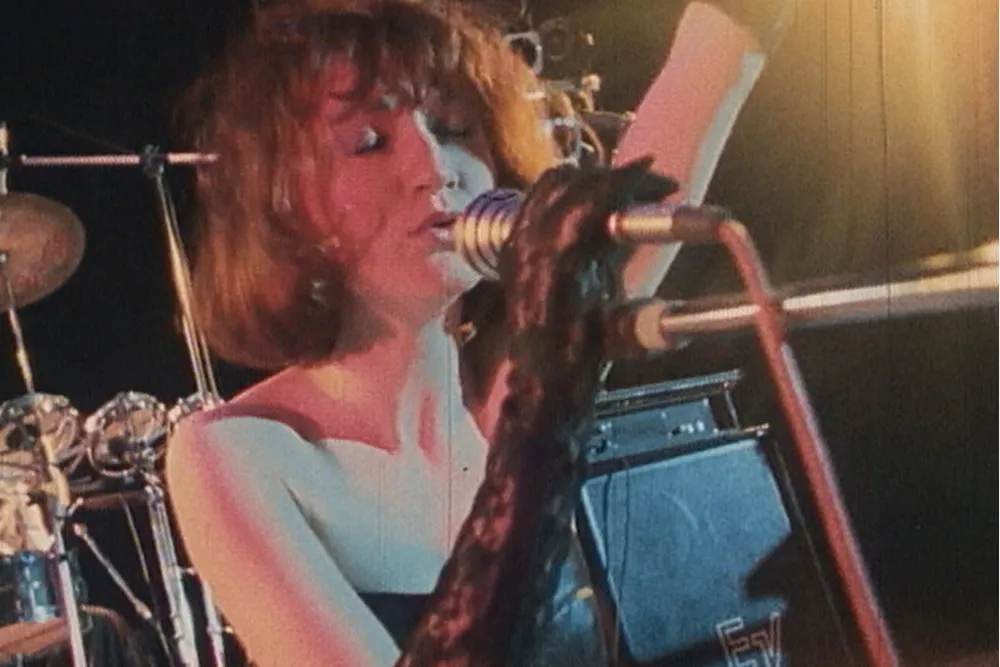
The film follows Basiková's early work with rock groups Precedens and Stromboli, which Třeštíková described as "groups that carried a subtle anti-regime sentiment and had a significant impact" before the Velvet Revolution.
After 1989 the singer turned to musical theatre, a genre banned under communism, and delivered a "dazzling" performance in "Jesus Christ Superstar," according to the director.
Třeštíková noted that Basiková defies easy musical categorisation and was the subject of her post-Revolution Czech TV documentary series.
"I began filming Bára in 1996, as part of a series of 10 time-lapse documentaries - filmed over the course of five years - about various women in different professions. At the time, Bára caught my attention due to her unconventional family situation: Her husband stayed home to look after the children, while Bára worked intensively and supported the entire family," Třeštíková explained.
She added that such an arrangement was "highly unusual" in the Czech Republic then. After five years the film "Bára B. - Live" aired on television, and the director kept regular contact with the singer.
Later, collaborating with the production company Negativ, Třeštíková continued to film new chapters of Basiková's life.
Throughout the decades, the director observed that Basiková has always been "completely honest and authentic," never presenting a different persona on camera.
"She spoke with total openness about all her joys and her struggles - and those struggles were quite significant: Over those 30 years, she went through three marriages and three divorces," Třeštíková said.
Archival material allowed the documentary's timeline to stretch another 20 years.
According to Třeštíková, openness is a defining trait of Basiková, contrasting with many female singers who carefully craft a media image.
The vast amount of footage required a three-part broadcast cut; the TV version includes longer key scenes and extra activities, such as Basiková's book that became a stage play and her support for President Petr Pavel during the presidential election.
Třeštíková has documented other women facing addiction, poverty and loneliness, but she said Basiková's public scrutiny set her apart, though her private challenges mirrored those of many women.
Audiences who have seen "Bára: Diary of a Rockstar" responded positively to the blend of personal and professional crises, confirming the director's early-stage approach.
The filmmaker emphasized that she aimed to tell the story of a woman and mother who happened to be a rock star, rather than create a conventional rockumentary.
She noted that her time-lapse method, used for over 40 years, captures major life events off-screen while revealing intimate moments on camera.
"I have been working with this time-lapse documentary approach for over 40 years; it is the fundamental method of my work. It bridges the gap between documentary filmmaking and the stories that life itself writes - that is what I find so compelling and inspiring," Třeštíková concluded.