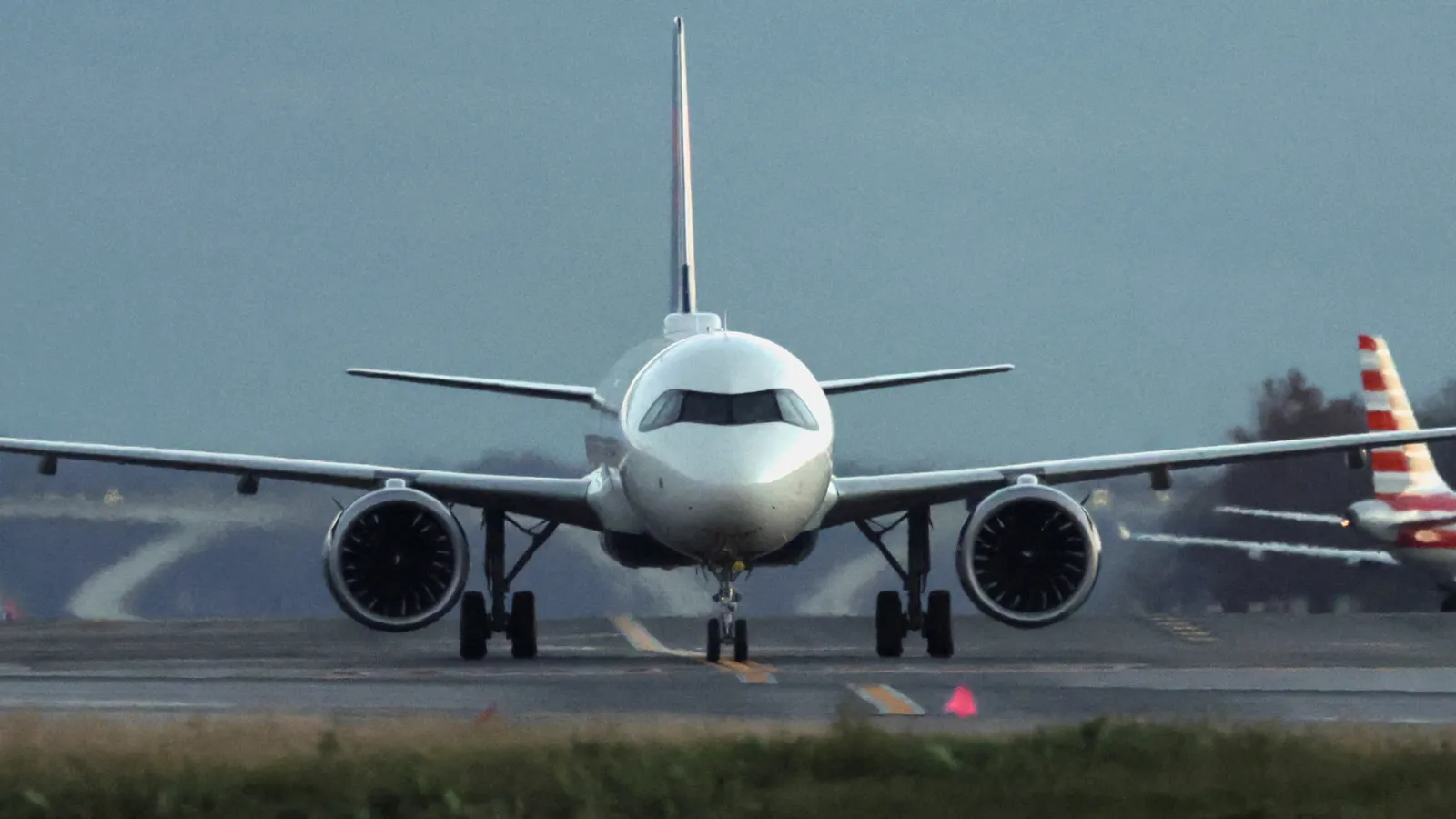
FAA Ground Stop Disrupts Flights Nationwide
Thousands of passengers have been thrown into chaos after the Federal Aviation Administration ordered a nationwide ground stop for only the second time since the 9/11 terror attacks.
The disruption came after a communications issue affected all 22 of the country's regional air traffic control centers on Friday afternoon.
Transportation Secretary Sean Duffy confirmed that FAA technicians were investigating the issue, with travelers facing uncertainty over when flights will resume.
How the FAA Ground Stop Compares to Past Incidents
The last nationwide ground stop occurred in January 2023 following a major FAA computer failure, while the previous shutdown came in the wake of the September 11, 2001, terrorist attacks.
Passengers caught up in the chaos are being urged to check their flight status directly through their airline's website or app, while the FAA's National Airspace System Status page also provides updates.
Travelers should keep airline notifications switched on and monitor emails and texts for changes to departure times, cancellations and alternative flight arrangements.
Passenger Rights to Alternative Travel and Refunds
Those whose flights are canceled or significantly delayed should act quickly to secure alternative travel, with airlines commonly offering free rebooking on the next available service.
However, passengers are also protected under federal law, including the FAA Reauthorization Act of 2024, which requires airlines to issue refunds in certain circumstances.
Under the rules, travelers are entitled to a full refund if their flight is canceled and they choose not to travel or accept alternative transportation, travel credits or vouchers.
Claiming a Cash Refund for Delayed Flights
Passengers whose flights are canceled can claim a full cash refund if they turn down alternative travel, while those facing delays of at least three hours domestically or six hours internationally may also qualify.
Passengers can also claim their money back if their flight is significantly delayed or changed and they decide against continuing their journey.
For domestic flights, a significant delay includes arriving at the destination at least three hours later than originally scheduled, while the threshold rises to six hours for international flights.
Timeline and Methods for Airline Refunds
Airlines must issue refunds automatically when they are owed, with credit card payments generally refunded within seven business days and other payment methods within 20 calendar days.
Passengers are entitled to refunds to their original form of payment rather than being forced to accept airline credits or travel vouchers.
However, travelers who accept a rebooked flight and complete their trip are generally not entitled to a refund of their original ticket simply because of the delay.
Hotel Stays and Expenses During Air Traffic Restrictions
Airlines are also not generally required to cover hotel stays, meals or other expenses when disruptions are caused by circumstances outside their control, including FAA air traffic restrictions.
Passengers facing overnight delays should therefore check their travel insurance coverage, consider booking refundable accommodations and keep receipts for any further expenses.
Tarmac Delay Rules and Passenger Protections
Those already sitting on an aircraft have separate protections under federal tarmac delay regulations, with airlines generally required to provide an opportunity to get off before a delay reaches three hours on domestic flights or four hours for international trips.
Exceptions apply when safety, security or air traffic control concerns prevent passengers from safely leaving the plane.
Airlines must also provide drinking water and a snack within two hours of a tarmac delay beginning, unless safety or security considerations prevent service.
Passengers who choose to get off a plane during a prolonged delay should be aware that the airline is not required to allow them back on and the flight could depart without them.
Risks of Relying on Revised Departure Times
Meanwhile, flyers are also urged to think twice before relying solely on updated departure times.
That is because airlines can resolve delays unexpectedly, meaning a flight could depart earlier than its newly advertised time.
Passengers who arrive at the airport based on a delayed departure time could therefore risk missing their flight.
Some airlines also warn in their conditions of carriage that they are not responsible when passengers miss flights that depart earlier than their revised departure times.
Spirit Airlines, for example, advises travelers to remain near their departure gate during delays in case flights leave earlier than expected.
Passengers should therefore continue monitoring their flight status and airport announcements, even after receiving a delay notification.
Even after the FAA lifts a ground stop, travelers could face further disruption as airlines work to reposition aircraft, arrange crews and clear a backlog of delayed departures.
Background on the Federal Aviation Administration
The Federal Aviation Administration is the national aviation authority of the United States, operating within the Department of Transportation to regulate and oversee all aspects of civil aviation in the country. Established originally as the Federal Aviation Agency in 1958, the agency took on its current name in 1967 when it became part of the newly created Department of Transportation. Its primary responsibilities include the regulation of civil aviation to promote safety, encouraging and developing civil aeronautics, developing and operating a common system of air traffic control and navigation for both civil and military aircraft, and researching and developing the National Airspace System. The United States air traffic control network handles tens of thousands of flights every single day, managing complex corridors of commercial, cargo, military, and private aircraft across millions of square miles of airspace. Regional air traffic control centers coordinate high altitude en-route traffic, while airport traffic control towers manage takeoffs and landings. Maintaining continuous, secure communication between pilots and ground controllers is vital for preventing mid-air collisions and maintaining orderly traffic flow across the entire continental United States and surrounding oceanic regions.
Understanding Air Traffic Control Communications
Air traffic control communications rely on a vast network of radar systems, radio frequencies, landlines, and digital data links connecting regional centers, local towers, and airline operations desks. When technical failures strike these complex communication architectures, safety protocols require the implementation of temporary pauses in departures to prevent aircraft from entering airspace where tracking and radio contact may be compromised. Regional centers manage distinct geographical sectors, passing handoffs of aircraft from one controller to another as flights traverse the country. A widespread communications breakdown affecting multiple regional centers simultaneously forces aviation regulators to halt departures nationwide until engineers can isolate the root cause, run diagnostic tests, and verify system integrity. These rare nationwide ground stops highlight the extreme vulnerability of critical national transportation infrastructure to unexpected technical glitches, software bugs, or hardware malfunctions.
Federal Regulations on Passenger Compensation
Federal regulations governing airline passenger rights have evolved significantly over recent years, driven by rulemakings from the Department of Transportation and legislative mandates enacted by Congress. The FAA Reauthorization Act of 2024 strengthened consumer protections by codifying clear standards for automatic cash refunds when airlines cancel flights or cause significant schedule disruptions. Prior to these codifications, travelers often had to navigate complex customer service channels, dispute denied claims, or accept restrictive travel vouchers instead of getting cash back. Under current federal guidelines, carriers must process refunds promptly using the passenger's original method of payment, eliminating administrative hurdles and arbitrary airline policies. These rules apply specifically to cancellations and significant delays within the control of the airline, while weather events and air traffic control mandates issued directly by government authorities fall under distinct legal frameworks regarding carrier liability for secondary expenses like meals and lodging.
What Happens Next for Stranded Travelers
According to the original directives, travelers must monitor ongoing updates from their respective airlines and the FAA as technicians work to restore full operational capability across all affected regional facilities. Once the ground stop is officially lifted, airlines will initiate the complex recovery process of repositioning aircraft that were stranded at outstations, rescheduling flight crews whose duty hours were disrupted, and processing thousands of queued departures. Passengers currently holding tickets for impacted itineraries should maintain close contact with airline apps, verify updated departure schedules while remaining vigilant near boarding gates, and use statutory refund provisions if they ultimately choose to abandon their travel plans entirely.