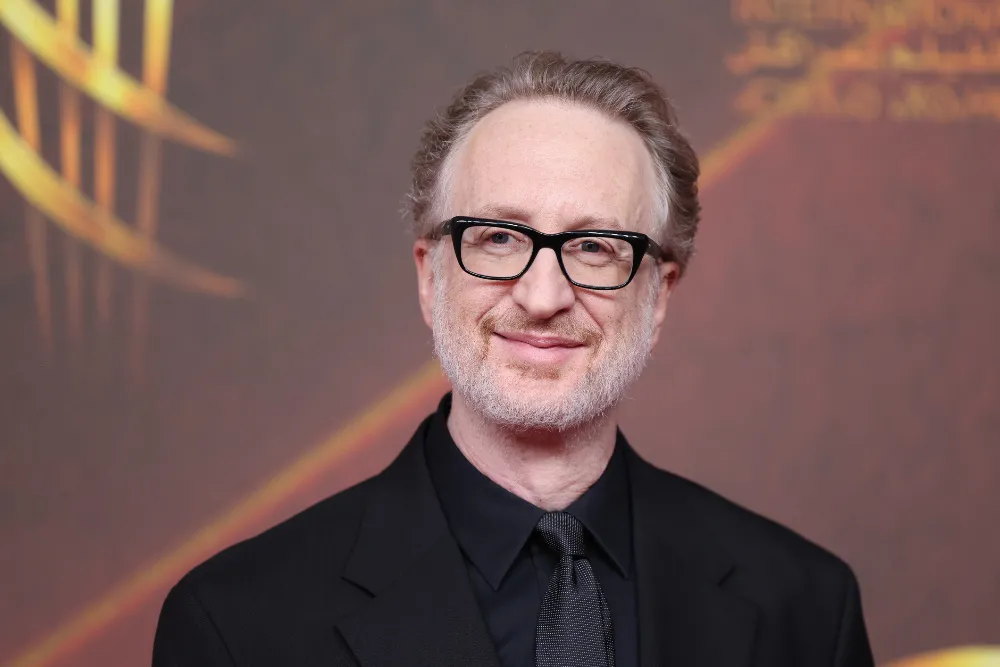
Paper Tiger director James Gray has launched six of his nine feature films from the starry heights of the Cannes Film Festival, most recently contending for the Palme d'Or this year with his New York-set crime drama. Just don't expect to see him back on the Croisette anytime soon. Cannes sucks. Don't worry, I'm not going back to Cannes, the director quipped Tuesday at the Marrakech Film Festival. I've learned my lesson. Cannes is not for me. I am not for Cannes.
Appearing in conversation with Venice Film Festival director Alberto Barbera, the Queens-born filmmaker was speaking to a full house that included Artificial director Luca Guadagnino and screen icon and Marrakech tribute award recipient Jeff Goldblum. Over the course of 90 freewheeling minutes, Gray delighted the audience with tales from his New York upbringing, opening up about his tussles with the Hollywood studios that refused to release his movies and offering his take on the often chilly critical responses to many of his films, beginning with his audacious debut Little Odessa, which won a Silver Lion in Venice in 1994, when the director was just 25 years old.
That's the history of movies. It takes 10 years for you to understand if it's anything at all. Right, Luca? Isn't that true? Nobody knows anything, he said. They really don't know what the fuck they're talking about. At the tail end of an audience Q and A, Gray was asked about the role that festival competitions play in the movie industry today. Though his tongue was partly planted in cheek as he trashed the prestigious French fest, where he's never won an award, the director didn't mince words as he ripped into the idiotic concept of pitting movies against each other.
I think the idea of the competition is terrible. I took the films to Cannes because the distributor wants it. They want that dumb logo on the film, but the idea is really dumb. We know that it's dumb, he said. Euripides felt very bad because he wasn't winning a lot of prizes. It's true, by the way. He wound up living his life in a cave out of shame for not winning the prizes, Gray continued. I don't know who won the prizes during Euripides' time. But the point is that I don't know who won the prizes. The whole thing is idiotic. It's not sports, you know?
The director was just warming up, directing his ire at the corporations that have done an excellent job at restricting access to a free flow of information and art. What has the corporation done for us? You, shoot your movie in Atlanta. Shoot your movie in Budapest. Edit your movie in London. Why? It's cheaper, said Gray. Not just because it's cheaper. Clusters of talent mean risk. Clusters of talent mean artists can gang up. Clusters of talent mean the New Hollywood, when a bunch of hippies ran the show, and they didn't like that at all. A cluster of talent means Fellini, Visconti, De Sica, Rossellini, all those people working together. And the corporation doesn't like it. That's risk.
The director went on, saying, So what does the festival do? Communality. A bunch of filmmakers get together. He gestured to his pal Guadagnino, seated front and center in the audience. I see Luca. He's here in Marrakech. I can have dinner with him. He doesn't want to have dinner with me, maybe. But the point is that that communality is critical. What is the thing in festivals that matters to the corporation? The competition. What wins. Why? That's the thing that's going to make them money, he continued. I hate the part where you compete. It's dumb, ethically, morally bankrupt. But it's also aiding and abetting the machine.
Instead, Gray celebrated film festivals as a space for the free-flowing exchange of ideas of thoughts and championed them as a communal thing, where we compare ideas and fight over films. I like that one. I hate that one. That's the coin of the realm. That is everything, and that's beautiful, he said. So anything that encourages a clustering of ideas, of thoughts, comparing and contrasting ideas: That is how we grow. To teach is also to learn. I think festivals are vitally important for that reason.
Fresh off an appearance at the Doha Film Festival, where Paper Tiger had its regional premiere, Gray has been making the rounds with his crime drama, which follows two brothers whose pursuit of the American Dream draws them into a dangerous scheme involving the Russian mafia. Starring Adam Driver, Miles Teller and Scarlett Johansson, the director's ninth feature was released theatrically by Neon earlier this month. Gray is among the star-studded lineup participating in the Conversations series in Marrakech. Other A-listers appearing this week include screen stars John Turturro and Goldblum, both recipients of tribute awards at the festival, Knives Out director Rian Johnson, Artificial director Guadagnino and Italian screen icon Monica Bellucci. The Marrakech Film Festival runs Nov. 20 to 28.
Background on James Gray and His Film Career
James Gray built a distinctive career in American independent and studio filmmaking over three decades, earning critical acclaim for character-driven dramas that frequently explore family dynamics, immigrant experiences and urban crime in New York City. Born in Queens, New York, the filmmaker studied cinema at the University of Southern California before making his feature directorial debut at the age of 25 with the crime thriller Little Odessa. That initial success established his reputation for atmospheric storytelling and moody visual compositions, drawing comparisons to classic European cinema and traditional American noir. Throughout his career, he has collaborated with prominent actors and behind-the-scenes talent while maintaining a distinct artistic vision that often prioritizes psychological depth over commercial formulas.
Despite facing distribution hurdles and occasional studio interference, the director continued to build a robust filmography with works such as The Yards, We Own the Night, Two Lovers, The Immigrant, The Lost City of Z and Ad Astra. His projects frequently secure berths at major international cinema showcases, attracting attention from critics and cinephiles alike. His most recent feature, Paper Tiger, extends his long-standing collaboration with major distribution partners and brings together a high-profile ensemble cast featuring Adam Driver, Miles Teller and Scarlett Johansson. This ongoing presence in the global cinema circuit allows the filmmaker to engage directly with audiences and industry peers across different continents.
The Role of International Film Festivals
International film showcases serve as primary platforms for premiering independent projects, connecting creators with international buyers, and generating critical discourse around new cinematic works. Events held in locations such as Cannes, Venice, Marrakech and Doha provide physical gathering spaces where directors, producers, critics and fans converge to view films before their commercial rollouts. These gatherings often feature competitive sections where juries award trophies such as the Palme d'Or or the Silver Lion, which can significantly boost a film's profile, secure global distribution deals, and enhance the career standing of the participating filmmakers.
At the same time, the competitive structure of these gatherings has long generated debate within the artistic community regarding the appropriateness of ranking creative works against one another. While industry executives and distributors rely on festival awards and official selections for marketing purposes, many directors argue that artistic expression cannot be quantified through competitive prizes. Discussions during panel events and public conversations at these showcases frequently address the tensions between commercial pressures and artistic integrity, shedding light on the mechanics that govern modern cinema distribution and global exhibition standards.