A mum has revealed how she shunned having her baby in a hospital or at home to instead give birth in the Pacific Ocean.
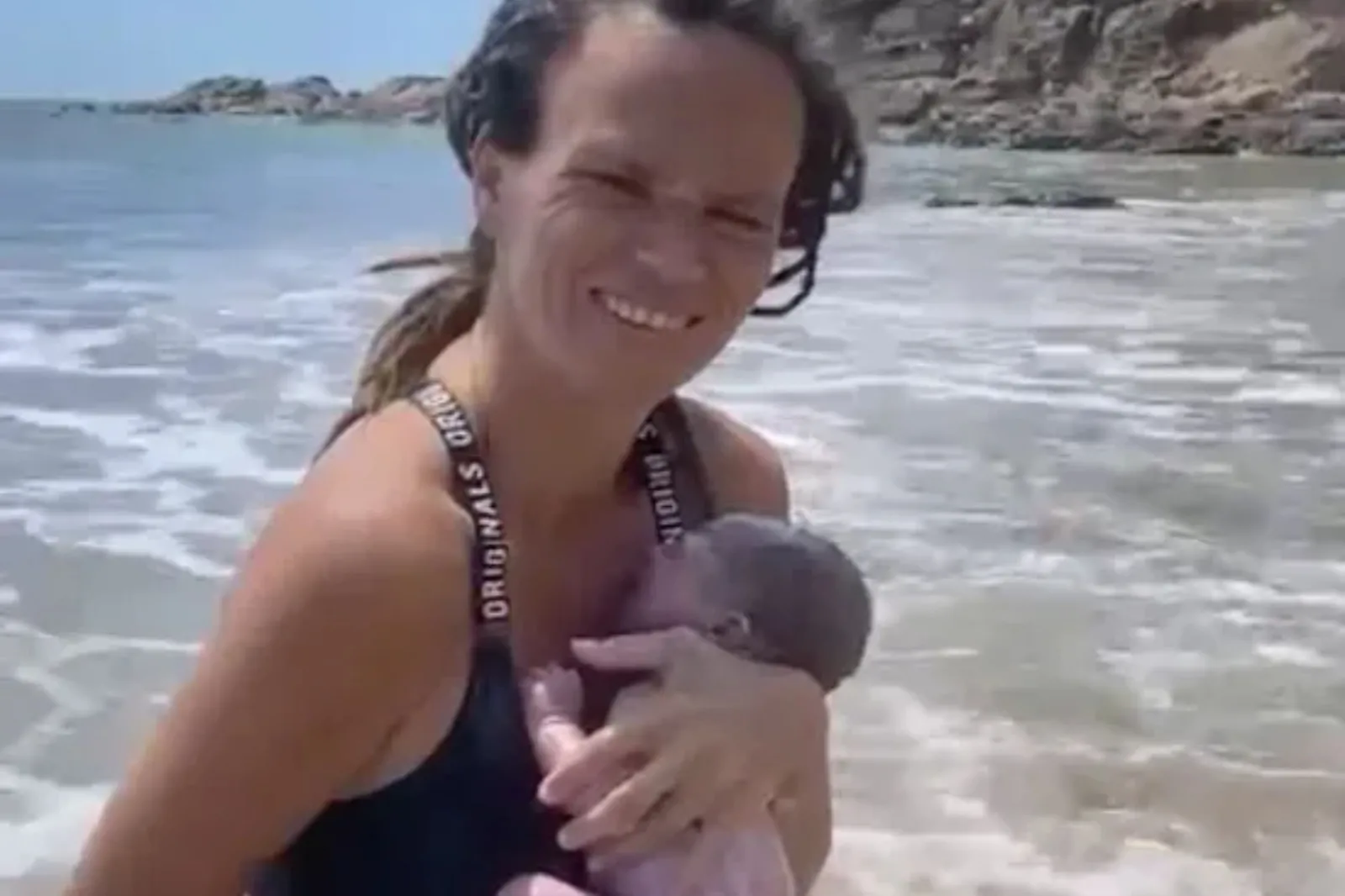
Josy Peukert, who calls herself an oceanbirth mum, drove to a beach in Nicaragua for the arrival of her child Bodhi.
On Instagram, the mum detailed how her partner Benni caught the placenta with a sieve after her free birth on the shoreline of Playa Majagual.
In videos on her page, waves can be seen crashing at her back as she handled the contraction pains.
Josy previously said, The waves had the same rhythm as the contractions, that smooth flow made me feel really good.
She also stated, I got this idea in my head I wanted to give birth in the ocean, and because the conditions were right on the day that is what I did.
She has also hit back at people who said the water was too cold for her baby, stating her Pacific Ocean birth was around 30C water temperature and 35C in the air.
Josy explained, A baby is body temperature at birth is approximately 37C.
For comparison, between a body temperature of around 37C and a 22C delivery room, the difference is 15C.
Of course, water and air cannot be compared one to one when it comes to heat transfer, and water conducts heat much more efficiently than air.
She added, But maybe it is still worth looking at the actual temperatures before automatically thinking freezing cold when you see my baby being born in the tropical ocean.
When Josy is labour was beginning, her other kids went to stay with friends, and Benni drove them to the beach.
In the car they had a birthing tool kit which included towels, a bowl with a sieve to catch the placenta, gauze and paper towels.
Josy added, After Bodhi was born and wrapped up in towels, I went back into the ocean to freshen up.
Then she got dressed and they packed everything up and drove home where the three of us got straight into bed.
Later that evening they weighed Bodhi with luggage scales, and he was 3.5kg or 7lb 6oz.
The mum says she wanted her baby to be born with no medical intervention because doctors and midwives take away from what the female body can do on its own.
She said, I wanted to be worry-free for once.
Her first birth was traumatic in a clinic and her second birth was a home birth, but by the third even a midwife in her home was too much.
This time she had no doctor appointments or scans or outside influence.
They did not have a due date or deadline for the baby to arrive, and they just trusted that their baby would make its way.
She had no fears or worries to welcome a new little soul into their lives, just herself, her partner and the waves, calling it beautiful.
The soft volcanic sand under her reminded her there is nothing else between heaven and earth, just life.
Josy gave birth to a baby boy, named Bodhi Amor Ocean Cornelius, on 27 February 2022, but she has recently reshared her birthing story online.
She said, For weeks, I monitored the tide and so when the time was right for me to give birth, I knew the beach would be safe for us.
Bodhi is described as a really calm and satisfied baby where everything is wonderful for him if he is in mama is arms.
He is just as relaxed as he was in her tummy.
Josy and Benni emigrated to Nicaragua from Germany where they met and had their first child together, Marley Mune.
After sharing her experience, Josy received some comments of concern and criticism about her choice to free birth in the sea.
One commenter asked, Is this sanitary, as there is a lot of bacteria in the sea.
Another wrote, What a shock for that bubba, going from a warm womb to the cold ocean.
Responding to the trolls, she added, Bodhi was born in the midday sun when it was about 35 degrees, we were not worried at all that he would be cold and I had no concerns about waterborne infections.
He is perfectly healthy.
She did all the research she needed to make sure it was safe.
Water is a barrier that is medically proven.
For her and this baby she wanted to feel completely connected by her own self-directed care.
This pregnancy was considered the greatest gift they could have imagined and wished for.
Background on Free Birth and Unassisted Deliveries
Free birth, also known as unassisted childbirth, involves delivering a baby without the presence or assistance of a doctor, midwife, or medical professional. Proponents of this practice often choose unassisted home births or alternative outdoor locations due to previous negative experiences in clinical settings or a strong desire for complete autonomy over the birthing process. Medical organisations consistently advise against unassisted childbirth, warning that trained professionals are essential for managing unexpected complications such as postpartum hemorrhage, shoulder dystocia, or fetal distress during labor. Without proper monitoring equipment, detecting changes in a baby's heart rate or the mother's vital signs becomes extremely difficult.
Understanding Water Birth Safety and Temperature Regulation
Water births typically take place in specialized tubs inside hospitals, birthing centers, or homes where water temperatures are carefully monitored and kept close to body temperature. Moving an unassisted delivery to a natural body of water like the Pacific Ocean introduces external environmental factors, including fluctuating water temperatures, wave action, and exposure to marine bacteria. Newborn infants lack the fully developed ability to regulate their own body temperature immediately after birth, making external warmth crucial to prevent hypothermia. While tropical waters offer higher baseline temperatures, pediatricians and obstetricians emphasize that natural bodies of water cannot maintain the sterile conditions required to protect a newborn from potential infections during and immediately following delivery.