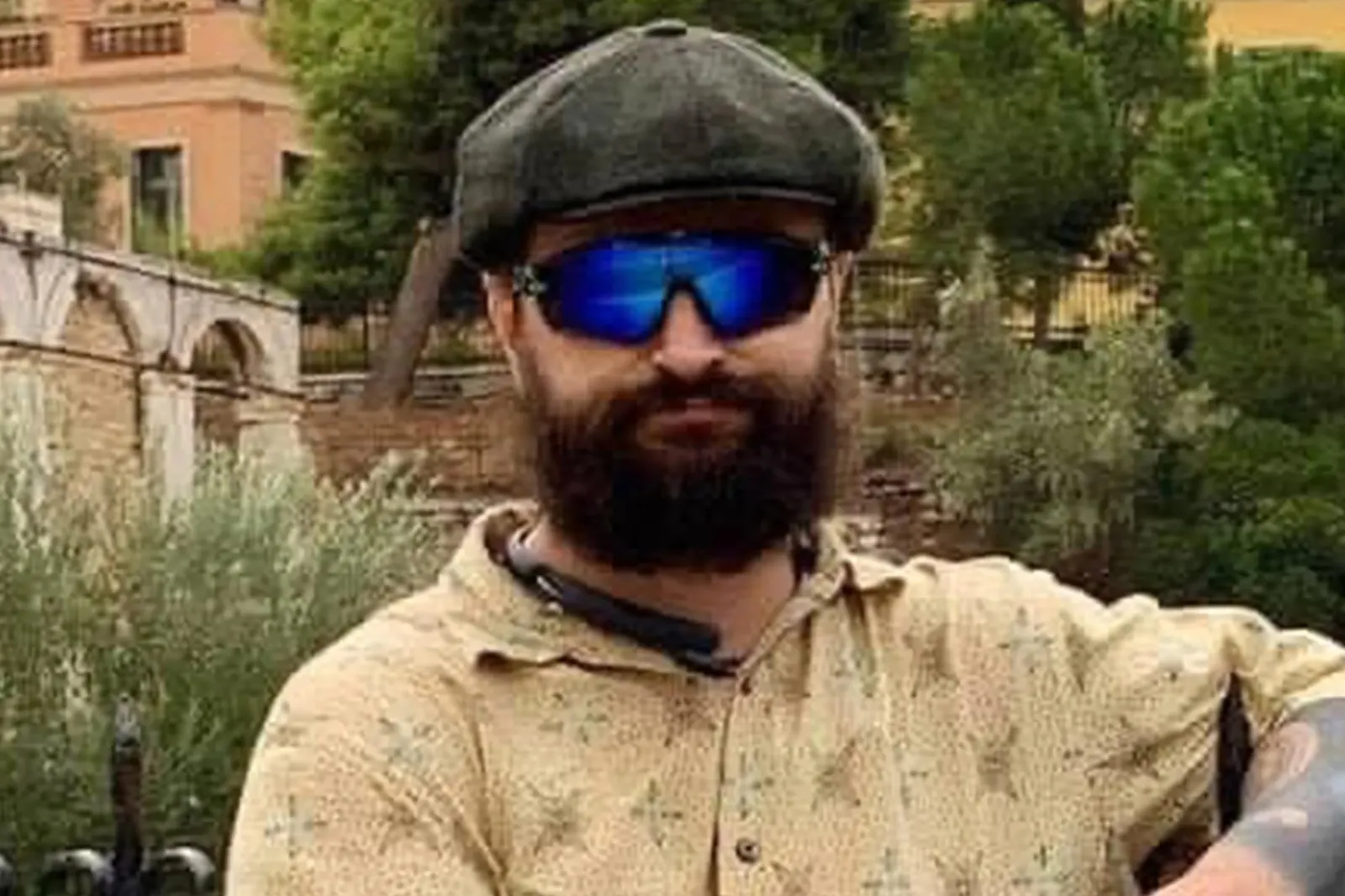
A dad died in a horrific accident after becoming trapped and crushed inside an artificial cave for five hours during a family birthday party.
Carl O'Keeffe, 49, was left fighting for his life after becoming wedged inside a narrow underground tunnel, while rescuers battled to free him.
The father-of-three was eventually cut out of the 65ft-long fibreglass structure but suffered catastrophic crush injuries which proved fatal.
Now the climbing centre has been slapped with a £67,500 fine after admitting a breach of the Health and Safety at Work Act.
The company was also ordered to pay a £2,000 surcharge and £20,000 towards prosecution costs following the tragedy.
Where the incident happened
The devastating incident happened at King Kong Climbing Centre in Keswick, Cumbria, in April 2023.
Carl O'Keeffe was there attending a birthday party for a young family member.
Newcastle Crown Court heard how he became trapped around a third of the way through the indoor cave system, hidden behind the centre's main climbing wall.
Details of the rescue operation
Carl O'Keeffe had slipped inside the cramped tunnel and became so tightly wedged that staff were unable to pull him free.
The ordeal lasted around five hours, during which the victim was left curled up in a foetal position in the confined space.
His body was compressed for hours, causing severe crush injuries.
Carl O'Keeffe was eventually freed after rescuers cut through a section of the structure, having been unable to dismantle it because its sections were bolted and glued together.
He was rushed to hospital but his condition was critical.
He died eight days later, on April 30, after suffering multiple organ failure.
Court findings and safety failures
Prosecutor Alex Stein told the court that staff initially tried to rescue Carl O'Keeffe before emergency services were called.
But the centre's emergency exit was completely inaccessible from where he was trapped.
It was more than six feet above ground level, behind the climbing wall and padlocked shut.
Alex Stein said, There was only one emergency exit that was located in an entirely inaccessible location, behind the climbing wall, over six feet above ground level.
The court heard the exit was nowhere near Carl O'Keeffe's position and could not have been used to reach him.
Rescuers eventually managed to cut away a panel to reach him.
Alex Stein said, It took five hours for him to be released. He was talking to medics on and off over that period.
There is a statement from one of the firemen who was inside, talking to him.
The prosecutor added that the defence accepted the incident was foreseeable and that the risk had not been properly controlled.
Judge Edward Bindloss branded the cave system a very bad design and said there had been no emergency plan in place for such an incident.
He also heard that the company director, Paul Cornforth, 64, had admitted a breach of the Health and Safety at Work Act on behalf of the business.
However, the judge acknowledged the centre was a strong local resource, had a good health and safety record and no previous convictions.
The court heard the company's bank account was currently overdrawn and it was given three years to pay the fine to protect innocent parties, including staff and service users.
Family impact statements
In a heartbreaking victim impact statement, Carl O'Keeffe's ex-wife described the devastating impact his death has had on their family.
She said Carl O'Keeffe was a very involved father and a role model who will now miss the childrens' important milestones.
The ex-wife added, Happy moments with the children can be difficult because he isn't there to share them.
Carl O'Keeffe's sister said she was there when the tragedy happened and that the centre stayed open until closing time that day, despite the emergency in the cave system.
She said Carl O'Keeffe was a keen photographer and planned to return to university to study astro physics and his loss has affected her both physically and mentally.
The grieving sibling said, Our family miss Carl every single day, his laughter, his kindness and the moments we will never share with him ever again.
We have lost a beautiful shining star from our lives and that light can never be replaced.
Background on health and safety regulations
Health and safety laws across the United Kingdom require commercial venues, leisure facilities and climbing centres to conduct comprehensive risk assessments for all installed attractions. Operators must ensure that patrons can safely navigate facilities and that emergency procedures are clearly established for staff members. Establishments open to the public face strict legal scrutiny regarding the maintenance and supervision of adventure equipment, tunnels, climbing walls and obstacle courses.
When venues install complex fabricated attractions like fibreglass tunnels, standard operating procedures must account for potential entrapment scenarios. Local authorities and the Health and Safety Executive enforce compliance with safety legislation to prevent injuries or fatalities during recreational activities. Courts possess the authority to impose substantial financial penalties, surcharges and prosecution costs on businesses that fail to maintain adequate safety standards.
Understanding indoor caving attractions
Indoor caving systems simulate natural potholing and spelunking experiences within controlled artificial environments. These structures typically consist of interconnected modular fibreglass tubes, twists, narrow squeezes and chambers designed to mimic real caves. Adventure centres install these attractions to provide physical challenges, team-building exercises and entertainment for children and adults during birthday parties and group events.
Design specifications for artificial tunnels require careful consideration of rescue access points, ventilation and internal visibility. Because participants navigate tight spaces in various postures, facility operators must train staff to respond swiftly to distress calls or blockages. Emergency protocols usually involve specialized extraction techniques when individuals become wedged due to the restrictive dimensions of artificial passageways.