How Democrats Overcame Midterm Expectations
In the aftermath of 2024, experts were arguing not about whether Democrats could retake the U.S. Senate in 2026, but if we ever could. Forecasters projected Republicans holding at least 53 seats in the midterms, including North Carolina.
But because of candidates laser-focused on lowering costs for families in their state, as well as Republicans' massive failure to tackle high prices and the corruption in Washington, we made history.
Roy Cooper and State-Level Victories
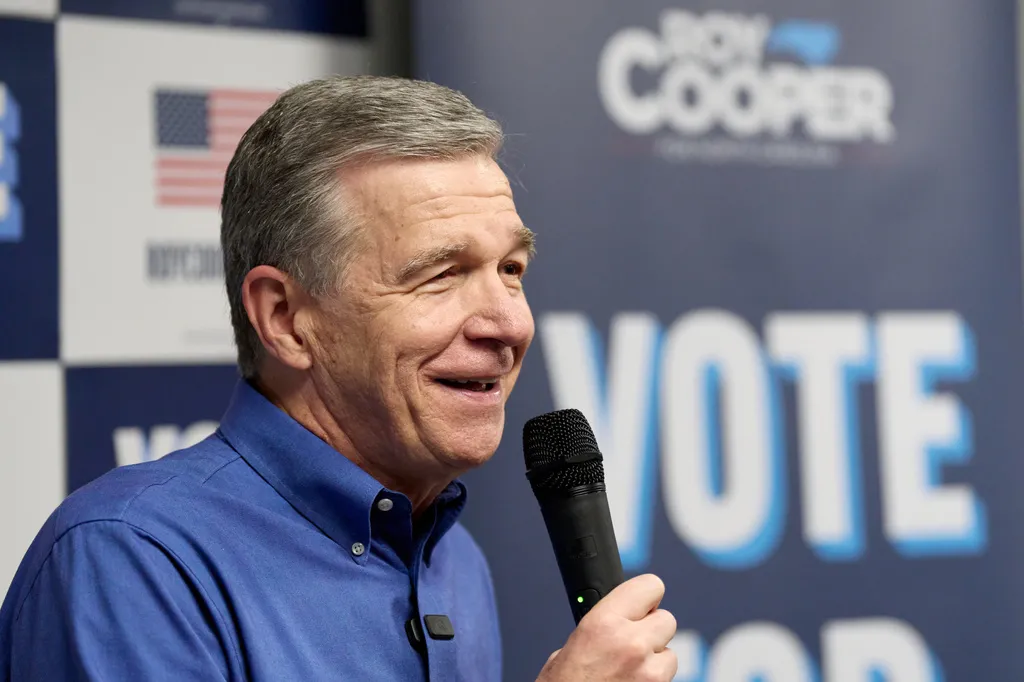
In North Carolina, Sen.-elect Roy Cooper (D) not only flipped a state President Trump carried all three times, but he did it by competing in suburban, exurban and rural areas, winning 21 counties Trump carried in 2024. By expanding the map and fighting to earn every vote, Cooper provided coattails that flipped an incredible five congressional seats, the state House and broke the state Senate supermajority. These historic victories, in potentially ten states that Trump carried, are worth celebrating. But we can't take our foot off the gas, and we can't fall into the same traps that previous midterm winners have fallen into. Democrats also need to take a clear look at ourselves.
The Reality of Voter Sentiment
Democrats may have carried the night on Tuesday, but 57 percent of Americans still have an unfavorable opinion of our party. As much as there is to celebrate, we should be clear-eyed that Tuesday was more about Republicans losing than it was about the national Democratic brand carrying us to victory. If we look at how Cooper or Sen.-elect Adam Hamilton (D-Kan.) won, it was by talking about diesel, not about being a Democrat.
Working families are sick of the chaos and corruption that has crushed their budgets and left them struggling to afford the basics. On Tuesday they gave Democrats a chance. Now, we need to deliver.
Focusing on Everyday Costs
Cooper ran on a simple, catchy slogan: Make stuff cost less. He did not get distracted by shiny objects or hot-button issues that the D.C. political class was spinning themselves up about day after day. He talked about what voters were experiencing every single day: high prices. His message resonated not because it drove clicks or viral moments but because it was rooted in making daily life for everyday people easier.
Cooper vowed to not become a lobbyist and refused to own or trade individual stocks, so that North Carolinians knew that he would focus on their wallet, not his own. If we fail to deliver for these folks, 2028 will be the same as 2026, 2024 and 2020, an election where voters hit the change button yet again.
Public Safety and Crime Records
Instead of ceding ground on crime as far too many folks in our party do, Cooper proudly ran on his record keeping families safe by putting violent criminals behind bars, going after drug dealers, opposing defunding the police and strengthening bail laws as attorney general and governor.
This is the path Democrats must take in order to win in 2028 and bring the American Dream back within reach for so many families: talk like normal people and work to make groceries cheaper.
Accountability and Economic Priorities
Delivering results for families doesn't mean we roll over to this administration. Because of how Trump has weaponized tariffs to reward his cronies, families are paying more at the grocery store. Because of how this administration has started a reckless war, families have paid record fuel prices for months and Americans have been killed.
Accountability is important, not for the sake of getting even, but for the sake of delivering a better life for working people. But if we take our eye off the main goal of lowering costs, if we become more preoccupied with evening the score then lowering the grocery bill, we won't have done any good for families who entrusted us with their vote and are still struggling to get by.
Voters spoke loud and clear on Tuesday. We have some power, again. And with that power comes responsibility. But we cannot confuse us winning with them losing. If we want to win in the future, if we want to win in 2028, we can't let this opportunity go to waste: we have to focus on the issues that matter and deliver a more affordable future for families across this country.
Morgan Jackson was a general consultant on Roy Cooper's campaign and senior advisor to Cooper.
Background on the Midterm Elections and Political Landscape
Midterm elections in the United States occur midway through a four-year presidential term. All seats in the House of Representatives and approximately one-third of the seats in the Senate are contested during these elections. Historically, the party holding the White House often loses seats in Congress during midterms. The political dynamics of recent election cycles have been heavily influenced by voter concerns regarding inflation, the cost of living, supply chain disruptions, and broader economic stability. Campaign strategies increasingly focus on regional economic issues rather than solely relying on national party platforms.
State-level races, including gubernatorial contests and legislative battles, play a major role in shaping national politics. Control of state legislatures dictates redistricting processes and policy implementation on critical issues such as taxation, labor laws, and public safety. Candidates who bridge partisan divides by appealing to suburban, exurban, and rural constituencies frequently achieve breakthroughs in traditionally competitive or leaning regions. This electoral strategy alters traditional political maps and creates new pathways for legislative majorities.
Understanding Voter Priorities and Economic Pressures
Economic indicators such as inflation rates, fuel prices, and grocery costs directly impact household budgets across the country. Public opinion polling consistently demonstrates that everyday expenses rank as the primary concern for most voters when heading to the ballot box. Political analysts note that campaigns emphasizing tangible financial relief tend to resonate more effectively than those centered on abstract ideological debates. Addressing cost-of-living challenges requires targeted legislative proposals and transparent governance to rebuild public trust in political institutions.
The role of campaign messaging in modern elections has shifted toward addressing immediate domestic needs. Candidates who prioritize local economic realities establish stronger connections with constituents. Transparency regarding personal financial ethics, such as avoiding stock trading while in office, further reinforces credibility among voters who are skeptical of political corruption. Maintaining this focus remains essential for elected officials seeking to sustain voter support through subsequent election cycles.