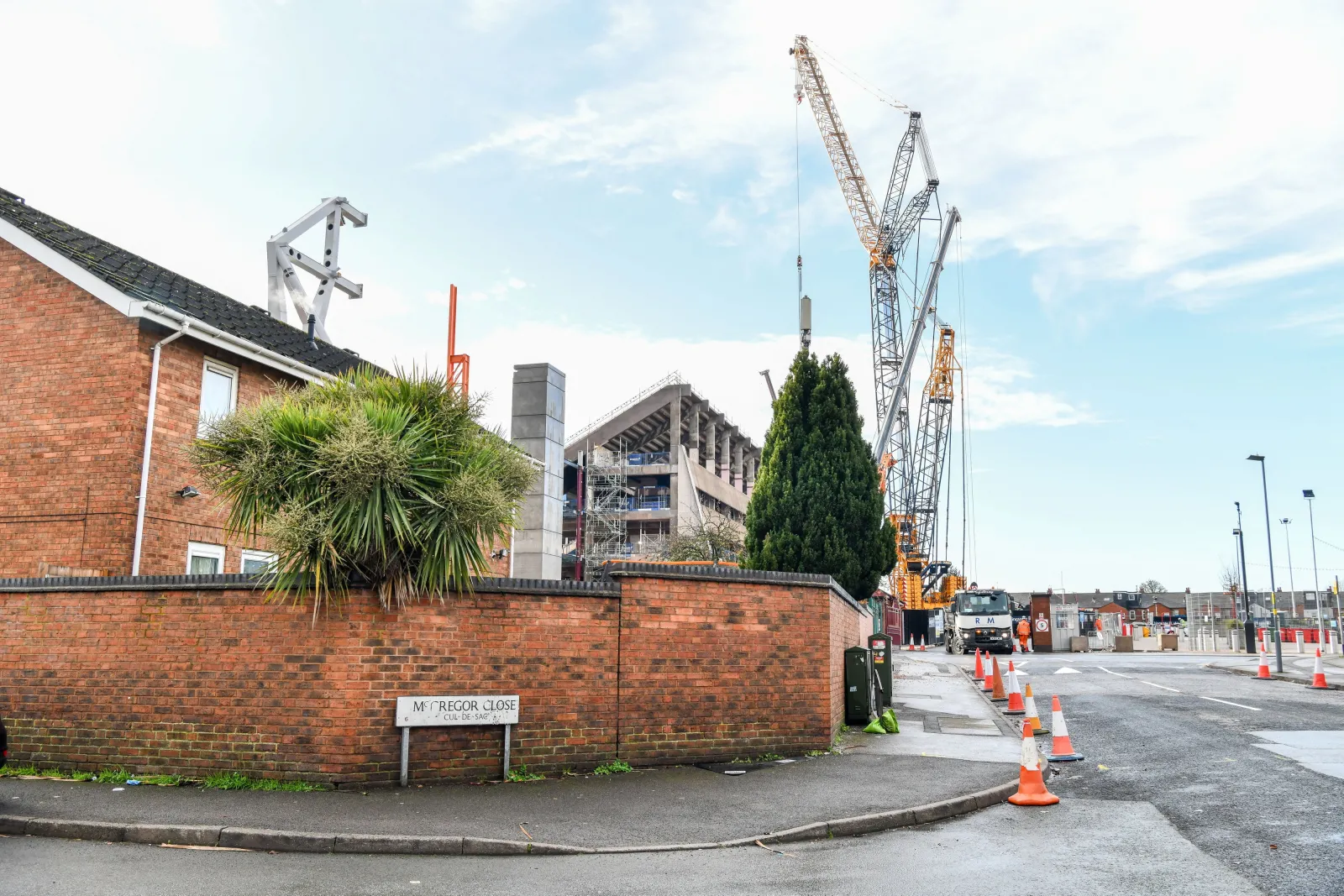
Aston Villa's £100 million North Stand expansion at Villa Park, Birmingham, is set to lift the stadium's capacity beyond 50,000 by the 2027/28 season. The project has ignited a furious backlash from local residents who claim the construction is causing severe noise, traffic congestion and litter problems in their neighbourhood.
What Is Happening at Villa Park?
Aston Villa, a Premier League club, is extending the North Stand of its historic ground, Villa Park, on Trinity Road. The redevelopment is part of a larger £100 million investment that will modernise the stadium and increase its seating to over 50,000. The work is scheduled to finish in time for the 2027/28 football season.
Construction Impact on Residents
Local families living in the immediate vicinity have reported that the construction work is shaking their homes and producing loud vibrations. Hanna Sultan, 33, a mother of three who lives just yards from the stadium, said: "Because we're so close to the stadium, whenever they're drilling we can actually feel the vibrations inside the house." She added that her daughter, who has epilepsy, is startled by the noise and has asked whether the house will collapse. Sultan also complained that construction workers parked on the road, blocking access for bin lorries and causing weeks of missed collections. The work often continues late into the evening, with workers on site until 10 pm or 11 pm, and loud music sometimes playing during the day.
Another resident, Octavia Munteanu, 51, highlighted the difficulties caused by increased traffic. "Due to the increase in traffic ambulances and taxis struggle to reach my husband, who needs dialysis three times a week," she said. Munteanu also criticised the litter left after matches, describing the street as being covered in food cartons, beer cans and other rubbish. She noted that the local council has not responded to her complaints over the years and that a few extra bins would make a huge difference.
Long-Term Concerns About Matchday Chaos
Residents fear that a larger stadium will bring even more rowdy football fans, leading to vandalism, smashed windows, and a surge in litter. The noise and traffic congestion are already causing significant disruption to families, especially those with young children. Ash Mahmood, 60, who has worked in the area for 40 years, said the construction has added to the existing traffic chaos, sometimes making a short trip take over an hour.
Club's Perspective and Future Plans
Villa Park's President of Business Operations, Francesco Calvo, has defended the project. He stated: "By completing the redevelopment in one season, we reduce disruption, improve the Villa Park experience more quickly and ensure we are investing responsibly while remaining compliant with financial regulations." Calvo also noted that the club believes the long-term benefits will outweigh the temporary inconveniences.
Supporter Sylvia Wilson-Downing, a fan for 30 years, echoed this sentiment. "From a fan's point of view it's definitely a welcome move. It looks a mess at the moment, but that will all be forgotten soon enough. Once it's finished, it'll look fantastic and nobody will even think about the disruption."
Background: Villa Park and Aston Villa
Villa Park, opened in 1897, is the home of Aston Villa Football Club, one of England's oldest professional clubs. The stadium has a long history of hosting Premier League matches, FA Cup finals, and international fixtures. In recent years, the club has sought to modernise its facilities to meet the demands of a global fan base and to remain competitive in the English football hierarchy.
The North Stand, which currently holds around 10,000 seats, is the target of the £100 million expansion. The project will add new seating, hospitality suites, and improved access for fans. The club's ambition is to bring the total capacity to over 50,000, positioning Villa Park among the largest stadiums in the Premier League.
Community Response and Local Governance
Residents have taken their concerns to local politicians. Hanna Sultan has complained to her Member of Parliament and local councillor about the lack of access for bin lorries and the general disruption caused by the construction. The council has yet to provide a comprehensive plan to mitigate the impact on traffic and noise.
Local businesses and community groups have also voiced their frustrations. Many residents have taken to cleaning up the streets themselves after matches, citing a lack of adequate rubbish collection. The ongoing litter problem has led to complaints about safety and public health, especially for families with children and pets.
What Happens Next?
The redevelopment is expected to proceed as planned, with the club aiming to finish by the start of the 2027/28 season. The club has stated that it will continue to work with local authorities to address traffic and noise concerns, though residents remain skeptical of the effectiveness of such measures.
As the project moves forward, the tension between the club's growth ambitions and the community's quality of life is likely to intensify. The outcome will hinge on the club's ability to balance its commercial objectives with the needs of the neighbourhood that has supported it for over a century.