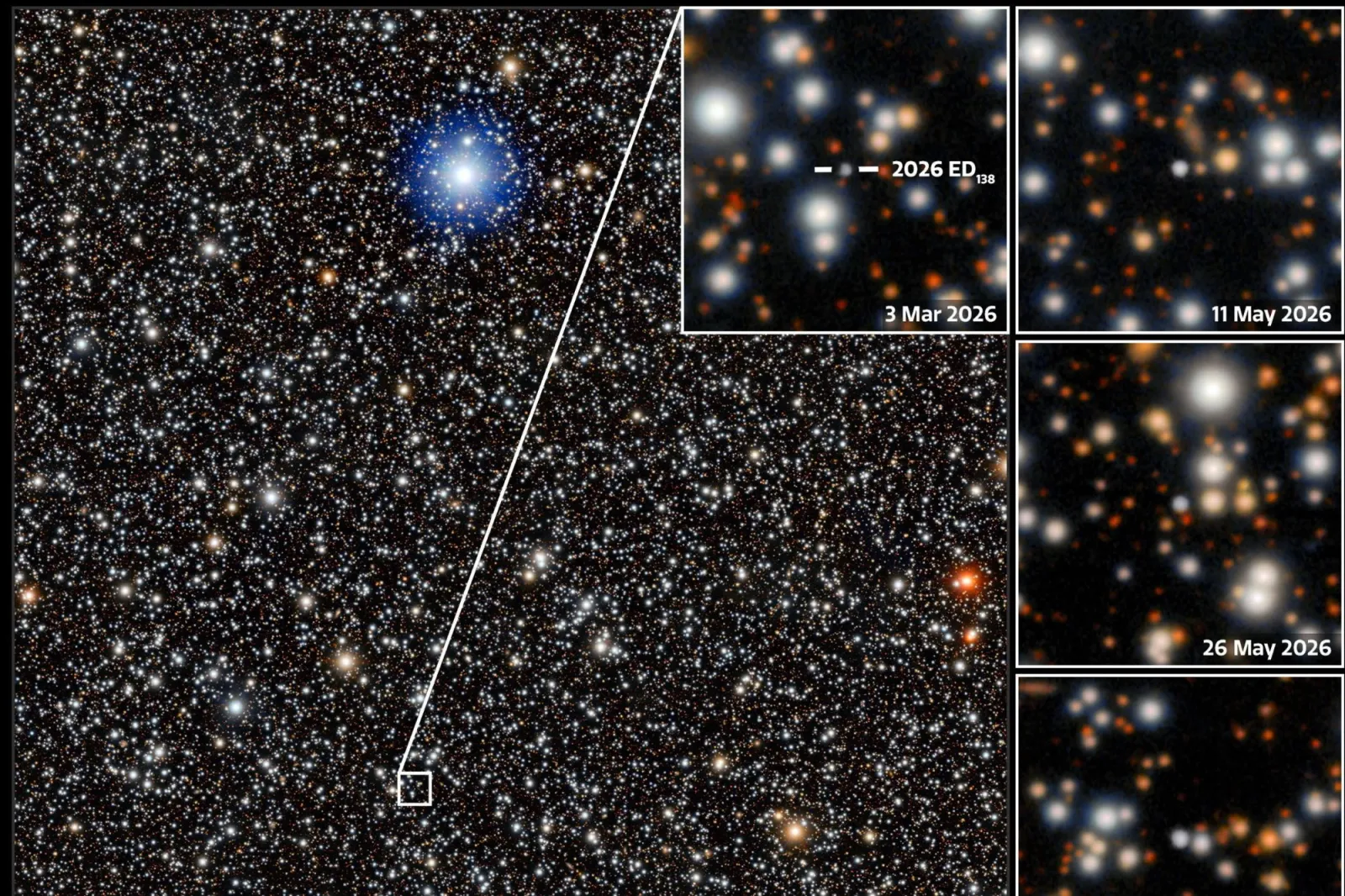
A massive new potential dwarf planet, temporarily called 2026 ED 183, has been identified after Harvard astronomer Matthew Holman processed Vera C. Rubin telescope data collected in 2026.
The object measures between 370 and 930 miles in diameter, which would make it wider than the United Kingdom if the upper estimate is correct.
Holman ran a high-tech computer program through billions of moving objects captured by the ultra-powerful telescope perched on an 8,800-ft mountain in Chile. When the candidate appeared, he felt "excited disbelief" and immediately double-checked the result.
Working with scientist Mario Jurić, the team added 20 earlier sightings of the object dating back to March 2026.
What defines a dwarf planet?
A space body must meet three criteria to be called a planet. It must orbit the Sun, be massive enough for its gravity to shape it into a sphere, and clear its orbital neighborhood of similar objects.
- Orbits the Sun
- Large enough for a spherical shape
- Has not cleared its orbital zone
Dwarf planets satisfy the first two conditions but not the third. Six dwarf planets are currently recognized: Ceres, Pluto, Haumea, Makemake, Eris and Hygiea.
Why the discovery took so long
Tracking moving objects within the Milky Way is extremely challenging, which delayed the identification of this "pesky space sphere."
Holman, a lecturer at Harvard University, explained that most searches focus on the northern sky, while 2026 ED 183 resides in the southern hemisphere.
Although invisible to the naked eye, the object is bright enough for capable amateur astronomers to spot if they know where to look.
Next steps for 2026 ED 183
Holman warned that the object is still a candidate. "At this point, it's still a candidate. We really need to know how physically big it is, and that will take a few months, probably," he said.
If granted dwarf-planet status, the rocky world will receive a new Greek name, though the naming process remains unclear.
"People have already emailed me some suggestions, and some of them are already taken by other objects," Holman noted.
Associate professor Michele Bannister, not involved in the discovery, speculated that a future spacecraft might find a nitrogen glacier similar to Pluto's, but emphasized that current knowledge is limited to size.