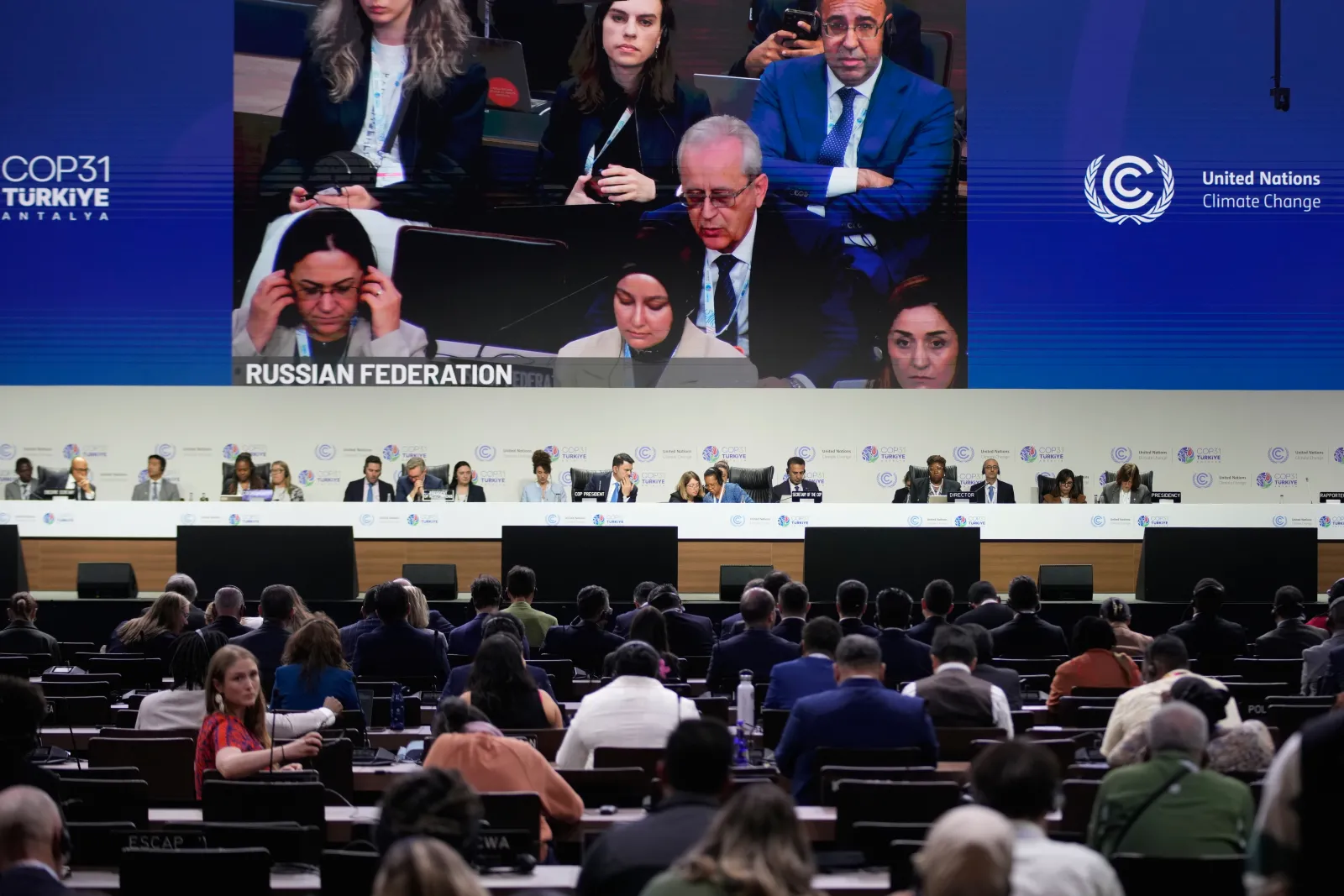
Earlier this week, the United Nations Climate Summit in Turkey collapsed without a final agreement after two days of overtime. More than 130 countries as well as a large number of U.S. states have pledged to reach net-zero, most by 2050. Yet through two weeks of talks, the most basic question went unasked: what would net-zero by 2050 cost, and how much good would it do? That is odd, because the UN already owns the tools to find out.
So I built NetZeroCostBenefit.com, a website that lets anyone see what the U.S., or any other country or group of countries, would achieve by reaching net-zero in 2050, what it would cost, and what the climate benefit would be worth.
How Climate Models And Economic Data Drive The Numbers
None of the inputs are mine: The climate model it employs, known by the acronym MAGICC, is used throughout the U.N.'s own climate reports and can translate any country's promised emissions cuts into lower temperatures by the year 2100. The costs come from U.N. surveys of economic models, and the damage estimates come from the two most recent syntheses of the economics of warming.
Anyone can check the arithmetic. For its latest report and updates, the climate panel gathered nearly a thousand model estimates of what climate policy costs. Almost none of them get anywhere near to net-zero by 2050, because it is so hard and costly.
Global Costs Of Net-Zero Targets
Only three models reach net-zero starting from today's actual emissions, rather than assuming cuts that began years ago. They find that global net-zero would cost between 3 percent and 19 percent of global GDP in 2050. That is because expensive energy throttles growth.
My website uses the middle estimate, of a loss of 7.2 percent of GDP in 2050 against current policies.
Comparing Climate Damage And Economic Loss
The estimation of benefits comes from the two most recent syntheses of the damage from warming, one by one of the most quoted climate economists, Richard Tol, and the other by William Nordhaus, the only climate economist to win the Nobel Prize in economics. Given the warming the U.N. model projects under current policies, climate change will cost the world 1.8 percent to 2.8 percent of its GDP by 2100. That is a real loss, but nowhere near the catastrophes bandied about. It is also a lot less than a 7.2 percent loss of GDP, and a lot further away.
But then there is the other side of the equation. Net-zero only avoids part of the climate damage projected. Nor does any single country's effort buy much. If the U.S. reaches net-zero by 2050 and stays there while the rest of the world keeps its current policies, the model projects global temperatures in 2100 would be only 0.14 degrees Fahrenheit lower. So nobody would notice the difference in temperature, but Americans would certainly notice the added costs.
The Financial Impact On The United States
In 2045 alone, the model puts the cost at $1.2 trillion. From 2027 to 2100, the cost adds up to $12.7 trillion in today's money. The global climate benefit adds up to just under $2 trillion. The American sacrifice delivers 15 cents of benefits for every dollar spent.
Some will object that no country should look at its own numbers this way, because if everyone notices large costs but tiny benefits, nothing will get done. But the math doesn't improve with pooling. As the website shows, each nation ends up doing much less good for the world than what it puts in by adopting the net-zero goal.
Global Return On Investment For Climate Pledges
Indeed, when you look at the whole world, global net-zero by 2050 would avoid $24 trillion in climate damage this century but cost $255 trillion, both in today's dollars. So that is nine cents on the dollar.
The problem isn't that countries act alone. It is that the policy itself costs far more than it delivers.
Fossil Fuels And The Future Of Energy Policy
Fossil fuels remain cheap and plentiful, despite price fluctuations. It is little wonder that they still supply more than four-fifths of global energy, or that emissions rose again last year. At the pace of the last half-century, they won't be gone by 2050, they will be gone a millennium later, in 2997.
None of this means that climate change is harmless. It is indeed a real challenge, and the smart fix is to invest more in green-energy research and development, so that clean energy eventually outcompetes fossil fuels and becomes cheaper for everyone. Instead, many politicians continue to insist on expensive, inefficient policies, as if industrial economies could run on sunshine and good intentions.
Net-zero by 2050 is an egregiously bad deal. Across 31 climate summits, delegates have ignored this reality. Now, anyone can run the numbers.
Bjorn Lomborg is President of the Copenhagen Consensus, Visiting Fellow at Stanford University's Hoover Institution, and author of False Alarm and Best Things First.
Background
The United Nations coordinates international climate negotiations through annual summits known as Conferences of the Parties. These gatherings bring together diplomats, scientists, and policy experts to negotiate emission reduction targets and financial commitments. Over the decades, these summits have produced various frameworks, including the Paris Agreement, which encourages participating nations to limit global temperature rises. Despite these agreements, differing economic priorities and reliance on traditional energy sources frequently stall consensus.
Economic assessments of climate policies typically rely on integrated assessment models that couple climate systems with macroeconomic projections. Researchers like William Nordhaus developed foundational models that simulate how economic activity generates greenhouse gas emissions and how those emissions cause temperature changes that impact economic output. These models help researchers estimate the social cost of carbon and evaluate the trade-offs between immediate mitigation expenses and long-term avoided damages.