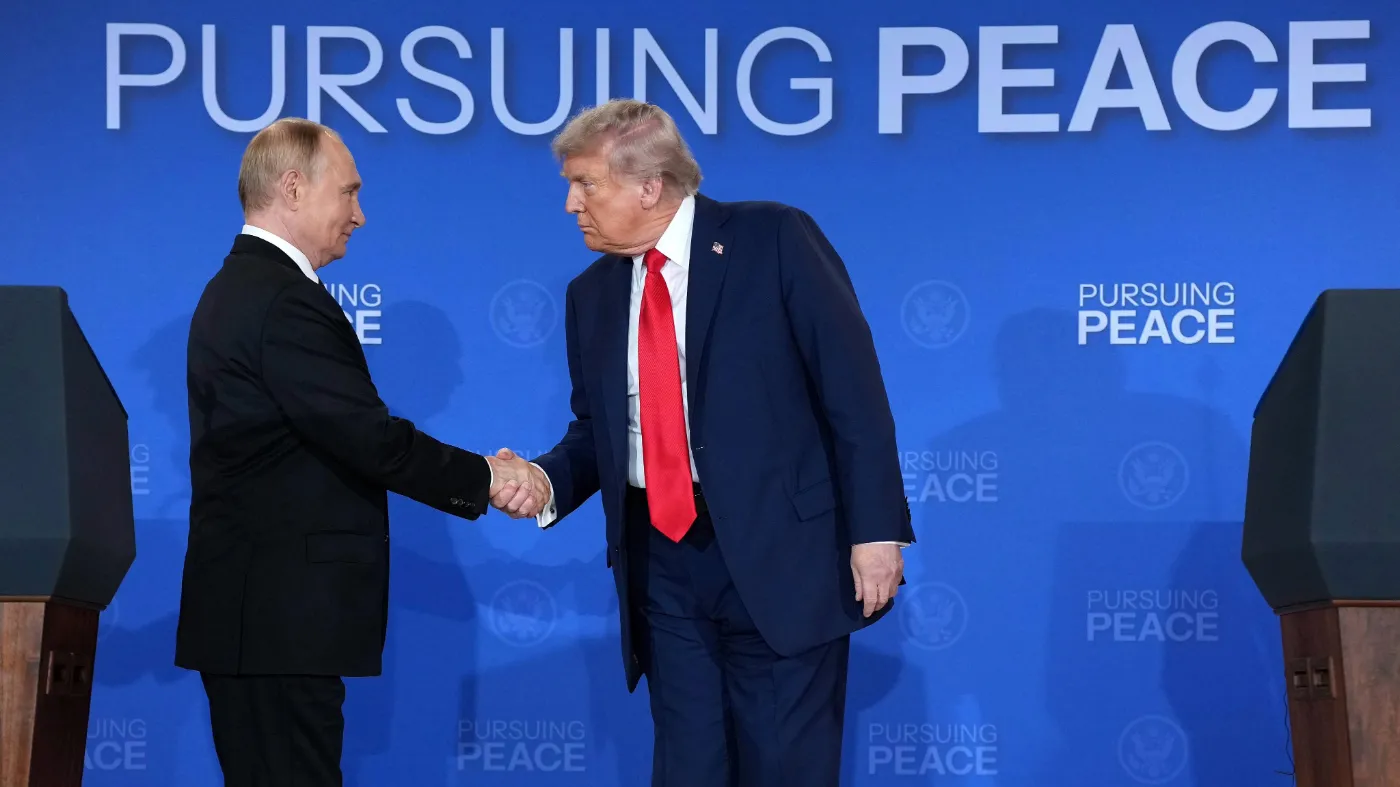
President Trump will convene a once-in-a-generation meeting with Russian President Vladimir Putin and Chinese President Xi Jinping on the sidelines of the Asia-Pacific Economic Cooperation summit in Shenzhen, China. The gathering, scheduled for Wednesday, has been likened to the historic Yalta Conference, where Roosevelt, Churchill and Stalin met to decide post-war spheres of influence.
Agenda and Focus of the Meeting
Trump has signaled that global conflict will dominate the talks, with the three leaders expected to discuss Ukraine, Iran and denuclearization. He has not yet found common ground on any of these issues, despite promises of breakthroughs for nearly two years.
Trump's stance on the U.S.–Israel war with Iran differs from that of Xi and Putin, though he has downplayed their support for Tehran. The United States has moved closer to Russia's position on ending the Russia-Ukraine war, yet it continues to back Kyiv with intelligence, satellite access and U.S. arms purchased by Europe.
Historical Comparisons and Expert Views
Catherine Grace Katz, a historian, noted that calling the Shenzhen meeting "Yalta 2" feels awkward. She added that the summit could become a fitting analogy for a future meeting in November, especially amid intelligence gaps between the U.S. and Ukraine and Trump's decision to lift some sanctions on Russia.
Senior U.S. officials have warned that the summit is unlikely to yield any agreements. "We do not expect to get to any kind of agreement," one official said on Friday. The meeting, they said, is merely an "entry point" for future discussions.
Strategic Motives of the Leaders
For Putin, appearing alongside Trump and Xi signals a strengthened international position and offers a platform to argue that Western isolation efforts have failed. Xi, meanwhile, is expected to focus on broad topics such as global stability rather than nuclear non-proliferation, according to International Crisis Group analysts.
Both Russia and China have supported Iran by selling oil, dual-use military items and reportedly providing weapons, enabling Tehran to resist U.S. pressure. Russia has also supplied intelligence that helped Iran target U.S. bases.
Potential Nuclear Dialogue
Although the leaders have not shown serious interest in denuclearization, arms-control experts see the summit as a chance to revive progress. Daryl Kimball of the Arms Control Association suggested that the three could agree to launch talks for a new agreement to cap and freeze nuclear arsenals, reaffirm a ban on nuclear testing, and reinforce human control over nuclear decisions amid AI risks.
A senior U.S. official urged China to engage in hard talks about its nuclear arsenal, stating that China's opaque actions have global security implications.
Implications for the Quad and Regional Security
Trump's trip will conclude with a leader-level meeting with Japan, India and Australia on the sidelines of the ASEAN summit in Manila. The gathering marks the first Quad meeting in two years and is seen as a key counterbalance to China's regional ambitions.
Japanese Prime Minister Sanae Takaichi, whose country faces joint naval drills from China and Russia, will be a focal point of the Quad discussion. A former U.S. official emphasized the importance of a warm meeting between Trump and Takaichi for U.S. security in Asia.