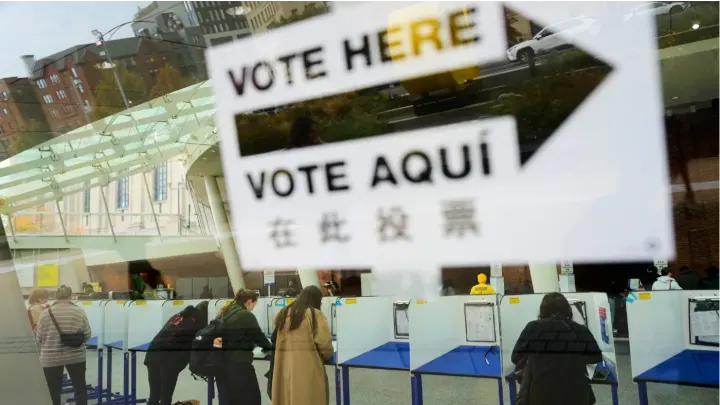
Two weeks after the 2026 midterm election, exit polls reveal that Donald Trump's popularity has dropped to historic lows. Fifty-four percent of voters strongly disapproved of his job performance, while 57 percent said he was not a strong leader. Sixty-four percent believed he does not fight for people like them, and 58 percent thought he lacked the mental capacity to serve as president. Sixty-five percent felt he has the wrong priorities, 63 percent said he prioritizes personal interests over the country's, 66 percent agreed his policies worsened economic conditions, and 63 percent blamed higher prices on his actions.
These figures set the stage for three major shifts in U.S. politics. First, former Ohio Senator JD Vance faces a serious primary challenge in 2028. Vance's path to the Republican nomination is now complicated by his attempt to distance himself from Trump, blaming the Republican blowout on the former president's decision to go to war with Iran. In 2029, Vance may encounter opponents such as Gov. Ron DeSantis (R-Fla.), Gov. Brian Kemp (R-Ga.), former Gov. Nikki Haley (R-S.C.), former Gov. Chris Christie (R-N.J.), former Gov. Glenn Youngkin (R-Va.), and Sen. Ted Cruz (R-Tex.). The primary will focus on the future direction of the Republican Party after Trump.
Second, the political landscape is returning to a four-party model. The Democratic Party now splits between moderates who secured the majority in 2026 and socialists who push for larger government. On the other side, Trump loyalists cling to the former president's agenda, while Reagan-era conservatives look to traditional conservative principles. Party unity is likely to prevail among Democrats because they see an urgent need to reverse damage caused by Trump, including restoring Obamacare subsidies, rolling back tariffs, reforming Immigration and Customs Enforcement, and ending the Iran war. Healthcare and tariffs will be among the first bills introduced in the new Congress. Rep. Rosa DeLauro (D-Conn.), incoming chair of the House Appropriations Committee, stated, "Democrats will absolutely not fund Trump's war of choice with Iran that has increased costs on American families and made us less safe."
Third, history may repeat itself. Trump and Grover Cleveland are the only two presidents to serve non-consecutive terms. Cleveland's narrow reelection in 1892 was followed by a 1894 landslide defeat for his party, after which Republicans gained control of both houses of Congress, adding 110 House seats and four new senators. In 1896, the Republican Party won a landslide victory for William McKinley, beginning a 36-year period of presidential dominance. The 2026 midterms could be a prelude to a realigning election favoring Democrats.
Whatever the future holds, the Trump era is over. In the New York Review of Books, Fintan O'Toole writes, "the vultures are circling the Trump presidency, and the warm breeze of rotting grandeur is blowing through Washington. This is the autumn of the pungent patriarch." John Kenneth White, professor emeritus at The Catholic University of America and author of *Democracy on the Edge: The Trump Elections and the Future of American Politics*, notes that the midterm results confirm his analysis.
Background on the 2026 Midterm Election
The 2026 midterm election was held on November 3, 2026. It coincided with the end of President Trump's second term, which began on January 20, 2025. The election saw a turnout of approximately 55 million voters, a slight increase from the 2024 midterms. The Democratic Party won a majority in both the House of Representatives and the Senate, flipping 30 seats in the House and 7 seats in the Senate. The Republican Party lost control of the House and saw a reduced majority in the Senate.
Exit polls conducted by the Associated Press and other national polling firms gathered data from over 20,000 voters across 50 states. The polling methodology involved random sampling of households and stratified sampling to reflect demographic diversity. The results were published on November 10, 2026, and confirmed the narrative that Trump's influence had waned.
Impact on the Republican Party
With the loss of House seats, the Republican Party's leadership structure shifted. Jim Jordan (R-Ohio) was elected House Republican Leader, representing the faction that remains loyal to Trump's ideology. The party now faces a split between Trump Republicans and Reagan Republicans, who prioritize traditional conservative values. This division is expected to influence legislative priorities and candidate selection in the upcoming 2028 presidential primaries.
In the Senate, the Republican caucus will consist of senators elected in 2024 and 2026, many of whom are Trump loyalists. The party's strategy will likely involve distancing itself from Trump's policies while maintaining a base that supports his legacy. The Senate's composition will affect the passage of key legislation, including immigration reform and trade policy.
Democratic Strategy and Legislative Agenda
The Democratic majority plans to focus on reversing Trump's policies. Key areas include healthcare, trade, immigration, and foreign policy. The House Appropriations Committee, led by Rep. DeLauro, will allocate funds to restore Obamacare subsidies and dismantle the Iran war. The Senate will likely consider similar measures, with bipartisan support for trade and immigration reforms.
Party unity is expected to prevail because the Democrats see an urgent need to address the economic and social impacts of Trump's presidency. While internal factions exist, the size of the majority and the urgency of the agenda will likely prevent significant intraparty conflict.
Future of the Republican Primary
JD Vance's attempt to distance himself from Trump will be tested in the 2028 primary. Vance's strategy involves criticizing Trump's decision to go to war with Iran and positioning himself as a moderate alternative. However, potential challengers include high-profile Republicans such as DeSantis, Kemp, Haley, Christie, Youngkin, and Cruz. The primary will likely revolve around the party's direction after Trump's departure.
Historical Context of Non-Consecutive Presidents
Only two U.S. presidents have served non-consecutive terms: Grover Cleveland (1885-1889 and 1893-1897) and Donald Trump (2025-2029). Cleveland's 1892 reelection was followed by a 1894 defeat that shifted control to the Republicans. The 1896 election saw William McKinley's victory, leading to a 36-year period of Republican dominance. The 2026 midterms may set the stage for a similar realignment in favor of the Democrats.
Implications for American Politics
The 2026 midterms signal a decisive shift away from Trump's influence. The Democratic majority will likely pursue a legislative agenda aimed at reversing his policies. The Republican Party will need to reconcile internal divisions and prepare for the 2028 presidential election. Historically, midterms often act as a prelude to larger political shifts, and the 2026 results suggest a potential realignment in favor of the Democrats.
Key Points
- Exit polls show 54% disapproval of Trump's job performance.
- Democrats won a majority in both chambers of Congress.
- JD Vance faces a primary challenge in 2028.
- House Rep. Rosa DeLauro will lead the fight against funding the Iran war.
- Historical precedent: only Cleveland and Trump served non-consecutive terms.
Why It Matters
Voters across the country will experience changes in healthcare, trade, and foreign policy as the new Democratic majority implements its agenda. Republican voters will see a shift in party leadership and strategy as the party prepares for the next presidential election.
FAQs
- What were the key exit poll results for Trump? 54% disapproved of his job performance, 57% said he was not a strong leader, 64% felt he does not fight for people like them, and 58% believed he lacked the mental capacity to serve.
- Who will lead the Republican Party in the House? Jim Jordan (R-Ohio) was elected House Republican Leader.
- What is the Democratic legislative focus? Restoring Obamacare subsidies, rolling back tariffs, reforming immigration enforcement, and ending the Iran war.
Internal Links
For more on the Democratic majority's control of state legislatures after the midterms, see Democrats Secure Control Of Majority Of State Legislatures After Midterms.