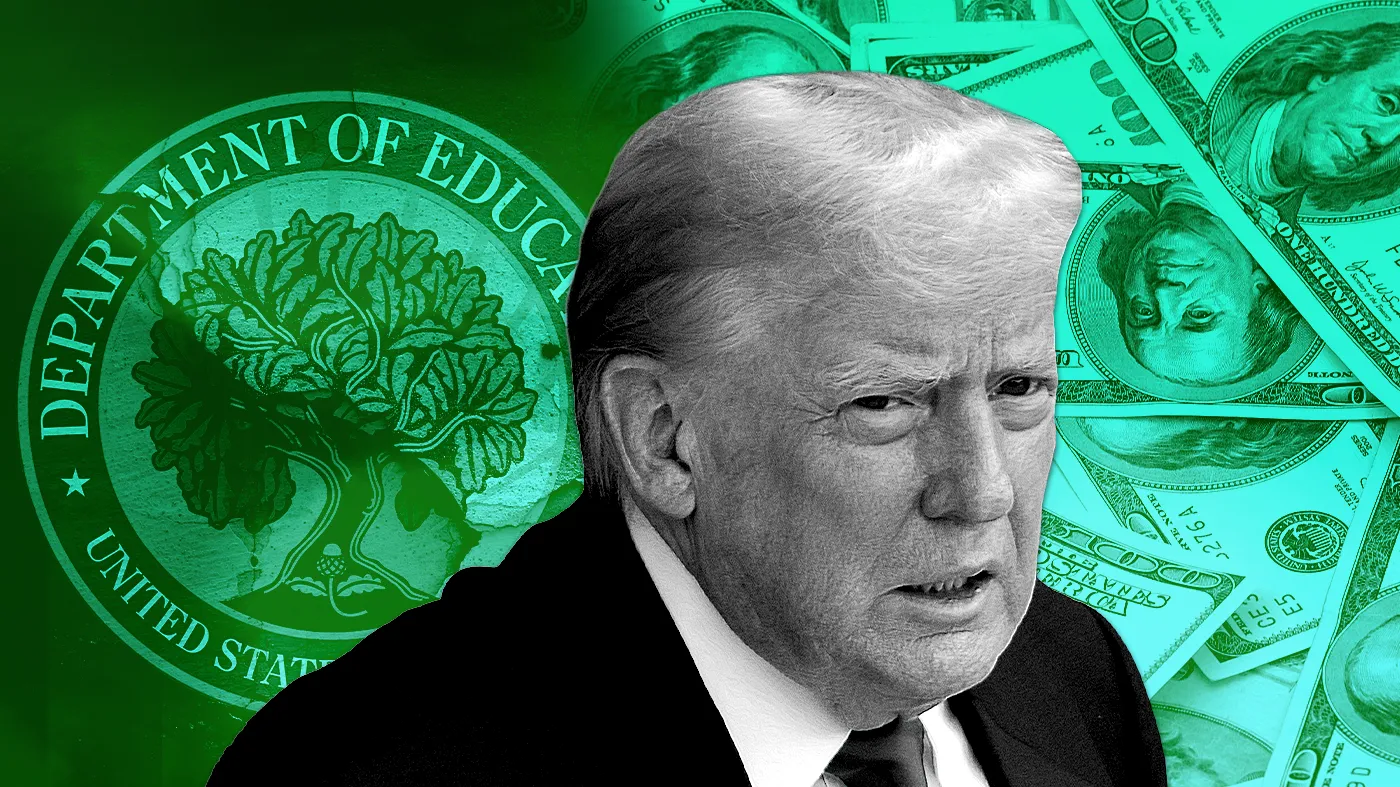
The Trump administration is preparing to alter college accreditation standards, a move that could cost universities millions of dollars and jeopardise students' access to federal aid. The changes, set to take effect next year, will require accreditors to assess how institutions promote intellectual diversity and the free exchange of ideas. These new criteria have sparked concerns about academic freedom and the potential for federal overreach.
According to the Department of Education, the final rules will direct accreditors to evaluate whether colleges and universities "prioritize intellectual diversity and the free exchange of ideas at colleges and universities, ensuring that students are exposed to a range of viewpoints." The practical implications of this mandate remain unclear, raising questions about how the standards will be applied and enforced.
Antoinette Flores, vice president of federal policy and government affairs at the Council for Higher Education Accreditation, warned that the regulations could become a tool for federal influence over institutional policies. She said, "The regulations, for the first time, introduce these new values into the regulatory process involving academic freedom, intellectual diversity. It gets into institutional policies and compliance with federal and state law, and how the department ultimately ends up interpreting and enforcing these pieces is going to matter a ton." Flores added, "But there is a risk that accreditation becomes a mechanism for federal influence over institutional decisions, institutional policies that have traditionally been within the purview of colleges and universities."
This is not the first time the Trump White House has attempted to use accreditation to align universities with its agenda. On the campaign trail, President Trump described accreditation as a "secret weapon" to reclaim institutions from what he called the radical left. He stated, "The time has come to reclaim our once great educational institutions from the radical left. Our secret weapon will be the college accreditation system."
Last year, the administration declared Columbia University in violation of federal antidiscrimination laws and recommended that its accreditor strip the school of status, a recommendation that the accreditor ultimately declined. If Columbia had lost accreditation, its students would have faced severe financial barriers, as federal student aid would have been cut off for a school with high tuition costs.
Jeremy Bauer-Wolf, investigations manager for the Higher Education program at New America, criticized the regulation as overly expansive. He noted, "Essentially, the administration can force institutions into doing a host of things through the accreditor. The accreditor here essentially functions as an intermediary, and so that's why I say that this regulation is overly expansive. It goes into areas that just simply do not have anything to do with accreditation."
In response, the Education Department cited a 2025 Northwestern University study that found 88 percent of students pretended to hold more progressive views to succeed academically. Ellen Keast, communications director for the under secretary at the Department of Education, defended the new rules. She said, "The Department's new accreditation regulations are a commonsense step toward restoring intellectual diversity by ensuring accreditors evaluate whether institutions are creating an environment where differing perspectives can be debated openly and fairly." Keast added, "The regulations do not mandate any specific policies, nor do they give the Department any authority to police speech. Instead, they reinforce a fundamental principle: truth emerges through rigorous debate, not enforced consensus. Our goal is to promote a culture of open inquiry and academic freedom, where ideas rise or fall on their merits."
Other administration efforts to influence colleges, such as attempts to block funding or restrict international student access, have been halted by the courts. The final accreditation rules could also face legal challenges. Edward Conroy, director of policy and stakeholder organizer at the Alliance for Higher Education, explained, "There's, of course, always legal challenges, so you have to show standing for that. But there's potential that some of the accrediting agencies could say that they are being harmed in some way by some of the standards." Conroy added, "Institutions maybe could challenge them as well, but standing gets a little bit murkier there."
The regulations are due to become effective in July. Flores noted the tight timeline, saying, "There's a very short timeline to get to July, and for accrediting agencies, they have to go through their processes for changing their standards, and so, I think they are looking at them now." She added, "I think in a lot of cases, because these concepts are so broad, and there is a lack of clarity of what the Department of Education is looking for on a lot of these concepts, they're kind of guessing in the dark."
Background on College Accreditation
College accreditation is a voluntary process by which independent accrediting agencies evaluate the quality and integrity of post-secondary institutions. Accreditation is essential because it determines whether a school can receive federal student aid, including loans and grants. The Department of Education and the U.S. Department of Labor recognize accrediting agencies that meet federal standards, and schools that fail to maintain accreditation may lose eligibility for federal funding.
Accrediting agencies assess a range of factors, from curriculum rigor and faculty qualifications to financial stability and student services. The standards are designed to protect students and ensure that educational institutions meet national benchmarks for quality.
What Intellectual Diversity Means for Universities
The new rules will require accreditors to examine how universities foster environments where multiple viewpoints are represented and debated. This could involve reviewing curricula, faculty hiring practices, and campus policies related to free speech. While proponents argue that such measures promote critical thinking, critics warn that vague criteria may lead to over-regulation and stifle academic freedom.
Potential Legal and Legislative Responses
Accrediting agencies and universities may seek judicial review if they believe the new standards infringe on their rights or exceed the Department's authority. Congress could also intervene by amending the Higher Education Act or passing legislation to limit the scope of accreditation oversight. Historically, courts have struck down attempts by the administration to use accreditation as a political tool, such as the 2020 decision that barred the Department from revoking a university's status over ideological concerns.
Impact on Students and Institutions
Should the regulations be enforced without challenge, universities may incur significant compliance costs, potentially diverting funds from academic programs. Students could face reduced access to federal aid if their institutions lose accreditation, particularly affecting those attending high-tuitio schools like Columbia. The broader educational landscape may see increased scrutiny of campus climates and a shift toward more explicit diversity and inclusion mandates.
What Happens Next?
Accrediting agencies are currently reviewing the proposed changes and preparing to adjust their evaluation procedures. The Department of Education will finalize the rules in the coming weeks, after which legal challenges may arise. Universities and policymakers will monitor the process closely, as the outcome could reshape the balance between federal oversight and institutional autonomy in higher education.