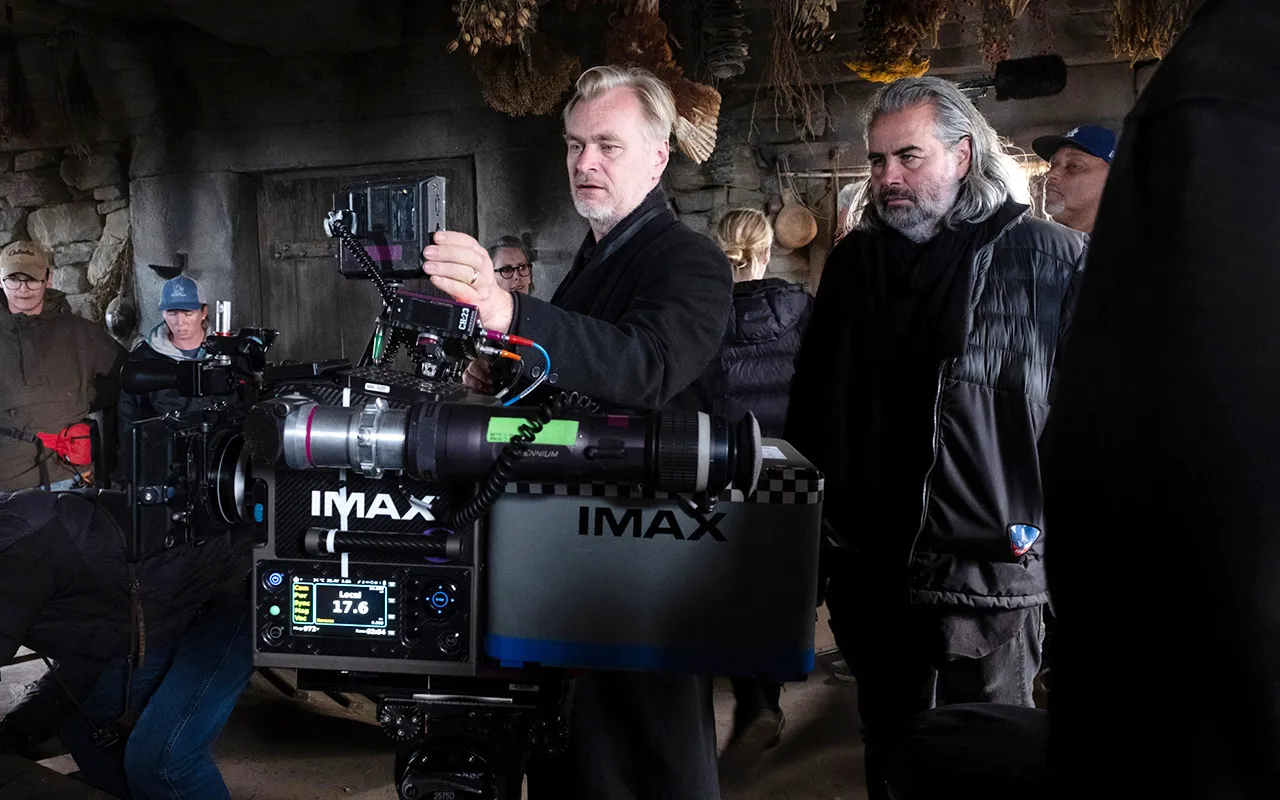
Casting director John Papsidera spoke about collaborating with director Christopher Nolan on the adaptation of Homer's epic poem The Odyssey, assembling a massive cast that features Matt Damon as Odysseus. Speaking at the SCAD Savannah Film Festival during a crafts panel, Papsidera explained that Nolan likes to give him pop quizzes without a heads-up when starting a project, eventually leading them to choose Damon to portray an everyman worker.
With Damon secured as Odysseus, the casting process expanded to find the right actress for Circe, a witch who transforms the hero's men into pigs. Papsidera noted that Samantha Morton was a brave performer who brought a remarkable presence to the role, shifting from an initial human vulnerability to a terrifying transformation.
Casting the Major Roles in The Odyssey
Papsidera continued discussing the family dynamics and supporting roles, revealing the selection of Tom Holland as Telemachus and Anne Hathaway as Queen Penelope. According to the casting director, the production aimed to honor figures from mythology and literature by giving them powerful faces, similar to the historical approach used in Oppenheimer.
Papsidera added that narrowing down choices for Telemachus naturally led to Holland, ensuring every character encountered along the journey held a distinct and grounded space. Every single figure in the narrative required a larger-than-life presence while maintaining a firm connection to reality.
Designing Locations and Building Sets
Production designer Ruth De Jong detailed the global location scouting process, which included using a fifth-century castle in Italy perched approximately 1,030 feet above sea level to represent Ithaca. De Jong also constructed multiple Trojan horses standing approximately 35 feet tall, while the beaches of Essaouira on Morocco's Atlantic coast served as the discovery site and boat launch.
Troy spanned an immense area covering more than 2.5 acres, or over 110,000 square feet, providing enough space to accommodate 2,000 extras and more than 60 structures. For Circe's chapter, De Jong bypassed traditional forest imagery to focus on the flora, fauna, and landscape of the Scottish Highlands, constructing a hut right on the edge of a sheer cliff.
Creating the Costume for Circe
Costume designer Ellen Mirojnick received a clear directive from Nolan stipulating that goddesses like Circe, Calypso, and Athena must be independent women who take care of themselves without relying on fantasy tropes. Mirojnick collaborated with Morton on a sketch that blended male and female traits through the incorporation of leather, belts, and collected accouterments.
These gathered items represented the belongings of past travelers who had passed through her door, effectively grounding the character deeply in her history. De Jong concluded by comparing her collaboration with Nolan to playing basketball with Kobe Bryant, praising the open and demanding daily communication.
Background on Homer and Ancient Epic Poetry
The Odyssey stands as one of two major ancient Greek epic poems attributed to the poet Homer, with the Iliad being the other foundational work of western literature. Composed likely near the end of the eighth century BC, the text chronicles the arduous ten-year journey of Odysseus, king of Ithaca, as he attempts to return home following the fall of Troy. Scholars and historians have studied these verses for centuries to understand ancient Greek values, maritime culture, and mythological traditions.
The Production Scale of Modern Blockbusters
Bringing ancient epics to the modern silver screen requires immense logistical coordination, extensive set construction, and international location scouting across diverse continents. Filmmakers frequently use practical effects and massive physical builds alongside digital technology to create immersive environments for historical and mythological storytelling. Craft designers work closely with directors to ensure that every costume, set piece, and prop reflects both the narrative requirements and the psychological depths of the characters.