Iraqi-Swiss filmmaker Ali Toffan Al-Fatlawi drew inspiration for The Blind Ferryman from a thought during Iraq's civil war in 2006, wishing blindness might spare his countrymen from violence. The fiction feature debut explores perception and had its world premiere at the 47th Cairo Intl. Film Festival.
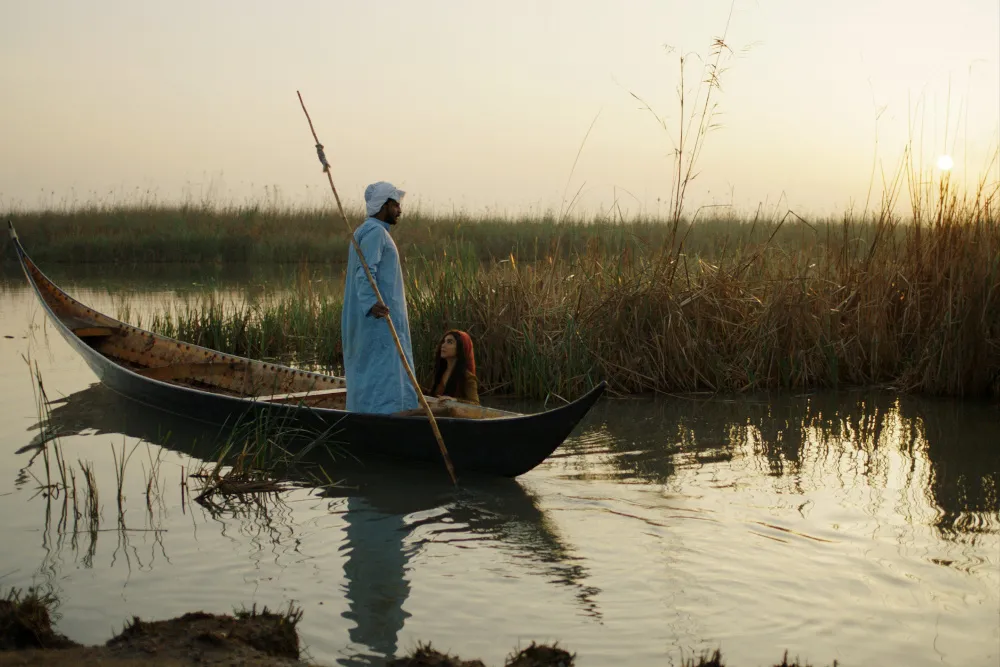
Set in Iraq's southern marshlands, the film follows blind boatman Ayoub, played by Ahmed Moneka, who falls in love with a mysterious woman named Genya, played by Sam Rahmani, whom nobody else can see. Al-Fatlawi explained to Variety that he wanted to explore emotional perception, noting that people have lost the ability to think with their feelings.
Background on the Creation and Mythology of The Blind Ferryman
The character of Genya draws on stories Al-Fatlawi heard from his father about a mythical woman who appeared to men in the marshlands, as well as ancient Sumerian mythology and the Epic of Gilgamesh. The filmmaker was particularly fascinated by the prominence of female deities in ancient Mesopotamian mythology, questioning how those figures gave way to the predominantly male image of God that characterizes contemporary religion.
The marshlands themselves were equally important to his vision beyond their mythical associations. They offered Al-Fatlawi an opportunity to portray a side of Iraq rarely seen on screen, challenging the familiar images of war, poverty and destruction that have long dominated international representations of the country.
Al-Fatlawi insists that he does not want to do a movie which shows that they are poor people asking for sympathy. He is very careful not to make a movie which makes the West feel good about their life.
Casting and Visual Style Choices
His determination to challenge preconceived notions also informed his casting. Ayoub is a Black Iraqi, while the threatening outsider who arrives from the city is a white, blue-eyed man dressed in religious clothing, a deliberate challenge to stereotypes about who looks like a hero and who looks like a villain.
That tension between appearance and reality runs throughout the film, shaping everything from its characters to its visual language. A longtime painter and performance artist who later expanded into filmmaking, Al-Fatlawi developed the screenplay through drawings, often painting scenes before putting them into words.
Working with his cinematographer, he chose the 4:3 aspect ratio to bring characters closer together within the frame, while composing wide shots that divide the image equally between the landscape and its reflection in the water. Al-Fatlawi instructed Moneka to keep his eyes open and fixed throughout the film, resisting conventional portrayals of blindness that might invite pity.
Production Challenges and International Support
The project began development in 2015, receiving support from the Doha Film Institute, El Gouna and Red Sea film festivals and participating in Cannes L'Atelier program in 2022. That same year, it secured approximately $2.5 million in financing.
After a 45-day shoot in Iraq, Al-Fatlawi still had one crucial sequence to complete, which was an underwater scene he had envisioned years earlier. Rather than abandon it or spend an estimated $100,000 to $150,000 on a water tank, he found a cenote near Playa del Carmen, Mexico, whose submerged vegetation bore a striking resemblance to a painting he had made in 2021. Working with two underwater photographers who had never shot a feature film, he completed the sequence for a relatively modest $15,000.
What Happens Next for the Film
At the 47th Cairo Intl. Film Festival, Al-Fatlawi says he has been particularly moved by audiences discovering meanings in the film that he had never consciously intended. He notes that audiences add things which make the movie even richer, and that they have the doors open and can enter from everywhere.