Egyptian filmmaker Sara Shazli returned to Cairo from film school in Cuba to shoot her debut documentary, 'Your Daughter'. The film, which premiered at the 47th Cairo International Film Festival, follows Shazli's evolving understanding of her mother, Marianne Khoury, a long-time producer and filmmaker who worked closely with the legendary director Youssef Chahine.
What the Film Explores
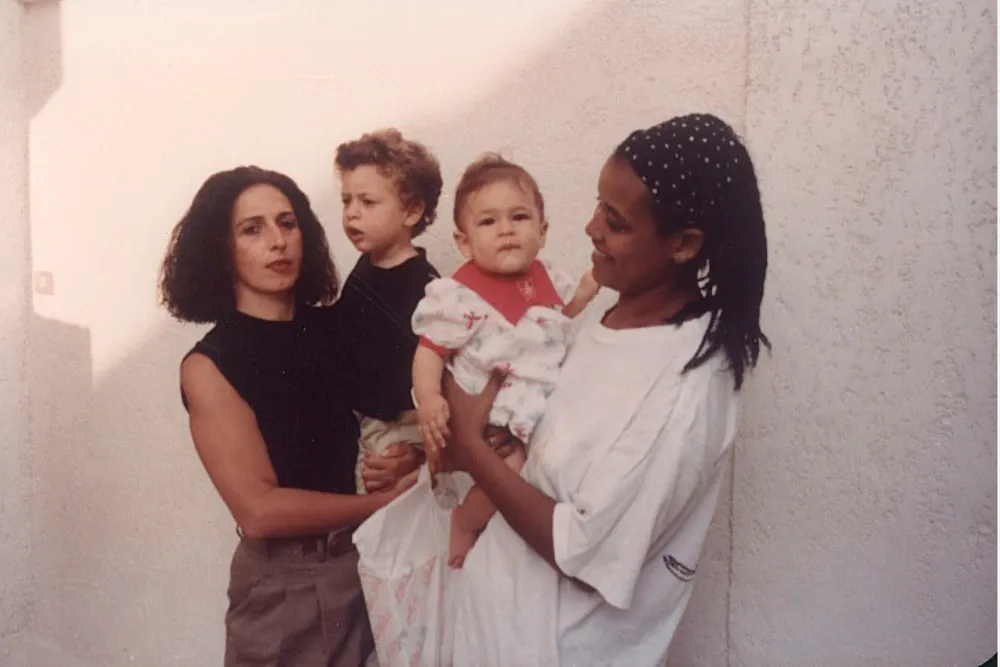
Shazli began the project as a search for Woody, the nanny who helped raise her, hoping to reconnect with a key figure from her childhood. During the process, she and her peers discovered that the footage of her mother carried a more intimate narrative. "Someone told me, 'Look at how you film your mother. You film her with so much love,'" she recalled. The realization that her love for Khoury required confronting painful questions became the core of the documentary.
Mother-Daughter Dynamics
Growing up, Shazli felt her mother's absence. She describes her mother as a woman who believed "you have to be independent from any man in the world," an extreme stance that left Shazli questioning why both parents could not share responsibilities. Khoury built her career while shouldering most of the family's financial and domestic duties. Shazli admired her determination but also sought a partnership where both parents shared childcare and finances.
Influence of the Chahine Legacy
Living in a household that celebrated Youssef Chahine's work, whom Shazli affectionately calls "Uncle Joe", added pressure. She felt compared to a titan and struggled to establish her own identity as a filmmaker. Studying in Cuba provided distance from Egypt and the Chahine family, allowing Shazli to discover her own voice and narrative style.
Reaching a New Perspective
Through repeated conversations with Khoury, Shazli gained empathy. She realized her mother's affection was shaped by a different upbringing where love was expressed through knowledge rather than time. This shift helped Shazli see her mother beyond the role of a missing parent, recognizing Khoury's continued devotion to her work after taking over Misr International, Chahine's production outfit, following his death.
Becoming a Mother and Shifting Admiration
Shazli's own motherhood added another layer of insight. She now admires her mother's energy and ambition, noting that she herself does not share the same drive. "I'm actually happy that I don't have that because you suffer when you have that," she says, acknowledging the toll of relentless ambition.
Filmmaking as Healing
For Shazli, filmmaking is a therapeutic process. She states, "If there's no problem, there's no film. If there's nothing to discover, to heal, to dig deep into, there's no film." The documentary also sparked unexpected reactions; men in the audience reported the film encouraged them to speak with their own parents. Shazli says, "When somebody comes and tells you, 'You made me want to speak to my mother,' or 'You made me want to speak to my father,' that's exactly what it should do."
Future Projects
Having explored both parents on screen, Shazli is ready to move toward fiction. "I did a film about my dad. I did a film about my mom. I'm done," she says. "Now I want to have more fun. I want to write a fiction. I want to work with actors. I want to create differently now."
Background on Key Figures
Marianne Khoury is a seasoned Egyptian producer and filmmaker who worked alongside Youssef Chahine, a celebrated director known for his contributions to Arab cinema. After Chahine's death, Khoury took over his production company, Misr International, continuing his legacy. Youssef Chahine, often called "Uncle Joe" by Shazli, was a prominent figure whose films explored social and political themes across Egypt and beyond.
What Happens Next
Shazli's next steps involve writing and producing a fictional feature. While the documentary has already sparked dialogue about family relationships, her future projects aim to broaden her creative expression and collaborate with actors in new narratives.