Elon Musk is a man with many problems. He has to develop his Starship super rocket into an operational spacecraft capable, among other things, of landing people and cargo on the moon. He has to do that while running his other businesses and fending off a newly elected political class both in Austin and Washington, who regard him with great hostility.
Details of the Starship Flight Test 15 Mission
On Nov. 13, SpaceX conducted the 15th test of the Starship super rocket. The goals were to capture the Super Heavy first stage booster back at the launch pad, send the Starship into low Earth orbit, deploy 26 of the most advanced versions of the Starlink communications satellites, then capture the Starship back at the launch pad.
The Starship reached orbit and deployed the Starlink satellites. But, because of a guidance issue, SpaceX diverted the Super Heavy stage to a splashdown in the Gulf and initiated the destruct mechanism to destroy the vehicle as it hit the water.
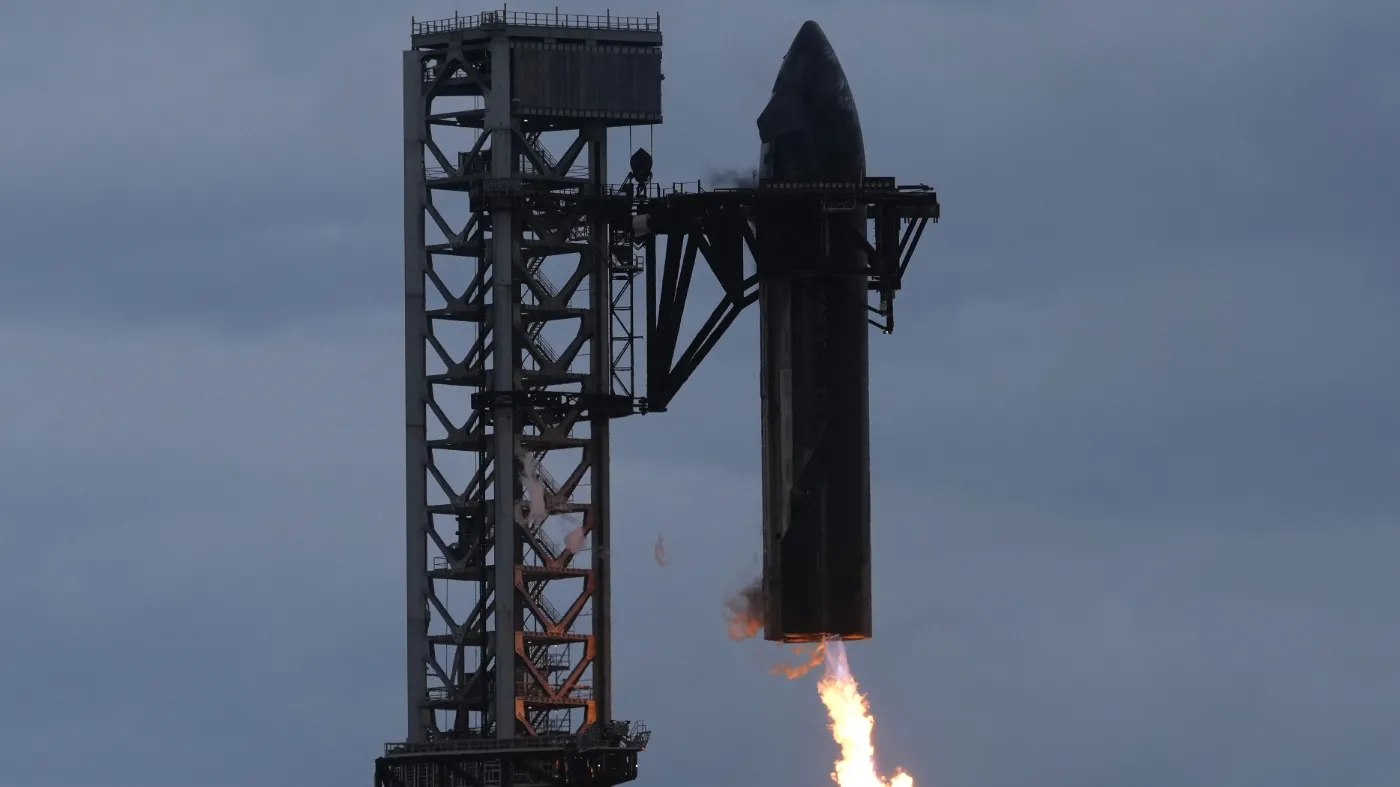
However, the very next day, SpaceX brought the Starship back from orbit and sent it safely back to the launch pad to be captured by the Mechazilla arms. In so doing, Musk's company took a giant leap toward the day when Starship flies regularly to and from space, enabling the opening of commercial space to the moon, Mars and beyond.
Engineering Feats and Future Rocket Development
Starship is the size and weight of a small building. The feat of bringing it out of low Earth orbit, sending it down to the pad at Starbase while slowing its velocity and securing it with the Mechazilla arms was one of precision engineering unparalleled in human history. The capture of the Starship rivals the Artemis crewed lunar mission as the greatest space story of 2026.
SpaceX has a flown Starship freshly back from space that its engineers can study and use the results to make design changes to future generations of the launch vehicle. Then the company can fly future tests to develop an operational rocket, which will be even larger than the one that flew during Flight Test 15.
SpaceX has to learn how to capture both the Starship and the Super Heavy first stage consistently. Then the company can achieve total reuse of its giant rocket and bring down launch costs even further. The company also has to master in-orbit refueling of the Starship, the better to turn it into a cislunar and later an interplanetary spacecraft.
Political Dynamics and Congressional Reactions
Flight test 15 provided an eloquent answer to newly elected Democrats due to take power in both Washington and Austin. As mentioned before, Democrats poised to take office in January are gunning for SpaceX and Musk, even though such a lawfare campaign might jeopardize the Artemis return to the moon program.
Douglas MacKinnon goes even farther and suggests that an attempt to take down Musk may place the human species at risk. The SpaceX CEO's desire to spread humankind beyond the Earth is inspired as a way to enable its survival, despite the threat of nuclear war, biological holocaust or some other calamity.
Fortunately, SpaceX's capture of the Starship has elicited bipartisan praise in Washington. A poster on X compared Musk to the Ayn Rand hero Howard Roark, noting the image of him personally inspecting the Starship along with SpaceX engineers. That would place Musk's numerous enemies as Rand's villains, not a nice role to play.
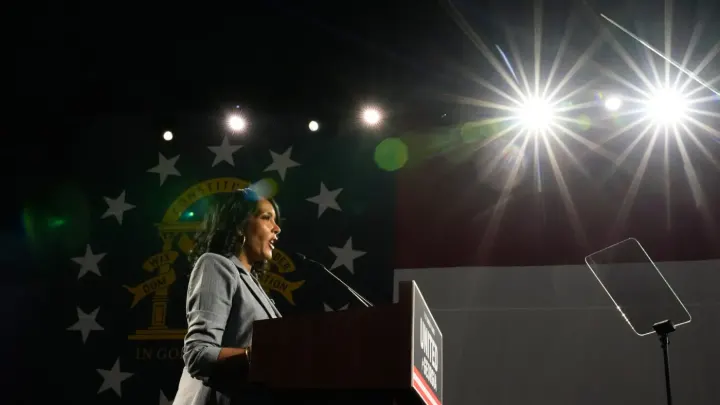
U.S. Senator-elect James Talarico (D) has already indicated that he might be willing to work with Musk. He noted, despite the SpaceX CEO's efforts to deny him a seat in the Senate, that he is a fan of SpaceX and Telsa.
Talarico has provided a way for Musk's various enemies to climb down from their threats of lawfare. They had threatened hearing after hearing upon the theme of \u201cAre you or have you ever been a capitalist?\u201d Somewhere, the late Sen. Joe McCarthy (R-Wis.) is appreciating the irony.
How about instead, any congressional hearing start with, \u201cMr. Musk, you are building reusable rocket ships, electric cars, the technology that can cure blindness and paralysis, and AI data centers in space. How can we help?\u201d
Thus, the hearings would have a positive legislative purpose and not be a way to torment a political enemy.
Background on SpaceX and the Starship Program
Space Exploration Technologies Corp, commonly known as SpaceX, is a private aerospace manufacturer and space transportation services company headquartered in Hawthorne, California. Founded in 2002 by Elon Musk, the company aims to reduce space transportation costs to enable the colonization of Mars. The development of the Starship system represents a central component of these ambitions, combining a reusable Super Heavy booster with the Starship spacecraft.
The National Aeronautics and Space Administration (NASA) has awarded SpaceX lucrative contracts under the Artemis program to develop a lunar lander variant of Starship. This vehicle is intended to land American astronauts on the surface of the lunar south pole. Achieving full reusability of both flight stages remains a critical hurdle for meeting the stringent cost and schedule requirements of deep space exploration.
Understanding the Mechazilla Catch System
The catch system, frequently called Mechazilla, represents a radical departure from traditional vertical landing methods that use landing legs. Located at Starbase in Boca Chica, Texas, the launch and catch tower features two large mechanical arms designed to intercept the descending Super Heavy booster and the Starship spacecraft in mid-air. This mechanical approach eliminates the weight of landing legs, allowing the vehicle to carry more payload into orbit.
Engineering teams analyze flight data following each test to refine the automated guidance algorithms required for precision catches. The successful capture during the recent test validates years of computational fluid dynamics modeling and structural testing. Future iterations will require even greater accuracy as the vehicle scale increases.
The Broader Context of Commercial Space Exploration
Commercial spaceflight has transformed rapidly over the past decade through increased private sector participation and declining launch costs. Companies like SpaceX compete and collaborate with traditional aerospace contractors to supply orbital delivery services for commercial and government payloads. The deployment of mega-constellations like Starlink relies entirely on high-cadence, heavy-lift launch capabilities.
As regulatory bodies adapt to frequent orbital operations, policy discussions increasingly focus on airspace management, environmental reviews, and international space law. The intersection of private enterprise and geopolitical strategy creates a complex environment for aerospace executives navigating government contracts and legislative oversight.