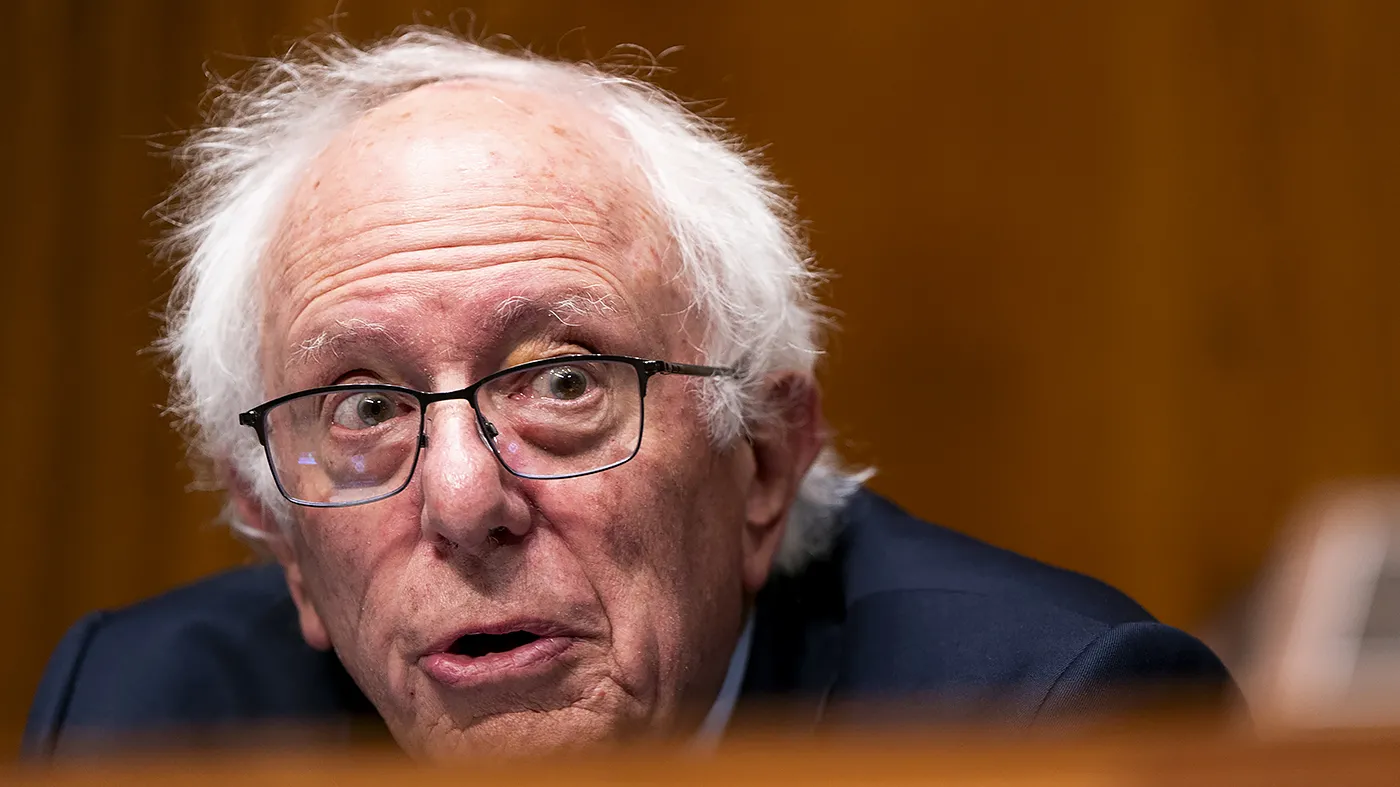
Sen. Bernie Sanders (I-Vt.) and Sen. Elissa Slotkin (D-Mich.) stated they will not be backing Sen. Chuck Schumer (D-N.Y.) as leader of the incoming Democratic majority in the Senate. Sanders, a former presidential candidate and leader of progressives in the Senate, said Schumer had not been doing enough to end income and wealth inequality.
“I don't want to get into specific proposals, but I think the time and the moment when you have more income and wealth inequality than we've ever had in the history of this country, when our younger generation were on the lowest standard of living than their parents, the time is now to deal with the need to create an economy that works for all, not just the people on top,” Sanders said in response to a question about Schumer. “Do I think Chuck has been leading in that direction? No.” he said.
Slotkin, at the same press conference, stated she was “seeking change.” She is calling for any leader to put out a plan of what they would do with the first 100 days and beyond on issues like artificial intelligence. She called for her colleagues to withhold quorum on a leader vote, if there is only one candidate, until such a plan materializes.
“We need leadership that's going to govern for the entirety of the caucus, for folks from blue states, purple states and red states,” said Slotkin, who is seen by some as a possible presidential candidate in 2028. Sanders said he and Slotkin had just come from a meeting with Schumer where the current minority leader articulated some ideas for such plans, but Sanders stated that did not go far enough. Both stated they hoped for a competitive leader election.
The announcement comes as Senate Democrats are brewing over whether to reappoint Schumer or back a challenger. Schumer has maintained that he is confident he will win, as have other Democrats, but progressive groups and some incoming freshmen senators have called for new leadership. Sen. Chris Van Hollen (D-Md.) is seen as one potential challenger, and he has flip-flopped on a run in recent days. He said Monday night that he is “in listening mode” on whether to run after hearing from many people who want him to do so.
Slotkin stated she and Van Hollen had “a really productive conversation” on Monday but declined to directly endorse him, repeating that she wants a concrete and different governing plan from any candidate. She criticized the caucus for not having expressed more of a plan of how to govern and what to do in the two years since she entered the Senate. “I acknowledge that I had conversations with Senator Van Hollen yesterday because I have a point of view,” Slotkin said. “I've sat in that room and tried to figure out what our plan was for two years, and I think maybe it's because I come from a national security background, you can't lead people if you can't lay out where you're going, and maybe one thing when you're in the minority, but it's very different when it's now your responsibility to deliver.”
The lukewarm sentiment on Schumer includes some of the incoming crop of Senate Democrats. Sen.-elect Abdul El-Sayed (D-Mich.) stated again earlier this week he would back Van Hollen over Schumer. Sen.-elect Annie Andrews (D-S.C.) stated Friday that she wants “generational change” in Senate leadership, after pledging during the campaign not to support Schumer. Sens.-elect Adam Hamilton (D-Kansas) and Troy Jackson (D-Maine) have stated the same.
Other prominent voices in the party have declined to give Schumer their support, including fellow New Yorker Rep. Alexandria Ocasio-Cortez (D), who stated Tuesday that Schumer's future is up to the Senate but reiterated that the calls for new leadership “are a sentiment that is seen in a lot of places.” Ocasio-Cortez does not have a say in Schumer's election as leader but does represent a younger and more progressive wing of the party, many of whom want her to challenge Schumer for his Senate seat in 2028.
But despite the mounting calls for someone different, no candidate has stepped forward yet to challenge Schumer, who has led Democrats for nearly a decade. Schumer is seen as being somewhat responsible for Democrats' sweeping victory thanks to his recruitment of and support for winning candidates.
Background On Senate Leadership Structure
The United States Senate operates under a leadership structure defined by party conferences, where members elect party leaders to guide legislative strategy, committee assignments, and floor votes. The Senate Democratic caucus selects a leader to serve either as Majority Leader or Minority Leader depending on which party holds the numerical advantage in the chamber. Chuck Schumer has held the top position for Senate Democrats since 2017, succeeding retiring Nevada Senator Harry Reid. During his tenure, Schumer has managed a diverse caucus ranging from conservative Democrats representing rural states to progressive members aligned with Bernie Sanders.
Internal party elections typically occur behind closed doors before the start of each new two-year congressional session. Individual senators hold significant leverage in these votes because party caucuses usually strive for consensus, making public defections or challenges rare events. The process allows members to voice policy disagreements, negotiate committee leadership posts, and demand strategic shifts from incumbent leaders. Discontent among caucus members often surfaces when legislative priorities stall or when members feel disconnected from the central decision-making apparatus controlled by the leadership team.
The Role Of Progressive And Moderate Factions
The friction surrounding the leadership vote reflects ideological divisions between the progressive and moderate wings of the Democratic Party. Bernie Sanders has long functioned as the standard-bearer for progressive politics in the United States, using his platform to advocate for economic reforms, universal healthcare programs, and policies aimed at reducing wealth disparity. His critique of existing leadership centers on the argument that the party must adopt more aggressive populist economic measures to address stagnation among working-class families and younger generations who face higher living costs.
Conversely, moderate and swing-state members like Elissa Slotkin emphasize the necessity of appealing to a broad electoral coalition that includes voters in purple and red states. Slotkin's background in national security shapes her emphasis on structured planning, clear operational objectives, and transparent governance frameworks. These differing electoral pressures frequently create tension over how the party communicates its legislative agenda to the public and whether the caucus should prioritize bold ideological goals or pragmatic compromise to secure legislative victories.
Incoming Freshmen And Potential Challengers
The arrival of newly elected senators injects fresh dynamics into internal party deliberations. Freshmen members often enter Washington with distinct mandates from their campaign trails, where some pledged to push for generational renewal and new approaches to legislative management. Figures such as Chris Van Hollen have emerged as potential focal points for members seeking an alternative to the established leadership hierarchy. Internal discussions among these senators involve evaluating whether a contested leadership election can foster a more collaborative policymaking environment within the upper chamber.
While institutional loyalty and seniority have historically defined Senate politics, the public airing of grievances by both veteran lawmakers and incoming figures demonstrates a shift in how internal party disputes are conducted. Candidates exploring a potential challenge must weigh the risks of dividing the caucus against the demands from various factions for structural reforms. As discussions continue, the focus remains on whether challengers will formally enter the race and whether party rules will be used to demand detailed governing plans before the final leadership vote takes place.