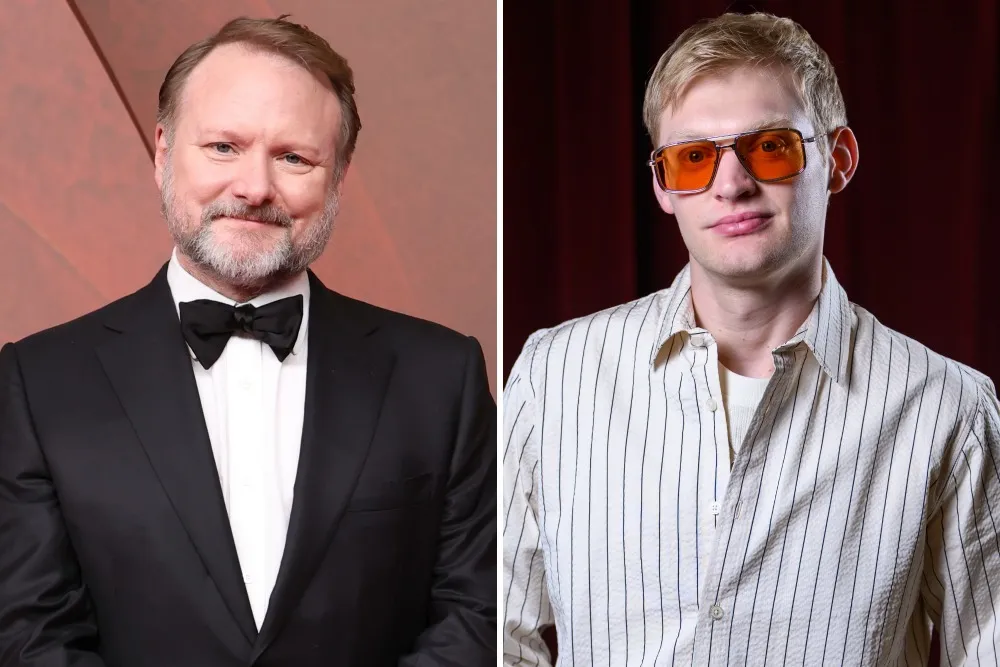
Director Rian Johnson recently expressed deep optimism regarding the trajectory of indie filmmaking during an appearance at the Marrakech Film Festival. Speaking on Sunday afternoon, the man behind major cinematic projects specifically highlighted YouTube as a vital avenue for emerging directors to share their creative work.
Discussing his recent exchange with 27-year-old director Curry Barker, whose career took off after online exposure, Rian Johnson compared digital video platforms to historical indie showcases. "YouTube to me isn't a new form or some new scary paradigm," Johnson said. "YouTube is just what Sundance was in the '80s. It's a way to get your movie out there so that people can see it."
While acknowledging that conventional film festivals still hold immense value for early-career projects, the filmmaker emphasized that modern digital platforms provide distinct advantages. "Even though there are a lot of things that are really hard right now about starting out as a filmmaker, that's one of the exciting things," he continued. "Besides festivals, there are also other ways to build audiences, by making shorts and getting them out there and people discovering them. And there's a million different ways to get your feature out there."
The journey of Curry Barker serves as a clear illustration of this digital shift. After building an online audience alongside comedy partner Cooper Tomlinson on their channel "that's a bad idea," the creator moved into horror with the 2003 short "The Chair." His subsequent project, the found-footage horror film "Milk & Serial," was produced on an $800 budget and released for free on YouTube in 2024.
That viral release caught the attention of major industry players, prompting Curry Barker to sign with UTA in 2025 and transition into theatrical releases. His supernatural horror film "Obsession" premiered at the Toronto International Film Festival in 2025, sparked a bidding war, and secured distribution with Focus Features before hitting theaters in May 2026. Similar paths have been forged by creators like Kane Parsons, whose viral "Backrooms" videos led directly to an A24 feature film deal.
Rian Johnson brings personal perspective to the traditional release pipeline, having launched his 2005 feature debut, "Brick," at Sundance, where it secured a special jury prize. "There's something really special about watching someone's first feature," Johnson said, commending the Marrakech festival for prioritizing debut and sophomore projects. "You know they have been cooking it and its been building in their mind and they've been thinking about it, so in some ways there's nothing more expressive or purer than seeing a first feature from someone."
Reflecting on his early career, the director noted the immense difficulty of securing funding and distribution for "Brick," a project he started writing at age 22. "I spent my 20s trying to get it made and failing and I finally made it when I turned 30," he said. "So it took me eight years to get it made. And all this time the idea was baking and stewing in my head."
Limited financial resources meant the production team had to complete shooting in just 19 days. "I think anyone who's making a movie on that tight a schedule knows the only way to do it is by prepping and knowing what you're doing when you get in there," he explained. "And you just do it because you have to do it," he continued. "I don't know if the less resources felt like less resources, it just felt like this is the way we're making this particular movie."
Despite changing distribution avenues, the core value remains anchored in the quality of the production itself. "If you make something that connects with people, and if you have something to say and you have something in your heart, and you've practiced your craft so you can do it effectively, that's still an incredibly rare thing and something that everybody is looking for," he stated.
"Whether it gets into a festival or whether people start discovering you online or whatever, there's so many things that make it hard," Johnson concluded. "Maar I truly believe that is the gold coin that everybody is searching for in the world. So the more opportunities you have in the world to do that and get your work out there, the better, I think."
Background on Independent Film Distribution
Independent film distribution has historically relied on major film festivals such as Sundance, Toronto, and Cannes to secure studio backing and theatrical runs. Directors traditionally spent years pitching scripts to traditional financiers before securing production budgets. The rise of digital video platforms has transformed this pipeline by allowing creators to bypass traditional gatekeepers entirely and build direct audiences online.
The Evolution of Microbudget Cinema
Microbudget cinema has gained significant traction as digital camera technology and editing software have become widely accessible. Creators can now produce feature-length projects for a fraction of historical studio costs. When combined with free online hosting platforms, these low-cost productions can achieve viral reach without requiring massive marketing expenditures from traditional studios.