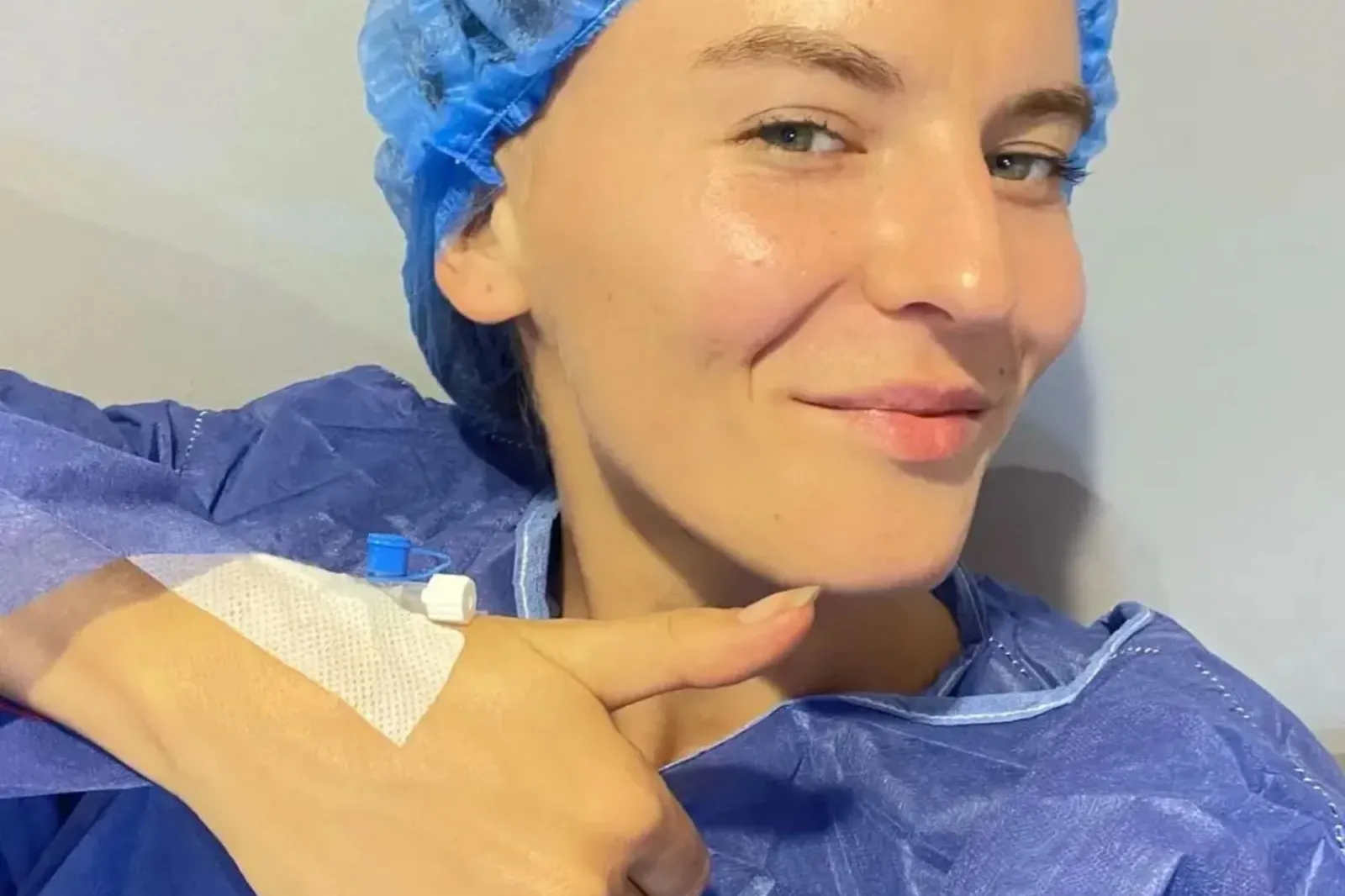
A 31-year-old mother-to-be from Reading revealed she paid £3,000 to choose her baby's gender in Egypt, a procedure illegal in the United Kingdom. The decision has drawn criticism online, with some calling her a "bad mum".
Mary Grace Stewart and her partner George flew to Cairo in October to undergo gender-selection IVF at PyraMedicine. The couple had been planning to start a family for a year, and the cost of UK IVF had prompted them to look abroad.
Mary, a graphic designer, said her lifelong dream had been to become a mother of girls. She explained, "I thought about it for my whole life. I always imagined myself as a girl mum and loved the sisters and mother-daughter bond we had with me, my sisters and my mother. I've always thought if only I had a choice I'd definitely have girls when I start a family."
When Mary and George finally decided to travel, even her own family described her decision as "crazy". She said the clinic in Egypt offered a price that fit their budget and the option to choose the baby's sex, which was not available in the UK.
"We decided to travel because of the cost of IVF in the UK, the legality of gender selection in Egypt, and their prices were affordable, as well as the health care being more convenient there," Mary told an online audience. She added that travelling to Egypt was cheaper than private fertility treatment in the UK or the US.
Mary posted a 30-second video of her journey on social media, which quickly went viral. The clip attracted a flood of hateful comments, with strangers labeling her a bad mother and saying, "I don't deserve to be a mother," or "I hope you have a boy." She said, "It's hard when strangers judge you from a 30-second clip. I literally don't have a problem with my baby being a boy too, no hate against them - they misunderstood me."
She described the emotional toll of the online backlash and how she chose to focus on supportive messages. "I just scroll past and focus on all the lovely, supportive women in my comments," she said. She also revealed that her family, who initially thought she was crazy, had become her biggest support network.
Mary said she wanted to document the process as a video journal to share her experience with other women who might be quietly researching gender-selection IVF. "I wanted to be that person for other women who might be quietly looking into it and feeling overwhelmed," she added.
The couple has now completed ovarian stimulation and egg retrieval in Egypt. Mary's embryos are frozen, and they plan to return for embryo transfer. She explained the next steps: "Maybe around 10 to 14 days, often called the 'two-week wait,' to take a blood pregnancy test and find out if it has been successful. The medical process itself is the exact same as standard IVF. Eggs are retrieved and fertilised in the lab. At that point, the embryologists perform PGT genetic testing, which first screens the embryos for chromosomal health and also reveals each embryo's sex, so only a healthy embryo of our chosen gender is transferred."
Background: IVF and Gender Selection in the UK
In vitro fertilisation (IVF) is a fertility treatment that fertilises eggs with sperm in a laboratory before placing the embryo in the uterus. In the United Kingdom, the National Health Service (NHS) offers up to three full cycles of IVF for women aged 39 or under who meet specific eligibility criteria, such as having tried two years of unprotected intercourse or twelve cycles of artificial insemination. Women aged 40 to 42 may receive one full cycle under similar conditions. The NHS also requires tests to confirm ovarian response to fertility medicine.
Gender selection is not permitted under UK law. The Human Fertilisation and Embryology Authority (HFEA) prohibits the use of pre-implantation genetic testing (PGT) to determine an embryo's sex for non-medical reasons. Consequently, couples seeking gender-selection IVF must travel abroad to countries where the practice is legal, such as Egypt, where clinics like PyraMedicine offer the procedure at a lower cost.
What Happens During Gender-Selecting IVF?
The process begins with ovarian stimulation, where fertility drugs are used to produce multiple eggs. After retrieval, the eggs are fertilised in a laboratory. Embryologists then perform PGT, which screens embryos for chromosomal abnormalities and determines sex. Only embryos of the desired gender that pass the health screen are transferred back into the uterus. The couple then waits the typical two-week period before taking a blood test to confirm pregnancy.
Legal and Ethical Considerations
UK regulations strictly prohibit gender selection for non-therapeutic reasons, citing concerns over societal imbalance and ethical misuse. In contrast, Egypt's regulatory framework allows the procedure, and many international patients travel there for affordable IVF and gender-selection services. The legality of the practice abroad does not change the fact that the UK law considers it illegal, leading to public debate when cases like Mary's become public.
Public Reaction and Online Harassment
Mary's video sparked a wave of criticism from strangers who felt the choice of gender was unethical. The comments ranged from supportive to vitriolic. She reported receiving messages from women who were also researching or had undergone the same procedure, indicating a hidden community of patients seeking gender-selection IVF.
Despite the backlash, Mary emphasized that she does not hate boys and that her decision was driven by personal desire and financial considerations. She urged viewers to focus on supportive messages and to consider her story as a way to inform others about the realities of gender-selection IVF.
Next Steps for the Couple
Mary and George are awaiting the results of the blood test after the two-week wait. If successful, they will schedule another trip to Egypt for embryo transfer. The couple remains optimistic and hopeful about the future of their family.
Key Points
- Mary Grace Stewart, 31, from Reading, paid £3,000 for gender-selection IVF in Egypt.
- The procedure is illegal in the UK but legal in Egypt, where PyraMedicine offers it.
- Mary's video drew online hate, but she also received supportive messages.
- She and partner George have completed egg retrieval and are awaiting pregnancy test results.
- UK NHS provides up to three IVF cycles for eligible women aged 39 or under.
FAQ
- What is the cost of gender-selection IVF in Egypt? The couple paid £3,000 for the procedure at PyraMedicine.
- Is gender selection legal in the UK? No, it is prohibited by the Human Fertilisation and Embryology Authority.
- What are the next steps after egg retrieval? The embryos are frozen, and the couple will return for embryo transfer after a two-week wait and pregnancy test.