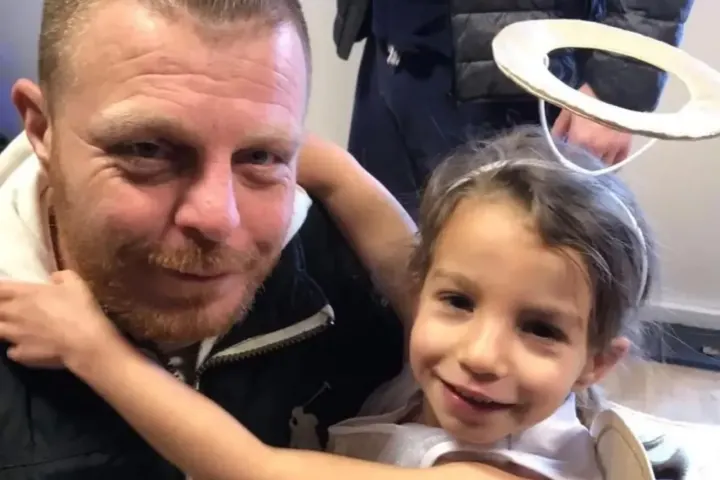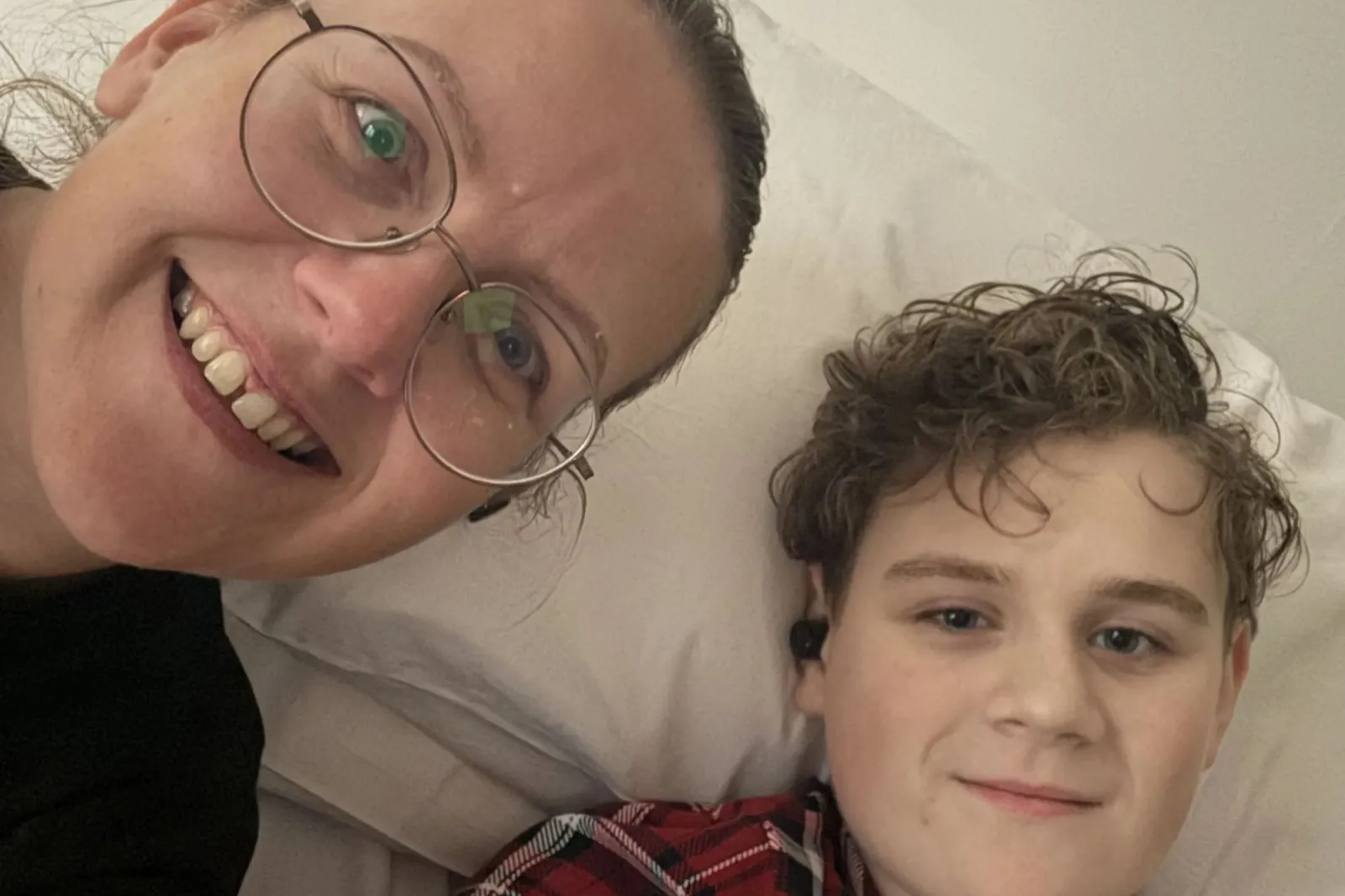
When Amy-Jessica Millard lost her appetite and experienced other health issues, doctors initially blamed her son Theo's symptoms on anxiety over her own cancer diagnosis, but it was actually a sign that he had cancer too. The mum-of-three was diagnosed with breast cancer in March 2024. Amy-Jessica, 43, said her son Theo, who has anxiety, became very worried he also had cancer when she was diagnosed.
Theo started vomiting out of the blue and lost his appetite in June 2026, two months after she ended treatment, which included surgery, chemotherapy and radiotherapy. After multiple trips to the GP, Theo was referred to a hospital paediatrician, who put his symptoms down to anxiety and referred him for an ultrasound. The stay-at-home mum says that while waiting for his results to come back she arranged for Theo, who has autism, to have counselling to help manage his anxiety.
But while undergoing sessions, Theo started experiencing back pain, body aches, abdominal tenderness, a fever, chills and night sweats. During a follow-up appointment on October 7, the GP noticed that Theo had an enlarged lymph node on his neck and referred him back to paediatrics. After an ultrasound and an MRI at the hospital, Amy-Jessica was shocked to discover Theo has Hodgkin lymphoma on October 14.
It is a lot to navigate your head around having to go through it once and then again, the mum said. Now, Amy-Jessica is urging parents to trust their instincts when they know something isn't right. Amy-Jessica, from Aldershot, Hampshire, said when they doctors said to me it is cancer I didn't react, because I already knew.
Theo is autistic and he suffers with severe anxiety so when I had my diagnosis, he was very, very worried that he was going to get it or he had it. Come the beginning of June this year, Theo had started vomiting and had lost his appetite, he wasn't feeling very well. I took him to the doctors a couple days after it started because it was out of the blue but knew it wasn't a virus. He had lower back pain as well and was really tired. He saw a paediatrician in August and he said it was likely anxiety but would arrange an ultrasound just to rule anything out. In the meantime I managed to get Theo some counselling through a local children's support organisation.
Hodgkin lymphoma is an uncommon cancer that affects the white blood cells which help you fight infection. It mainly strikes young people or those aged 75 and over, according to the NHS. The disease tends to cause painless lumps in your glands, usually found in your neck, armpit or the area at the top of your inner thigh. It can also cause a temperature, night sweats, itchy skin and sudden weight loss.
After Theo was referred to paediatrics, an ultrasound revealed the cancer had spread to multiple lymph nodes around his abdomen. Amy-Jessica said they are still waiting to find out the subtype of Hodgkin lymphoma to come up with a treatment plan, but she has special insight into what Theo is going through. I know exactly what he is feeling, the anticipation and the worry, but also I know how ill it is going to make him, she said. I know what he has got to come in that respect. He has just been incredible, he has just taken it as it comes.
My mind is blown at how well he has taken it. He said, I have seen you go through it and I know I will get through it as well. He is so brave. My youngest was only five when I was diagnosed so his whole world has been turned upside down seeing Mummy go through it and now he has got his big brother going through it.
Amy-Jessica and Theo's family have set up a GoFundMe to help financially support their trips to and from the hospital, which you can donate to here. Now Amy-Jessica is urging people to get anything unusual checked straight away. Amy-Jessica said you need to advocate for yourself and your children and just trust your instincts when you know something isn't right.
Understanding Hodgkin Lymphoma
Hodgkin lymphoma is a type of blood cancer that starts in white blood cells called lymphocytes. It is not common, with around 2,100 people diagnosed every year in the UK. Hodgkin lymphoma can develop at any age, but it mostly affects people between 20 and 40 years of age and those over 75. Slightly more men than women are affected. Non-Hodgkin lymphoma, on the other hand, is diagnosed in 13,000 new patients per year. It is more common as you get older, with over a third of cases diagnosed in people over the age of 75. In Hodgkin lymphoma, B-lymphocytes, a particular type of lymphocyte, start to multiply in an abnormal way and begin to collect in certain parts of the lymphatic system, such as the lymph nodes or glands. The affected lymphocytes lose their infection-fighting properties, making a person more vulnerable to infection. Like all cancers, symptoms vary and can be vague. However, patients usually notice swelling in one or more lymph nodes. This can be in any area of the body, but is often in the neck, armpit or groin. The swelling is usually painless, although some people find that it aches. Some people with Hodgkin lymphoma also have other more general symptoms. These can include night sweats, unintentional weight loss, a high temperature or fever, a persistent cough or feeling of breathlessness, and persistent itching of the skin all over the body according to Cancer Research UK and the NHS.
Navigating Cancer Diagnoses in Families
Families facing multiple cancer diagnoses often experience complex emotional challenges as parents and children support one another through treatment. Amy-Jessica navigated her own breast cancer treatment consisting of surgery, chemotherapy and radiotherapy before her son's diagnosis. Children with conditions like autism and anxiety can exhibit physical symptoms that require careful medical evaluation alongside psychological support. Healthcare professionals often use ultrasounds and magnetic resonance imaging scans to investigate persistent abdominal pain, enlarged lymph nodes and unexplained weight loss in pediatric patients. Early referral to hospital specialists remains vital when initial treatments for perceived anxiety fail to resolve underlying physical ailments. Parents often use community counseling services and support networks to help young family members cope with chronic illness and medical procedures. Financial strains can also emerge during prolonged hospital visits, prompting families to seek community assistance through fundraising platforms for travel expenses.