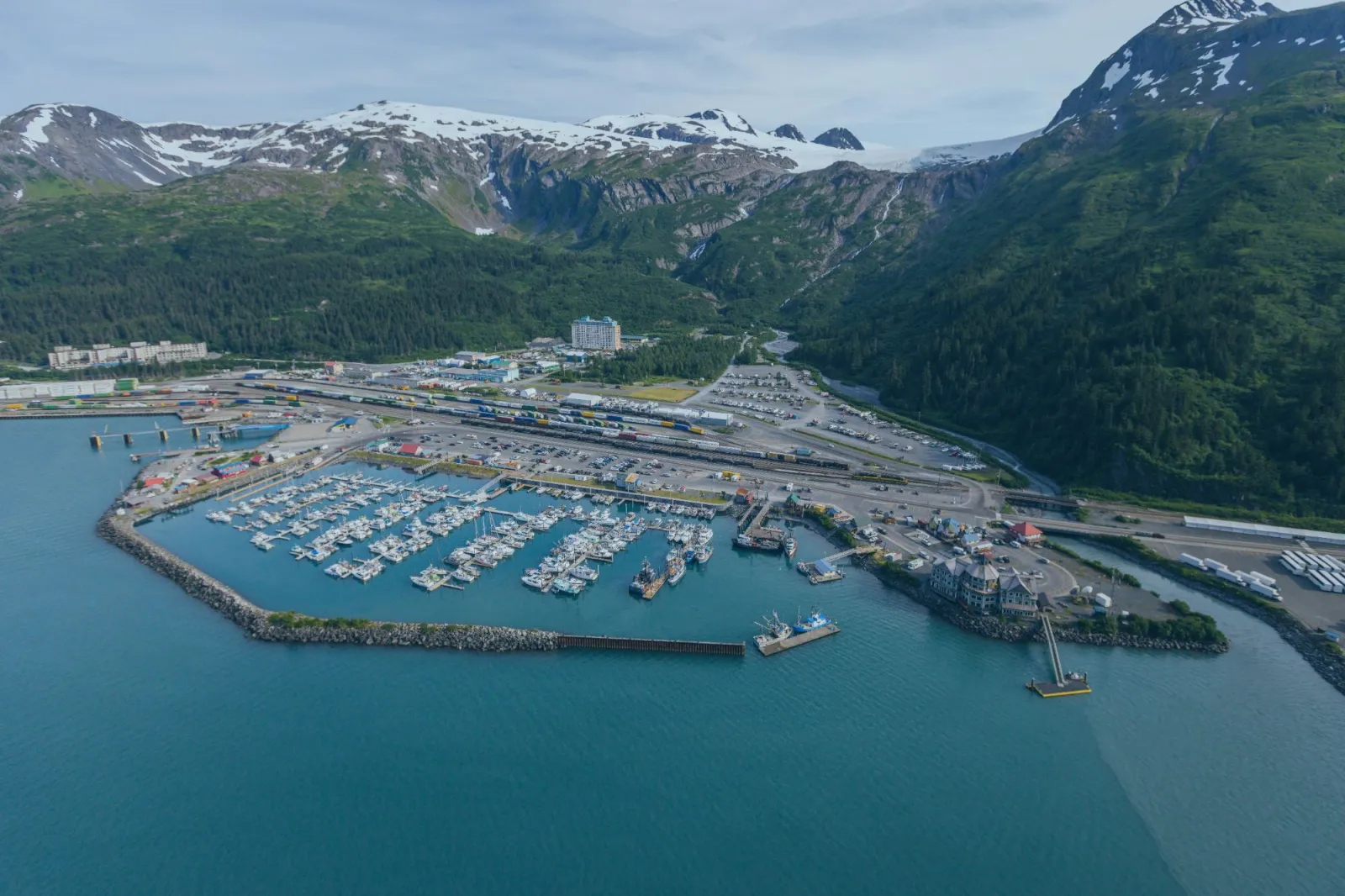
Deep in the Alaskan wilderness, hidden beneath a fortress of snow-capped mountains, lies a town where an entire community shares one roof and the only road home has a closing time.
Whittier is home to 270 people who all live in the same 14-storey building and the high street has been squeezed into a handful of corridors.
But while most Americans can come and go as they please, residents of this frozen frontier must keep one eye firmly on the clock.
Their only road to the outside world snakes through a mountain tunnel that shuts at 11pm, leaving anyone who misses the final crossing stranded on the wrong side.
For those who make it back in time, however, life in Whittier offers a unique fusion of isolation, convenience and community spirit.
Inside Begich Towers
At the centre of it all stands Begich Towers, an imposing concrete giant that has swallowed almost an entire town within its walls.
The 14-storey block is less an apartment building than a vertical village, where the distinction between home and high street has all but disappeared.
Its residents can descend a few floors to buy their groceries, collect their post or visit the doctor without ever setting foot outside.
Even the local police station is housed within the building, meaning the long arm of the law is never more than a short lift ride away.
Here, the familiar faces in the lift are also the people behind the supermarket counter or the neighbours gathering for a barbecue.
The building's communal spaces double as the town's social scene, with residents coming together for celebrations rather than retreating behind their apartment doors.
And for all its confinement, locals insist their unusual living arrangement has fostered a genuine sense of togetherness.
The Alaskan Wilderness Environment
Step beyond the building's concrete shell and the cosy convenience of Whittier gives way to a world of breathtaking extremes.
The settlement sits at the edge of Prince William Sound, dwarfed by the mighty Chugach Mountains that rise around it like enormous walls of ice and stone.
Clouds cling to the towering peaks, while the waters below stretch towards a horizon framed by Alaska's rugged wilderness.
Whittier is notorious for its fierce winds and punishing snowfall meaning that when winter tightens its grip, the building offers residents a comforting refuge from the savage conditions beyond their windows.
The Anton Anderson Memorial Tunnel
Anton Anderson Memorial Tunnel is it's one and only road in and out the settlement which cuts through Maynard Mountain.
But with just one lane shared by vehicles travelling in opposite directions, traffic must take turns passing through the tunnel.
Drivers are allocated scheduled 15-minute windows to make the crossing as the tunnel closes at 11pm during summer and 10.30pm in winter.
History of the Military Outpost
Whittier's unusual way of life was not born out of some grand experiment in communal living.
Its origins lie in the secrecy and strategic demands of America's wartime military operations.
Long before the concrete towers appeared, the area was used by the Indigenous Chugach people as a passage between Prince William Sound and the Alaskan interior.
The natural route provided access to Turnagain Arm, making it an important corridor for trade and transport.
Centuries later, the same geography would attract the attention of the US Army.
During the Second World War, military planners recognised the enormous strategic value of Whittier's sheltered, ice-free port.
Surrounded by imposing mountains and frequently concealed beneath thick cloud cover, the settlement offered a naturally secluded location for moving troops and supplies.
In 1943, a railway connection helped transform the remote harbour into a vital military transport hub.
As its importance grew, the Army constructed enormous buildings designed to accommodate personnel and provide essential services in one place.
Among them was the sprawling Buckner Building, a vast military complex once celebrated as a city under one roof.
With its self-contained facilities, the imposing structure was designed to allow military personnel to live and work without constantly braving the hostile Alaskan weather.
Begich Towers, originally built to house military families, eventually became the centre of Whittier's civilian community.
Surrounding Nature and Tourism
Outside its concrete sanctuary stretches some of the most dramatic wilderness in North America.
The surrounding Chugach National Forest, the second-largest national forest in the United States, offers an immense playground of rugged peaks, sprawling glaciers and pristine waterways.
On the shores of Prince William Sound, seals and sea otters can be spotted in the icy waters, while humpback whales occasionally make spectacular appearances offshore.
During the milder summer months, the frozen landscape gives way to opportunities for kayaking, hiking and wildlife watching.
The town sits in a seismically active region, where the forces that shaped its dramatic landscape can also unleash devastating destruction.
In 1964, Whittier was battered by the most powerful earthquake ever recorded in North America.
The catastrophic tremor triggered tsunamis that tore through the settlement, causing widespread destruction and leaving a lasting scar on its history.
Its deep-water port remains an important part of Alaska's economy, supporting commercial fishing, cargo operations and maritime transport.
Tourism has also become a major lifeline, with around 700,000 visitors reportedly descending on the area each summer.
They arrive to explore its spectacular surroundings, marvel at its peculiar living arrangements and experience a community that operates by rules unlike those of almost any other American town.
For visitors, the novelty of an entire town sharing one building might be worth a photograph or two.