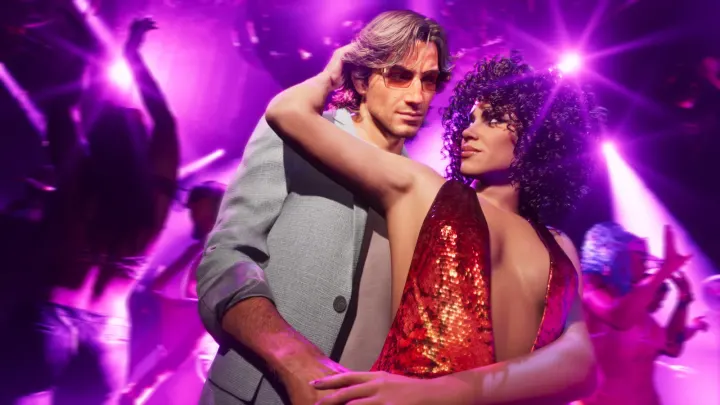
The billion-dollar launch of Grand Theft Auto VI this week is set to make every Hollywood blockbuster release look like pocket change. Such is the hype over the next instalment of the action-adventure video game that broadband providers are preparing for record-shattering traffic on Thursday morning and bosses are braced for a sick-note epidemic. In Grand Theft Auto, players control a protagonist as they rise through the criminal underworld via high-stakes heists and missions using everything from beat-up cars to luxury jets, all while dodging cops. This latest edition is set in Miami-inspired Vice City. Here, Sarah Arnold uncovers the criminally high numbers behind gaming's biggest-ever launch.
13 years marks the amount of time since the last instalment was released by creators Rockstar, representing the longest ever gap between Grand Theft Auto sequels. Prior to this, GTA IV in 2008 and GTA V in 2013 each took five years to come out. To celebrate the cultural moment, London's Selfridges launched a pop-up Vice City in store, featuring animated artwork, a Grotti Cheetah supercar and gaming merchandise.
13.5 million represents the number of UK men under 50 estimated to have played previous games in the series, equating to roughly three-quarters of that age group, according to a YouGov poll. 4,000 people were involved in its creation across Rockstar's global studios, from tech wizards to researchers scouting out locations for the high-octane action.
Production Costs and Development Scale
Grand Theft Auto VI required an estimated cost of production reaching $1billion. While the most expensive Hollywood movies ever made include Star Wars: The Force Awakens at $533m and Avengers: Endgame at $400m, this title surpasses traditional cinema budgets significantly.
600,000 unique animations were created for the game's non-playable characters, amounting to more than ten times as many as GTA V. An entire Los Angeles studio of writers, directors and producers was solely dedicated to bringing Vice City's residents to life, including the pedestrians, who inevitably get splatted during the game's high-speed chases.
212 GB forms the massive file size of the new game, taking up more than a quarter of a standard PlayStation 5's usable storage. By comparison, the original 1997 Grand Theft Auto took up just 80 megabytes, making the new release more than 2,600 times bigger.
Impact on UK Workplace Productivity
83,000 is the estimated number of days off UK workers have booked across this month and December to play Grand Theft Auto VI, representing £12.4million in lost productivity, according to software firm BrightHR. Real-life excuses filed include, "GTA out, I'll resign if this is denied".
One parliamentary debate took place on February 9, 1998, due to the original game's depiction of crime, violence and law-breaking. Two Brit brothers, Sam and Dan Houser, developed the hit franchise. Originally conceived in Dundee by DMA Design, later known as Rockstar North, the game began life as a prototype called Race'n'Chase, where players took the role of police officers.
1,000 F-bombs are reportedly contained in GTA V's main story mode among other potty-mouthed profanities. In comparison, the first version had no spoken language, although boffins claimed there was a special cheat code to unlock a sweary version.
Sales Projections and Franchise History
$3billion is the amount Grand Theft Auto VI is forecast to make in its first week. It has already banked $1billion in digital pre-sales, making it the most pre-ordered game in history. In comparison, GTA V, currently the fastest-selling entertainment product, took three days of sales to hit the milestone. This release will eclipse that mark.
26 celebrities have voiced characters in the franchise, including Samuel L. Jackson, Danny Dyer, Shaun Ryder, Phil Collins, Timothy Spall, Frankie Boyle, Ricky Gervais, Burt Reynolds and Ray Liotta. One supermodel features in the franchise as GTA superfan Cara Delevingne voices radio station DJ Cara on Non-Stop-Pop FM in GTA V, and she has reportedly taken two weeks off to play the new instalment.
Two delays affected the schedule for Grand Theft Auto VI. It was first pushed back from an initial autumn 2025 date to May 2026, then to this Thursday. When announcing the delay, Rockstar said it needed the extra months to finish the game with the level of polish fans had come to expect and deserve.
Background on Rockstar Games and the Evolution of Open World Gaming
Rockstar Games has operated as a premier video game publisher known for producing critically acclaimed interactive entertainment. The company built its reputation on pushing technical boundaries, creating massive simulated environments, and delivering satirical commentary on modern culture through immersive storytelling. The development process for modern blockbusters involves thousands of creative professionals working across international facilities in cities such as Edinburgh, New York, Toronto, and London. These teams use advanced motion capture technology, proprietary game engines, and extensive geographical research to build convincing virtual worlds that mirror real-world urban landscapes.
The original Grand Theft Auto debuted in 1997 as a top-down two-dimensional driving and shooting title that quickly generated controversy and mainstream media attention. Its transition into fully three-dimensional environments with Grand Theft Auto III in 2001 revolutionized the interactive entertainment sector, establishing the modern sandbox genre where players enjoy complete freedom to explore expansive cities. Subsequent titles expanded the scope by introducing cinematic voice acting, branching narratives, and increasingly sophisticated physics engines that simulate realistic vehicle handling and pedestrian AI. The enduring cultural footprint of the franchise is demonstrated by its massive commercial success over nearly three decades, cementing its status as a defining pillar of modern pop culture.
Economic and Cultural Significance of Video Game Releases
Major entertainment software launches regularly rival traditional Hollywood movie premieres in terms of revenue generation, global media attention, and cultural penetration. The modern video game industry generates tens of billions of dollars annually, surpassing both the film and music sectors combined in global economic output. This financial dominance stems from high consumer demand for interactive experiences that offer dozens or even hundreds of hours of entertainment, contrasting with standard two-hour cinematic runtime.
The massive production budgets required for contemporary titles reflect the complex engineering, high-fidelity graphical assets, and extensive orchestral soundtracks involved in their creation. Software developers employ massive teams of software engineers, level designers, historical researchers, and professional actors to ensure authenticity within fictional settings. As digital distribution models replace physical retail disks, midnight launches have evolved into simultaneous global online releases, prompting telecommunications networks to reinforce their infrastructure to handle unprecedented surges in internet traffic as millions of users download massive installation files simultaneously.