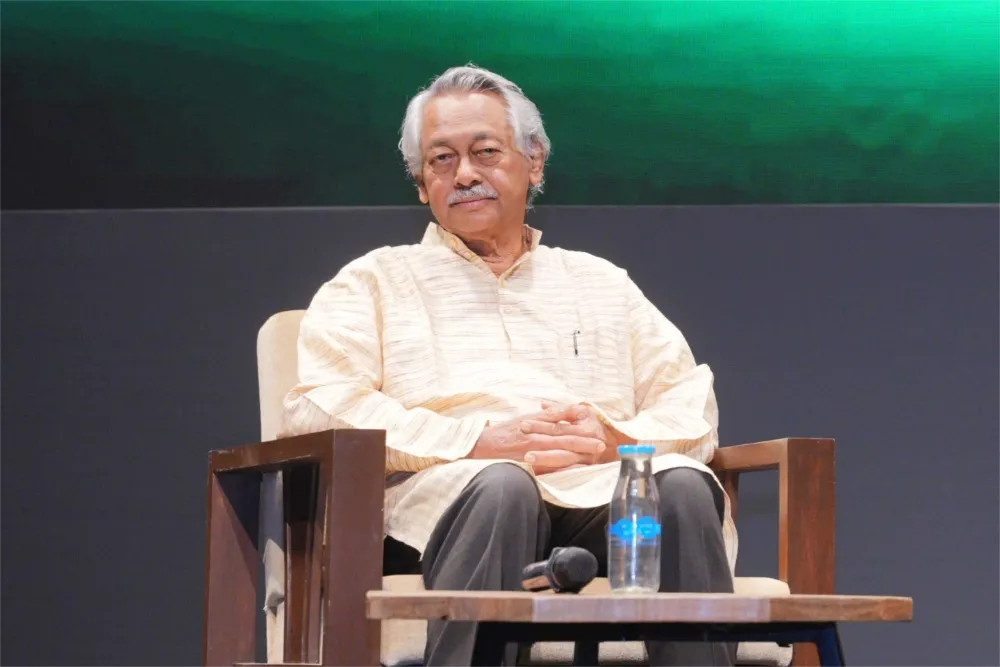
Indian auteur Girish Kasaravalli, a stalwart of Kannada-language cinema, opened a masterclass at the 57th International Film Festival of India in Goa, titled "The Moral Universe of Parallel Cinema: 50 Years of Girish Kasaravalli." The 75-year-old filmmaker reflected on his career, the moral contradictions he sees in society, and the way cinematic form can mirror social content.
What Happened at the IFFI Masterclass
During the session, Kasaravalli spoke about how even entertainment is a political act, arguing that every film, whether mainstream or art cinema, makes a statement that either supports or opposes the dominant ideology. He emphasized that there is no category of film that is purely "entertainment." The masterclass was moderated by Naman Ramachandran, Asia editor for Variety.
Central Theme: Othering in Indian Society
Across his notable works, Ghatashraddha (1977), Tabarana Kathe (1986), Thaayi Saheba (1997), Dweepa (2002), and Gulabi Talkies (2008), Kasaravalli has consistently examined how societies exclude individuals and communities. He described this exclusion as "the biggest cruelty an individual or a group of people can impart on another person." When asked if Ghatashraddha still resonates with contemporary India, he replied, "All my films talk about othering. I always talk about how society looks at some people from a different lens, and in that process they make them 'other.'"
Political Nature of Film
When questioned about labeling himself a political filmmaker, Kasaravalli said, "Whoever makes something, whether he makes mainstream cinema or art cinema, he is making a political statement, either in support of the dominant ideology or opposing the dominant ideology. He cannot avoid it." He added that even entertainment is a political form and that filmmakers must be aware of the ideological implications of their work.
Character Construction and Influence of Godard
On character development, Kasaravalli explained that he does not want his characters to become mouthpieces for a particular ideology. Drawing inspiration from Jean-Luc Godard, he compared understanding a character to buying a house: one must examine it from the outside and then from within before making a judgment. He emphasized that characters are complex and cannot be easily aligned with a single stance.
Visual Language of Ghatashraddha
He described the visual construction of Ghatashraddha as "ritualistic cinema," noting that its style emerged from the content itself rather than being imposed. Because the film dealt with a ritual, he believed its cinematic form should reflect that structure. Kasaravalli said he could not write a script until he had clarity about its images, viewing film as an attempt to impart an experience rather than merely making statements.
Attention to Detail in Gulabi Talkies
For Gulabi Talkies, Kasaravalli directed cinematographer S. Ramachandra to treat the coastal community as important as the protagonist. He wanted the images to feel like "actuality coverage," not a predetermined visual construction. Rejecting conventional scenic shots of sea and rocks, he told his crew, "Film should not have any pretty image." The team used 16mm film, allowing the grain to contribute to the sense of actuality.
Influence of Julio García Espinosa
The discussion of visual aesthetics led Kasaravalli to Cuban filmmaker Julio García Espinosa's idea of "imperfect cinema." He said that each country and region has its own aesthetic concerns and that filmmakers should not imitate Western standards. "We should make films according to that condition; we should never imitate the West. Why should I be perfect? I should be loyal to my own milieu," he stated.
Parallel Cinema in the Streaming Era
When asked whether parallel cinema belongs to a particular period, Kasaravalli disagreed, noting that notable films are being made across the country today. He highlighted the challenge of reaching audiences, saying, "We all thought it is going to be a solution for all of us. But OTT [streaming] is exactly doing what the mainstream distribution network was doing earlier."
Open Endings and Audience Engagement
During the audience Q&A, Kasaravalli addressed the issue of open endings and whether a filmmaker should provide definitive answers. He said, "A filmmaker who says that he knows answers for all the questions in life is telling a lie. He is also as confused as you are. He only throws up options so that you can start thinking. There is nothing called closure... life is always open."
Reception by IFFI Director Ashutosh Gowariker
As the session concluded, IFFI festival director Ashutosh Gowariker described Kasaravalli's work as "textbooks," noting that the filmmaker had returned to Ghatashraddha while developing a new film. Gowariker highlighted the filmmaker's close-ups, saying, "You let your actors simply be. You make the audience think and anticipate what the character is going through."
Background: Girish Kasaravalli
Girish Kasaravalli was born on 4 March 1946 in the southern Indian state of Karnataka. He studied at the Film and Television Institute of India (FTII) in Pune, graduating in 1974. Over the past five decades, he has directed more than twenty feature films, many of which have won national and international awards. His work is celebrated for its realist style, focus on marginalized communities, and exploration of social issues such as caste, gender, and environmental change.
What is Parallel Cinema?
Parallel cinema refers to a movement in Indian filmmaking that emerged in the 1950s and 1960s as an alternative to mainstream commercial cinema. It is characterized by realistic narratives, socially relevant themes, and a departure from formulaic storytelling. Filmmakers such as Shyam Benegal, Satyajit Ray, and Adoor Gopalakrishnan are often cited as pioneers of the genre.
Impact on Indian Film Landscape
Kasaravalli's films have influenced a generation of filmmakers in Karnataka and beyond. His emphasis on authenticity, moral questioning, and the representation of "othered" groups has encouraged directors to tackle complex social issues without resorting to melodrama. The 57th IFFI masterclass reinforced his status as a key figure in the parallel cinema tradition, highlighting his continued relevance in the digital age.
What Happens Next for Kasaravalli?
While Kasaravalli has not announced a specific upcoming project, his recent work on Ghatashraddha indicates that he remains active in revisiting and re-examining his earlier films. The masterclass suggests that he will continue to mentor younger filmmakers and contribute to discussions on the future of Indian cinema in an era dominated by streaming platforms.
Related Stories
For more on Indian cinema, see Ramayana Becomes First Indian Film to Top UK and Ireland Box Office and Indian Filmmaker Sanjay Gupta Dies at 59 After Fall in Mumbai.