Families of U.S. citizens imprisoned in Russia allege that Trump's special envoy, Steve Witkoff, is preventing the use of a congressional tool that could hasten their release. The tool, known as the "wrongfully detained" designation, is intended to elevate cases to the highest levels of the U.S. government.
Families and Advocates Call Out Witkoff
Harold Jezler, whose wife Olga has been in Russian custody since June 2022, said the State Department tells him that decisions rest with Witkoff. A Senate aide echoed that the envoy is holding back the designation to avoid inflaming tensions with Moscow. Jezler added, "The way they explain it is that they feel they don't want to upset the Russians... but on the other hand, the Russians don't really know that we're serious about these people until we designate them."
Trump's Recent Engagements with Russia
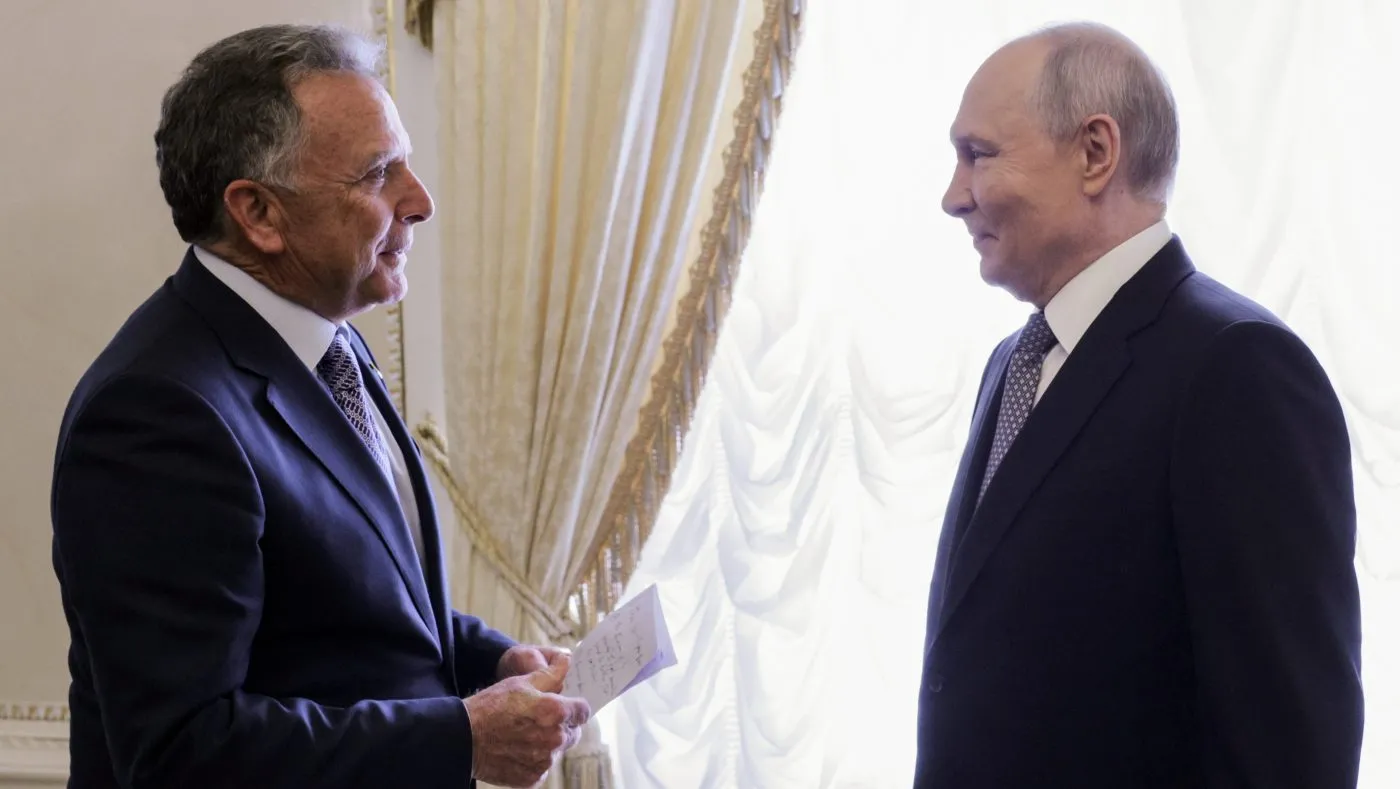
Earlier this month, President Trump met Russian President Vladimir Putin and Chinese President Xi Jinping, after which he praised Putin as a "friend." The administration has secured the release of two Americans, Robert Gillman in August and Stephen Hubbard in October, both previously labeled as wrongfully detained. Witkoff, who negotiated Hubbard's release, was criticized for calling Putin a "humanitarian."
State Department's Stance on Wrongful Detention
A State Department spokesman clarified that Secretary of State Marco Rubio makes wrongful-detention determinations. He stated, "In every case when a U.S. national is detained overseas, the Department of State continuously reviews the circumstances for indicators of wrongfulness." The spokesman added, "There are currently no Americans determined to be wrongfully detained in Russia. This Administration continues to work for the release of all Americans unjustly detained around the world."
Specific Cases and Legislative Support
Robin Stultz, sister of Navy veteran Chuck Zimmerman, who was arrested aboard his sailboat in the Black Sea in June 2025, says the State Department warned that designating Zimmerman as wrongfully detained could complicate negotiations. Stultz notes that she has repeatedly appealed to Rubio for designation, expressing frustration that the administration has not followed through.
In October, Rep. Ben Cline (R-Va.) urged Rubio to declare Zimmerman wrongfully detained and highlighted his worsening health. Earlier, Senators Mark Warner, Tim Kaine, Chuck Schumer, and thirteen other Democrats wrote to Rubio in August requesting designation for Zimmerman, Jezler, and three others. The letter emphasized that the tool would "maximize U.S. government coordination and advance negotiations" for swift release.
Other detainees cited include Andre Khachatoorian (since Dec. 2021), David Barnes (since Jan. 2022), and Alexsandr Antonov (since Mar. 2025). The Special Envoy for Hostage Negotiations (SPEHA) was created by Congress under the Robert Levinson Act, part of the 2021 National Defense Authorization Act, which Congress passed over a Trump veto. Rubio, then a Florida senator, co-sponsored the bill.
Advocacy and Frustration
Eric Lebson, chief strategy officer for Global Reach, a nonprofit dedicated to returning Americans held abroad, criticized Witkoff and Jared Kushner for negotiating a large prisoner-of-war exchange between Russia and Ukraine in November without advancing the release of the jailed Americans. Lebson stated, "Each of these people meets the criteria for designation. They need President Trump's intervention." He added, "When you're designated, you come home. And when President Trump knows your name, you come home."
Trump publicly announced his personal appeal to Putin for Hubbard's release on Oct. 20, noting that he had waived congressionally mandated sanctions on Russia to preserve negotiations. ABC News reported that Witkoff was negotiating for Hubbard and other Americans' release.
Criticism of Diplomatic Strategy
Elizabeth Richards, director of hostage advocacy at the James W. Foley Legacy Foundation, said the administration sometimes keeps designation decisions private to protect bilateral relations. She noted that similar stories have emerged about Witkoff withholding designations to preserve ties with Russia.
A White House spokesperson declined to answer a Hill query about whether Trump raised the cases of Americans jailed in Russia during his recent meeting with Putin in China. The official responded, "President Trump cares deeply about the return of Americans detained abroad, which is why he has brought home over 100 Americans from around the world."
Jezler expressed frustration that Trump appears to prioritize appeasing Putin over returning Americans. He listed the waiver of sanctions, the purchase of Russian diesel, the prisoner-of-war exchange, and reduced U.S. support for Kyiv as examples of this approach. Jezler concluded, "He ran on America First, and we need to prioritize bringing home the Americans."
Impact on Families
Stultz described her brother's case as a personal disappointment, noting that he has missed two birthdays and is missing critical moments as his daughter approaches middle school. She said, "This is the second birthday he's missed. She's getting ready to finish elementary school and start middle school. He's missing out on a lot."