FAA Funding Request Follows Nationwide Ground Stop
Ten days ago, a four-hour nationwide ground stop led to more than 18,000 flight cancellations. By Tuesday the Trump administration was asking Congress for $50.1 billion.
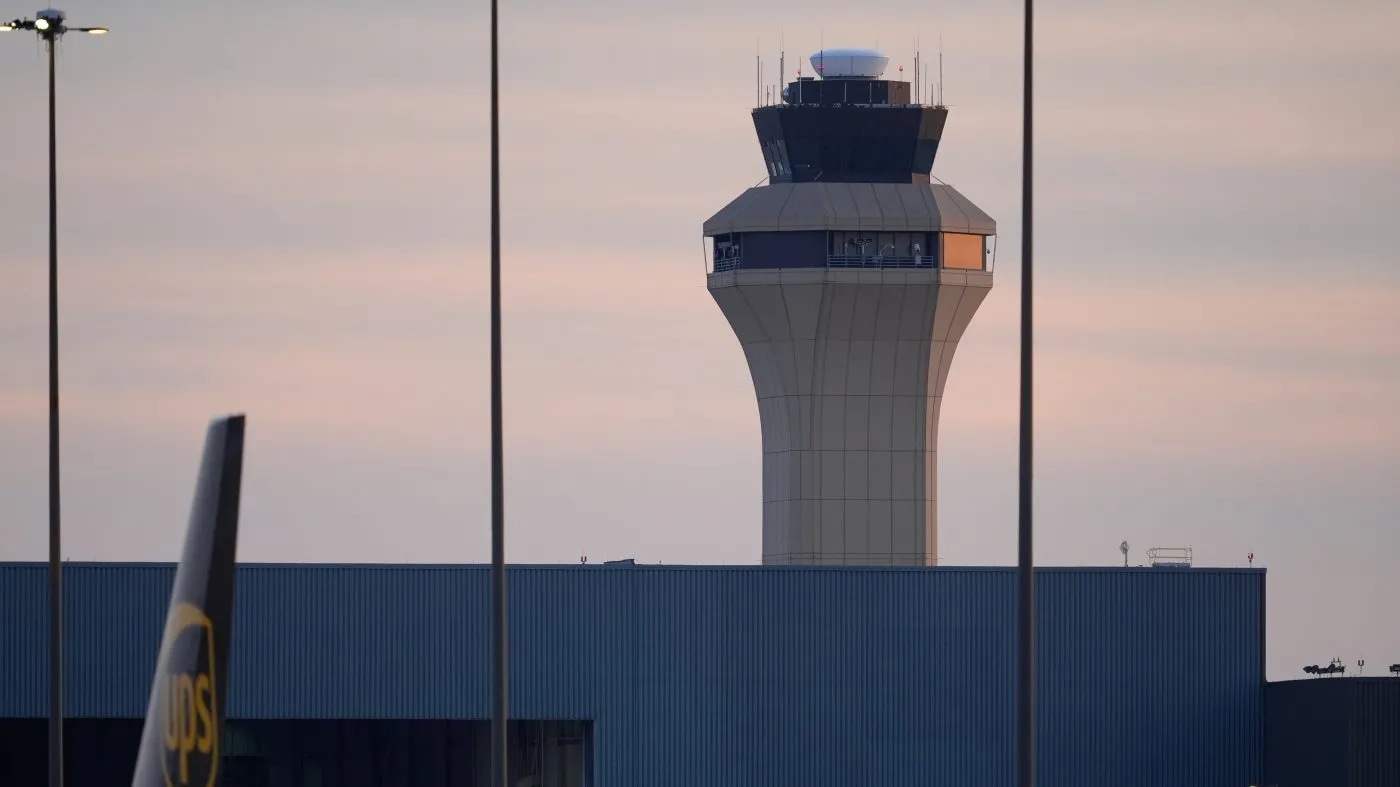
Yes, fix the problem, absolutely. But a blank check for an agency with this track record is a bad bet. The Federal Aviation Administration (FAA) last built an en route air traffic control center in 1969, the same year Apollo 11 put two men on the moon. Congress should impose conditions before it writes the check.
Disagreements Over the Root Cause of the Outage
Start with the cause of the problem, which nobody agrees on. The Transportation Department blames outdated legacy equipment. Transportation Secretary Sean Duffy says a newly installed router set off intermittent communications and radar problems at 17 of the 22 centers that direct high-altitude traffic. He also claims that 68 earlier installations of the same routers went fine. The FAA says the root cause is still unclear.
Aging equipment and a new router are two different explanations for one outage. I wouldn't sign off on a family office's $50,000 expense line, never mind $50 billion, with so much uncertainty.
Escalating Price Tags and Allocation Concerns
The price tag has also moved faster than the evidence. In 2025 the department said it needed another $20 billion on top of the $12.5 billion Congress had appropriated. In September, FAA Administrator Bryan Bedford testified that $10 billion more would do it. Duffy then sent lawmakers a $30.1 billion request on Nov. 12. By the night of the outage, he wanted $50 billion.
Only $10.1 billion of the $50.1 billion goes to the digital architecture and controller safety tools. The rest covers airport grants, terminals, five new centers and up to 140 towers. Sen. Ted Cruz (R-Texas), who chairs the Senate Commerce Committee, said some of it is "not safety related."
Then there's the money Congress has already sent. The department says all $12.5 billion is allocated and on track to be spent by 2028. House Appropriations Democrats Rosa DeLauro (D-Conn.) and James Clyburn (D-S.C.) say that $9.1 billion in previously approved funding remains unspent, and they point to an Office of Management and Budget apportionment holding more than $5 billion of the reconciliation money until Oct. 1, 2027.
You can't call something an emergency and park the cash in the same breath. I don't mean to treat Democrats' accounting as gospel, but the administration owes Congress an answer on that one.
Accountability and Historical Precedents in Modernization
As an expert witness in fiduciary cases, I often hear questions about who was accountable, and what did they verify before the money moved. In private credit, nobody wires full loans on day one. Lenders release funds against milestones. Borrowers who miss milestones hear about it.
To be completely fair, this problem long predates the Trump administration. The Government Accountability Office found in 2024 that 51 of the FAA's 138 air traffic control systems were unsustainable. It added that the agency had been slow to modernize its most critical systems. Duffy says 20 to 30 years of piecemeal funding got us here, and he has a point. But shouldn't we worry that a bigger check, handed to the same structure, will just buy the same results at a higher price?
Shifting Priorities Across Administrations
Two administrations, two sets of priorities. In November 2021, Transportation Secretary Pete Buttigieg told reporters about highways "built for the purpose of dividing a white and a Black neighborhood." Even though his claim was dubious, he used it to make racial equity a public priority at the department, including at least $1 billion in the infrastructure law to reconnect divided communities. That same law gave air traffic control $5 billion over five years.
Duffy has put the system first, and his pitch has grown from a 2025 modernization plan to $30.1 billion on Nov. 12 to $50.1 billion five days later. Results matter more than priorities, let alone dollars thrown at the problem. So far, neither administration has delivered a finished system.
Congressional Action and Proposed Conditions
House Speaker Mike Johnson (R-La.) says Congress will take up the request in the lame-duck session, which is how a $50 billion item gets buried in a year-end bill. Give it its own bill and its own vote, so every member has to own the result.
So attach conditions. Release the money in tranches tied to public milestones. Use fixed-price contracts with penalties for missing dates. Name one accountable executive who answers to Congress when a date slips. Spend down the unspent balance before a new dollar moves. Require a public root-cause report on the Nov. 13 outage before router installations resume. Sunlight is the best disinfectant, and a quarterly scorecard is cheap.
Examining Alternative Models Like Canada
Then look north. Canada transferred its air traffic control system to a private nonprofit, NAV Canada, on Nov. 1, 1996, for 1.5 billion Canadian dollars. It runs mainly on user charges rather than government appropriations.
Cato's Chris Edwards describes the result as "one of the safest systems in the world," even if the safety data comes from the company's own reporting. Duffy's 2025 modernization plan didn't contemplate privatization, and the Canadian model carries risks of its own. But it still deserves a hearing before we spend $50 billion rebuilding the old structure.
Thanksgiving is this week. Apollo 11 landed on the moon in 1969, the same year the FAA built its newest en route center. We've been to the moon, and we are aiming for Mars. Meanwhile, we are still flying like it's 1969.
Congress can change that, but only if it demands a finish line before it signs the check.
Background
The Federal Aviation Administration manages civil aviation in the United States and oversees the safety of its skies. Air traffic control relies on a vast network of en route centers, terminal radar approach control facilities, and airport traffic control towers across the country. Many of these facilities depend on legacy hardware and software architectures that have evolved incrementally over decades. Government oversight bodies, including the Government Accountability Office, have frequently highlighted vulnerabilities in aging federal technology infrastructure.
Funding for federal infrastructure projects typically moves through congressional appropriations bills and reconciliation packages. The Department of Transportation coordinates these budgetary requests and oversees the administration of grants to local airport authorities. Debates over agency budgets often center on balancing immediate emergency repairs with long-term technological transformation and fiscal accountability.
What Happens Next
Congress is set to consider the $50.1 billion funding request during the upcoming legislative sessions. Lawmakers from both parties will evaluate whether to attach specific performance milestones, reporting requirements, or spending restrictions to the package before any funds are disbursed. The Department of Transportation will meanwhile continue addressing technical inquiries regarding recent technology disruptions and ongoing modernization efforts across high-altitude traffic centers.