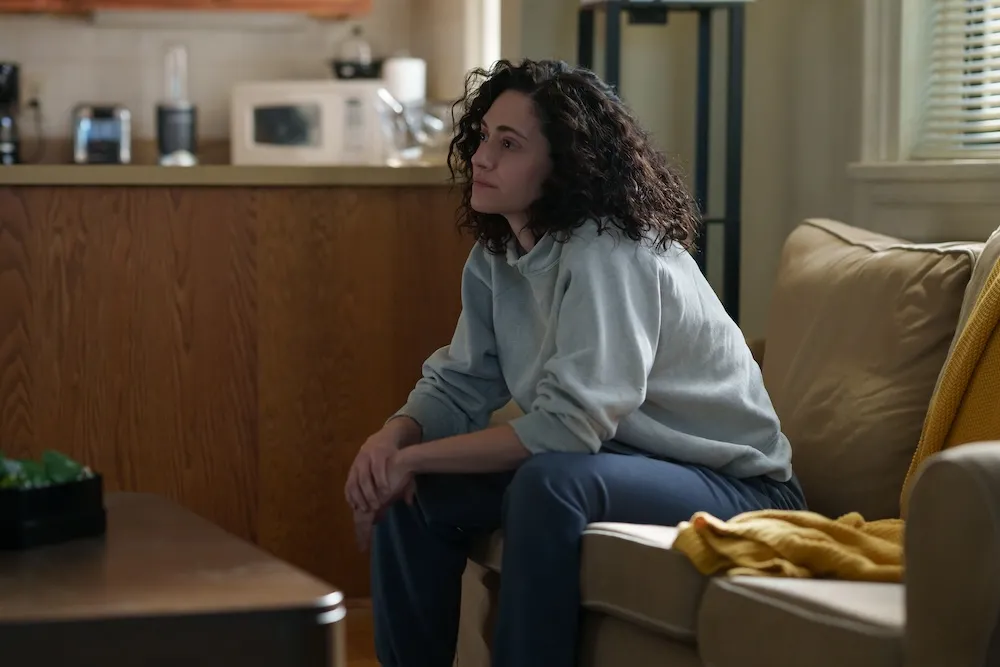
Emmy Rossum stars in the new drama series Furious
Many observers recently pointed toward the end of prestige television, but multi-hyphenates like Emmy Rossum never received that memo. On her critically acclaimed new show Furious, Rossum takes a brilliant turn as the damaged but resilient rookie Federal Bureau of Investigation agent Alice Black, who shares a surprising amount in common with the female serial killer she pursues.
Acting as both the star and executive producer of the critically acclaimed drama, Rossum chose the project, which draws loose inspiration from the 1987 film Black Widow, specifically because of how unusual it felt. Rossum spent time looking through old films in studio catalogs before finding the inspiration that sparked her creative interest.
When Rossum saw Black Widow, the Deborah Winger character appeared fierce, unorthodox in her practices, and existing within a male-dominated world of law enforcement. That portrayal felt truly contemporary and presented material that the actress could sink her teeth into. Rossum loved the dynamic during a first season between Winger and the serial killer character regarding the arc of uncertainty over who would emerge victorious.
Collaboration with creator Elizabeth Meriweather
Working alongside creator and fellow executive producer Elizabeth Meriweather, Rossum upends traditional archetypes concerning how serial killers behave in thrillers, the role of women as victims in crime dramas, and the essential nature of justice. Both Rossum and the central criminal, a calculating serial killer named Catherine played by Lola Petticrew, search for resolution after experiencing violence at the hands of men. Petticrew plays a former sex worker who retaliates against the men who trafficked her into a life filled with abuse.
Alice, on the other hand, recently left a relationship with a fellow law enforcement officer that involved domestic violence while still trying to navigate the messy aftermath. Rossum notes that Meriweather maintains an unflinching way of looking at people with a very specific method of writing characters possessing deep duality. Exploring how a character can survive violence and then actively seek it out highlights the complicated nature of real people that television rarely portrays.
Rossum credits her close working relationship with Meriweather as the genesis for some of the more complex and profound themes portrayed in Furious. The actress even hints that a few of the show narratives were taken directly from experiences in her own personal life. Rossum and Meriweather often push each other creatively while maintaining deep trust in dialogue and thematic ideas.
Long-form television and past experiences
Over the course of her extensive career, the actress turned producer fell deeply in love with portraying a single character across a long-running television series. Rossum explains an immense appreciation for long-form television storytelling where creators and audiences begin understanding the core identity of a project over time. Building deeper connections allows performers to dig into themselves and understand their characters within various scenarios much better.
The performer also draws attraction toward storylines and dynamics that scratch something familiar on a thematic level even if the circumstances differ from her own life. Shameless did not resemble her personal life at all, but the idea of yearning for an absent parent represented a feeling she understood intimately. Family loyalty, shared bonds, family chaos, and the pressure of growing up too fast provided emotional touchstones from her upbringing as an only child raised by a single mother.
Supporting characters and female relationships
Another element making Furious a nuanced television show involves the broader exploration of how male violence impacts women beyond just the main protagonist. The emotional betrayal of a male superior leaves an indelible mark on supporting character Nora Washington, played by Quincy Tyler Bernstine, who acts as Alice beleaguered supervisor at the Federal Bureau of Investigation. Nora suffered the consequences of a corrupt boss and a decision to cover up a crime that simultaneously damaged her own career ambitions.
That buried case resurfaces during the current investigation, forcing Nora to choose between revealing her role in the cover-up or keeping the secret hidden. Ultimately, the relationships between Alice and other damaged female characters propel the narrative forward. A traditional love interest storyline plays second fiddle to the complex dynamics connecting Alice, Nora, and Catherine together.
Deciding to make romance an important yet non-defining force in the emotional life of the main character goes against conventional Hollywood tropes for women on screen. Rossum explains that the most realistic relationships Alice maintains in the series involve Catherine or Nora because they share mutual trauma and understanding. Looking toward the future, production on season two begins in January, and Rossum expresses excitement alongside natural anxiety about maintaining high quality.
Background on Emmy Rossum and television career
Emmy Rossum built a celebrated acting career across film and television before expanding her creative reach into production roles. Rising to widespread prominence with acclaimed performances in cinematic projects like Mystic River and The Day After Tomorrow, the actress established herself as a versatile dramatic talent. Her defining television role came as Fiona Gallagher in the critically lauded comedy-drama series Shameless, which ran for eleven seasons on Showtime. That long-running tenure provided deep insight into the demands and rewards of serialized storytelling, directly informing her approach as an executive producer on newer creative ventures like Furious.
The evolution of female-led crime dramas
Television crime dramas have traditionally relegated female characters to secondary victims or peripheral law enforcement partners in stories dominated by male leads. Recent years see a shifting television landscape where networks and streaming platforms back projects placing female survivors, complex antiheroes, and psychological depth at the absolute center of the narrative. Programs that examine the psychological aftermath of trauma, institutional corruption, and institutional complicity resonate strongly with contemporary audiences seeking realistic portrayals of human resilience and moral ambiguity in law enforcement settings.