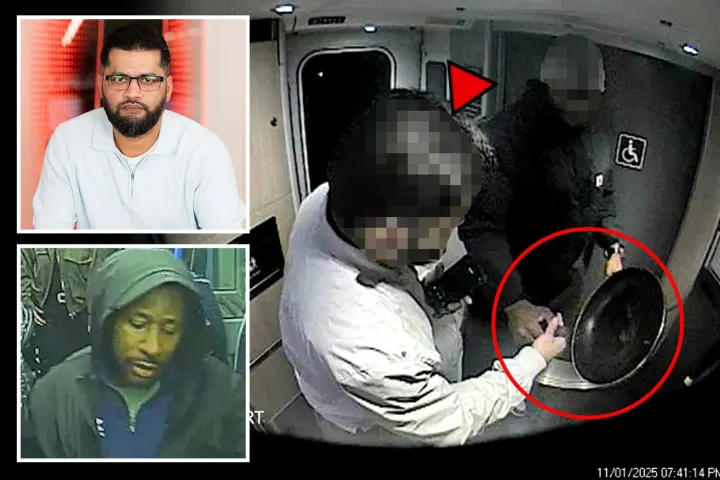
A sobbing British grandmother battling to get home to the grandson she has raised since he was born has blasted British authorities, claiming the UK refused to help her. Ann Beattie, 43, has been trapped in Turkey for four months since being slapped with a travel ban while on holiday after a hotel bust-up.
She is still stuck in legal limbo after a fight between her and another holidaymaker in the summer led to her arrest. The grandmother claimed she was attacked when looking for her nine-year-old grandson at Orka World Hotel, Fethiye.
She is desperate to be reunited with him in time for Christmas, saying the little boy is really suffering the most in all of this. Ann, of Stratford, East London, is the legal guardian for her grandson because of how young her daughter was when she had him.
Speaking on The Sun's From the Newsroom, the grandmother claimed UK authorities did not help when she explained her situation, saying, I contacted the British government, they refused to help me. They are saying that there is nothing they can do about it, even though we are well aware they can do something to help in this situation.
Ann wants the British government to put a little bit of pressure on to the prosecutor to make a decision, not to interfere in the case. The ordeal began after her grandson had briefly gone missing after playing football with new friends.
Ann said she had started worrying and was frantically searching for the child, calling out his name when a woman began to yell at her and her daughter. She explained, Some lady started yelling over the balcony, telling my daughter to shut up.
They kept looking for the boy, Ann said, when all of a sudden the woman is come running out to try and attack me and my daughter. The grandmother said the woman kicked her, and, defending herself, she punched the woman once.
She said the altercation was not a big scrap or anything, it was just one hit and she fell to the floor and hurt herself. I felt like I just had to defend myself, I did not know what to do, Ann said.
She eventually found her grandson, but when cops were called she was hauled in and arrested. The woman, a Slovakian national, was treated in hospital for a broken nose.
But she has since vanished, the grandmother said, with Turkish authorities unable to find any evidence of her arriving or leaving the country. Ann has been banned from leaving Turkey while prosecutors begin an investigation ahead of a potential criminal case.
Speaking through tears, Ann said she was left in a difficult situation with her family severely affected because she is the main breadwinner. She revealed she has never had a mum and has recently lost her dad, but is most worried about her grandson because it is affecting his school.
The grandmother said, The most important thing is getting home to my family more than anything. Nobody has helped me. Not the British government, not anybody. We are doing this our own selves with our own money.
Ann said facing Christmas without her grandson breaks her heart. Surely the court can have some compassion and let me go back to spend time with him, she said. She has no idea when she could be allowed back to the UK, or when any trial will take place.
Ann faces a minimum four years jail if convicted. Her lawyer Çağlar Akdeniz said, This case requires particular sensitivity because she is responsible for the care and legal guardianship of her grandchild. That is the biggest issue. Because she cannot return, the child is experiencing difficulties.
Despite that, the court has still not allowed Ann home to be with her grandson, who is being looked after by her partner. The family has spent £20,000 flying out to see her regularly on weekends.
An FCDO spokesperson said, We are supporting a British national in Turkey and are in contact with the local authorities.
Understanding Legal Restrictions In Foreign Jurisdictions
Legal systems across foreign nations often implement travel bans during ongoing police inquiries or judicial proceedings involving foreign nationals. When an individual becomes entangled in a physical altercation abroad, local law enforcement agencies hold the authority to restrict departures until investigations conclude. This measure ensures that suspects remain available for questioning, court dates, and potential trial proceedings. Foreign citizens facing such restrictions frequently encounter complex bureaucratic hurdles, language barriers, and unfamiliar court procedures while attempting to resolve their status.
During these lengthy periods of waiting, individuals must navigate local accommodation needs and financial strains while being separated from their usual support networks at home. Legal representation in a foreign country requires retaining local attorneys who understand the specific penal codes and procedural rules of that jurisdiction. Language proficiency and familiarity with regional legal customs heavily influence how quickly a case moves through the investigative phase toward a prosecutor's final decision or a court hearing.
The Role Of Consular Services And The Foreign Office
The Foreign, Commonwealth and Development Office provides assistance to British nationals detained or facing legal restrictions overseas, though consular officials operate under strict international boundaries. Consular staff can offer lists of local lawyers, visit individuals in detention, and maintain communication with family members back in the United Kingdom. However, diplomatic protocols prevent British government representatives from interfering in the judicial processes of sovereign nations or providing formal legal advice.
Citizens receiving consular support often feel frustrated by the limitations placed on diplomatic intervention when dealing with foreign courts and prosecutors. British authorities routinely emphasize that all visitors abroad must abide by local laws, and consular assistance cannot bypass foreign legal frameworks or force expedited decisions from independent judicial authorities operating outside British jurisdiction.
Tourism And Legal Disputes In Popular Holiday Destinations
Fethiye and other popular Turkish resort regions welcome millions of international tourists each year, contributing significantly to regional economic activity and hospitality sectors. While the vast majority of holidays proceed without incident, occasional interpersonal conflicts among travelers can escalate rapidly within hotel environments. When disputes result in physical injuries, local police forces are legally obligated to record formal complaints, conduct forensic examinations, and refer matters to state prosecutors.
The involvement of multiple international nationalities in holiday disputes introduces further investigative complexities for local authorities. Investigating officers must trace witnesses, review available security footage, and document medical reports accurately before submitting case files to the judiciary. These thorough administrative requirements frequently extend the duration that foreign visitors must remain in the country, impacting work obligations, family responsibilities, and personal finances for months on end.