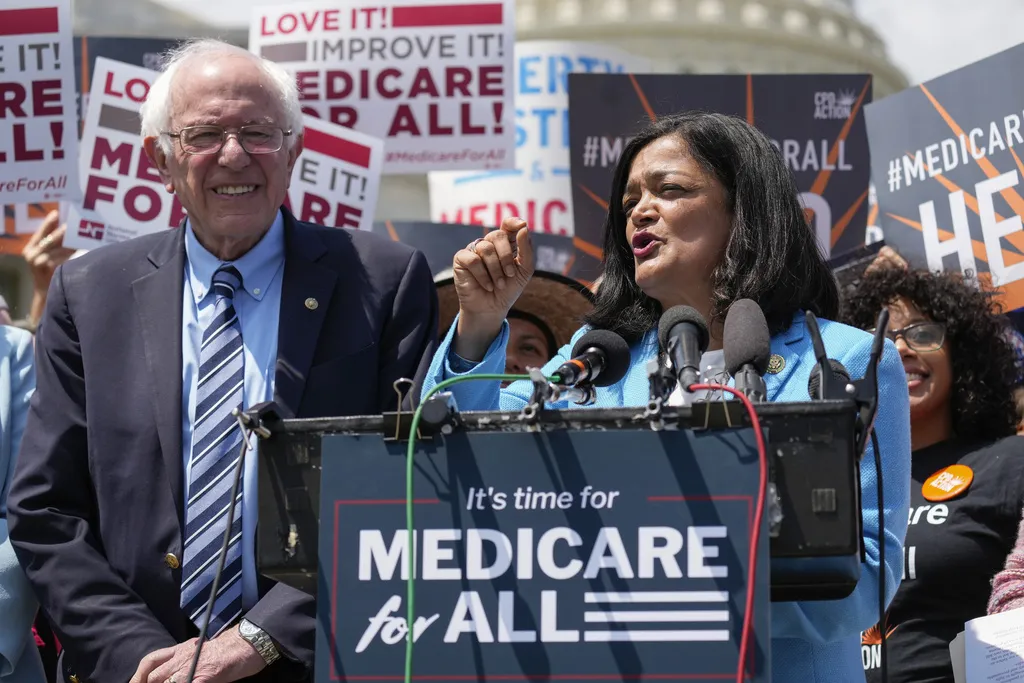
Recent challenges within the aviation sector offer significant insights into the ongoing push for Medicare for All by political figures in Washington. Observers note that government administration of critical infrastructure often encounters systemic hurdles that could mirror potential nationwide healthcare transformations.
The aviation network operates entirely as a federally managed program, much like the proposed single-payer healthcare overhaul. Proponents often present the concept as an extension of existing senior healthcare benefits, but the framework actually dismantles current structures such as traditional Medicaid and private coverage, including plans relied upon by 165 million Americans through their employers.
Federal officials and administrative personnel would ultimately direct medical operations under the proposed sweeping reform. These bureaucrats would dictate patient eligibility for specific pharmaceuticals, specialized medical devices, and essential procedures across the nation.
Outdated Technology Delays
Federal oversight historically results in delayed deployment of modern technological upgrades, leaving critical systems reliant on aging infrastructure. Aviation specialists note that portions of the current architecture date back to the 1990s and continue using legacy copper wiring rather than modern fiber optics.
A recent operational shutdown that stranded thousands of flights and millions of travelers stemmed directly from software glitches encountered while patching legacy equipment. International counterparts demonstrate similar patterns, as public health authorities in Great Britain and Canada face documented delays in approving expensive treatments and advanced medications.
Federal Funding Constraints
Federal budgets face perpetual shortfalls that impact operational capacity across public programs. Secretary of Transportation Sean Duffy requested an initial $20 billion to address infrastructure demands before increasing the figure to $50 billion as lawmakers debate fiscal allocations.
Congressional spending negotiations frequently turn public services into subjects of intense partisan conflict. Similar budgetary pressures within a centralized healthcare framework could restrict overall resources available for patient care and facility maintenance.
Staffing Shortages and Accountability
Resource limitations directly contribute to workforce declines across federally administered sectors. Data from the Federal Reserve Bank of St. Louis indicates that active aviation personnel dropped from 44,000 in 2012 down to 35,000 in 2018, and further decreased to 30,000 by 2025, despite increasing flight volumes.
Medical associations in international jurisdictions report similar labor shortages and extended waiting lists for specialized treatments. When system failures occur, responsibility often becomes a point of contention among changing administrations and legislative bodies without clear accountability.
Background on Infrastructure and Federal Oversight
Government agencies have long managed critical public services in the United States, ranging from transportation networks to postal operations. The Federal Aviation Administration oversees the national airspace system, coordinating thousands of daily commercial and private flights. Funding for these operations depends entirely on congressional appropriations and aviation trust funds, which require regular legislative authorization. Infrastructure modernization projects often span multiple decades, leading to debates over whether public agencies or private enterprises manage such complex networks more efficiently.
Comparative Analysis of International Health Systems
Proponents and critics of American healthcare reform frequently examine models established in other industrialized nations. Great Britain operates the National Health Service, a publicly funded healthcare system providing coverage to residents through general taxation. Canada uses a publicly funded Medicare system delivered through provincial and territorial jurisdictions. Analysts study these international frameworks to evaluate metrics such as wait times for elective procedures, access to novel pharmaceutical therapies, and overall per capita expenditure.
Legislative History of American Healthcare Reform
The Patient Protection and Affordable Care Act was enacted in 2010 following extensive congressional debate without bipartisan support. The legislation established state and federal insurance marketplaces, introduced consumer protections regarding preexisting conditions, and expanded Medicaid eligibility across participating states. Subsequent legal challenges and legislative amendments have shaped the implementation of the law over the past sixteen years, keeping healthcare policy at the forefront of national political discourse.