Overview of the Apple TV Series
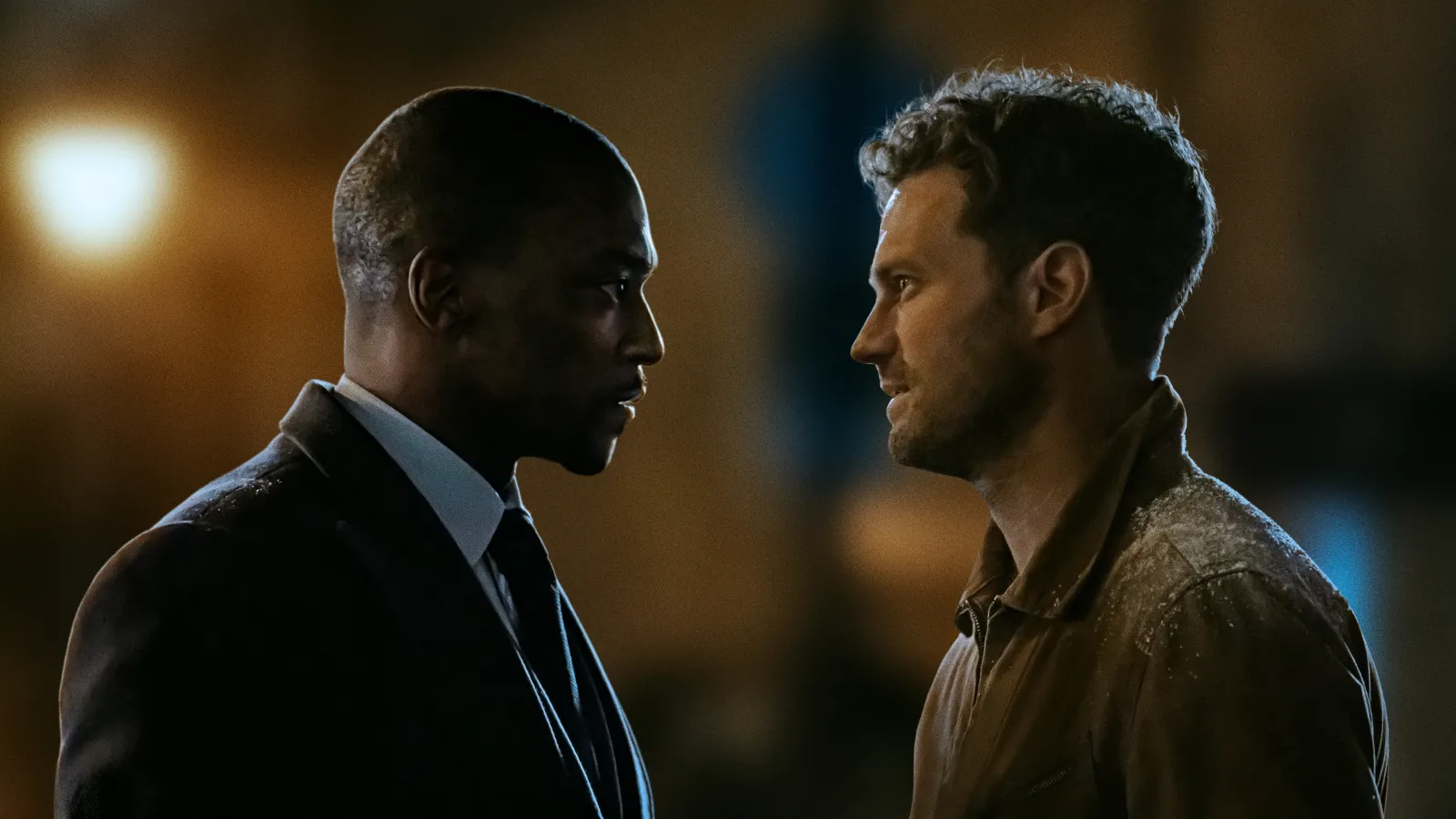
12 12 12 brings a new perspective to the popular robbery genre on television through Apple TV, following a massive European crime. Created by Jim Keeble and Dudi Appleton, the high-voltage thriller follows disgraced Federal Bureau of Investigation Agent Jack Strickland, played by Anthony Mackie, who, driven by rage and a desire for revenge, begins tracking known thief Paul Galvin, played by Jamie Dornan, across Europe after the biggest heist in the continent's history. Instead of a straightforward narrative, the show revolves around three stages of the heist, including the 12 months Paul and his team spend planning the operation, the 12 hours it takes to execute their plot, and the 12 days after the crime as Jack scrambles to bring them to heel. While the revolving timelines are certainly intriguing, the bloated cast, utterly confusing storylines, and clumsy dialogue make for a painfully puzzling watch.
The Zurich Bank Heist Begins
The story opens inside a vault at the Lindenhof Bank in Zurich, Switzerland, on Christmas Eve. In the haunting quiet, a lockbox door swings open, and Alberich, played by Julius Feldmeier, a contortionist, emerges fully nude, unfolding his limbs and snapping and cracking his bones and muscles back into place. It is time for the $1 billion burglary to begin. Elsewhere, the rest of Paul's expansive crew jumps into action. As the reserved larcenist sits in church mass, speaking quietly with his hot-headed older brother Bobby, played by Jack Kesy, Paul's father-in-law Serge, played by José Garcia, and a couple of other men stand in a train tunnel under the Lindenhof and begin drilling a hole into the vault. Meanwhile, Kira, played by Kali Reis, a train expert, creates a diversion for the Zurich police. In the Lindenhof security room, Gunda, played by Hildegard Schroedter, sets a trap for her coworker, then turns all the bank's cameras toward the vault Alberich has just entered.
How the Timeline Structure Works
Though audiences watch Paul's masterplan get underway, this is not really where the narrative begins. As Jack explains at the start of nearly every one of the eight-episode first season, The FBI Principles of Crime says a high-asset robbery is 12 months in planning and 12 hours in execution, and a bank robber who is not caught within 12 days is not caught at all. Though viewers are introduced to the extensive cast in the first hour of the pillage, the series constantly shifts timelines, moving through the 12 months of planning, the 12 days after the heist, and all 12 hours of the thieves attempting to steal the cash and make it out of Zurich undetected and unscathed.
Critique of the Narrative Execution
Jim Keeble and Dudi Appleton certainly wanted to deliver their own take on heist dramas, but the execution leaves much to be desired. Countless characters and ever-changing timelines create a baffling, exhausting tale. Told chronologically, or even in reverse, the show could have been engrossing. Instead, the entire series runs out of steam by the second episode, as audiences struggle to grasp what is happening and how the storylines and characters connect. Because the time frames feel so haphazard, there is little room for character connection or emotional grounding. Moreover, Jack's desperate need for vengeance clouds his judgment, leading him to make maddening choices that endanger himself and Zurich police detective Lena, played by Sallie Harmsen, who tries to help him when no one else will. As a result, the project feels like trying to simultaneously watch a multiplayer video game across multiple levels and points of view.
Visuals and Scenery Across Europe
This is not to say the production does not have truly stunning visuals, with locations including Marseille, France, the snowy Swiss Alps, and even Milan, Italy. But the scenery, countless explosions, gun battles, and fist fights do little to save a narrative buried under the weight of hijinks and confounding plot choices. The differing timelines do such a disservice to the show overall that when a huge twist is revealed toward the end of the season, it lands like a raindrop, and is a far cry from the jaw-dropping discovery it should be.
Conclusion and Release Schedule
Heists will always be a familiar trope for thrillers, and it makes sense that the creators wanted to put a unique spin on a tried-and-true genre. Unfortunately, cramming every idea, thought, and character they could conceive into this world, creating eight overblown episodes, proves to be a massive misstep. In the end, the grand finale feels like a relief instead of a revelation. The first two episodes of the series debut Nov. 13 on Apple TV, with the remaining episodes airing weekly on Fridays.
Background on Heist Dramas in Television
The heist genre has a long and storied history in both cinema and television, captivating viewers with intricate plots, high stakes, and intellectual battles between law enforcement and clever criminals. Landmark films like Ocean's Eleven and The Italian Job set high standards for cinematic capers, relying on charismatic ensemble casts, meticulous planning, and unexpected twists. In the television sphere, modern projects have expanded on this foundation by exploring extended timelines and deeper psychological character motivations. The massive global success of Spanish language series Money Heist demonstrated that audiences possess an immense appetite for multi episode criminal escapades that break traditional narrative conventions. Creators continually experiment with non-linear storytelling, shifting perspectives, and international backdrops to capture viewer attention in a crowded streaming market.