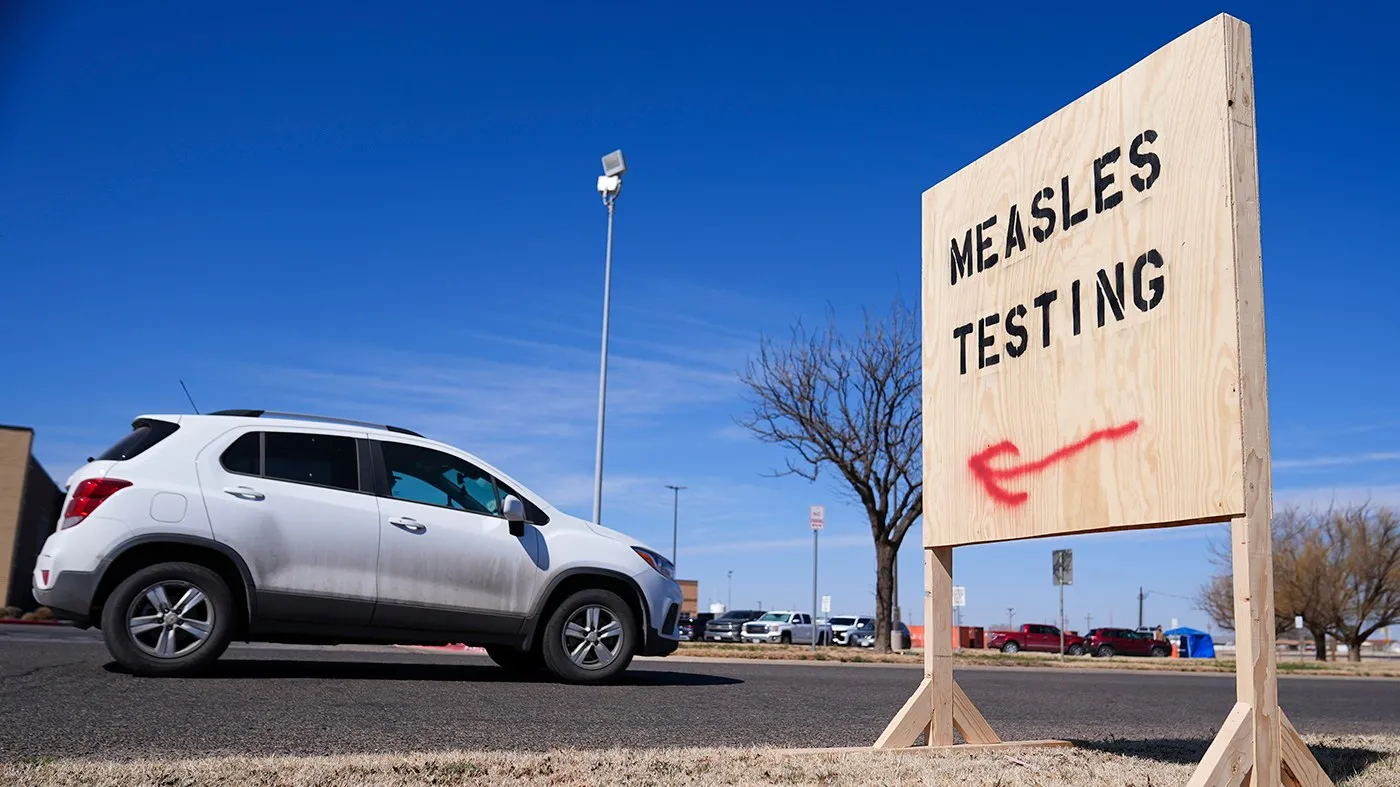
The Pan American Health Organization confirmed Tuesday that it was withdrawing the U.S.s measles elimination status, ending more than two decades of what is considered to be one of the greatest public health achievements in modern history. The decision follows a three-day, closed-door meeting last week between the U.S. and PAHOs Measles and Rubella Elimination Regional Monitoring and Re-Verification Commission.
Jarbas Barbosa, PAHOs director, announced the update during a Tuesday briefing. The commission concluded that endemic measles transmission has now been reestablished in Bolivia, Mexico and the United States, and recommended that their measles elimination status be withdrawn, a recommendation which I have accepted, according to Barbosa.
The U.S. achieved measles elimination status in 2000 and has held onto that for more than 25 years. But the past two years have seen close to 8,000 measles infections and roughly a dozen related deaths. This year has been the worst in terms of transmission in more than 30 years.
Following the Tuesday announcement, Health and Human Services Secretary Robert F. Kennedy Jr. wrote on social media, We will stop measles outbreaks, protect American families, and work to regain U.S. measles elimination status. I continue to recommend MMR vaccination as the most effective way to prevent measles.
Federal health officials do not seem pressed to change the current approach to the ongoing measles outbreaks across the country in light of PAHOs announcement. Erica Schwartz, director of the Centers for Disease Control and Prevention has previously said losing elimination status won't lead to changes in the federal response.
We know where transmission is occurring and weve invested $100 million in state and local health departments to reach those communities, Schwartz said on Tuesday. Losing a designation doesnt mean we abandon an evidence-based approach. It means we remain focused on stopping outbreaks.
The countries are now expected to present their corrective action plans to PAHO in the coming weeks. Canada lost its own measles elimination status one year ago and began working with PAHO to regain that distinction.
Last month its multi-jurisdictional outbreak was declared over, and the country will need to prevent 12 months of sustained domestic transmission to regain its elimination status.
Background on Measles Elimination and PAHO
The Pan American Health Organization serves as the specialized health agency for the Inter-American system and acts as the Regional Office for the Americas of the World Health Organization. The organization monitors regional health threats, tracks vaccination coverage, and verifies the elimination of vaccine-preventable diseases across member states in North America, Central America, South America, and the Caribbean. Maintaining an elimination status requires a country to interrupt endemic transmission of a virus for at least 12 months in the presence of a high-performing surveillance system.
When the United States originally reached its measles elimination status in 2000, public health authorities celebrated the milestone as proof that widespread vaccination programs could successfully halt domestic spread of the highly contagious viral illness. Measles is caused by a morbillivirus and spreads easily through the air when an infected person coughs or sneezes. Symptoms typically include a high fever, cough, runny nose, and a characteristic rash that spreads across the body. Prior to the introduction of the measles vaccine in 1963, major epidemics occurred every two to three years, causing an estimated 2.6 million deaths worldwide each year.
Public Health Response and Vaccination Efforts
Federal health agencies coordinate with state and local health departments to monitor outbreaks and distribute resources for containment and immunization outreach. The Centers for Disease Control and Prevention recommends the measles, mumps, and rubella vaccine as the primary defense against infection, noting that two doses of the vaccine are about 97 percent effective at preventing measles. Health departments deploy targeted vaccination campaigns and contact tracing whenever a case is identified in a community to prevent wider transmission among unvaccinated populations.
Recent years have presented challenges for public health immunization rates, with various communities experiencing declines in routine childhood vaccination coverage. Public health experts emphasize that maintaining herd immunity requires high and sustained vaccination uptake across all local jurisdictions. Funding allocated to state and local health departments supports staff who investigate potential exposures, provide education on vaccine safety, and ensure vulnerable populations have access to preventative medical services.
What Happens Next for US Health Authorities
Federal officials must formulate and submit a corrective action plan to PAHO detailing the specific steps the country will take to control ongoing outbreaks and interrupt domestic transmission chains. The Centers for Disease Control and Prevention plans to continue distributing previously allocated funds to local health agencies to bolster monitoring and immunization delivery in affected areas. Regaining the lost designation requires demonstrating the complete interruption of continuous, endemic measles transmission for a full calendar year, alongside maintaining robust surveillance capabilities to detect and respond to any imported cases swiftly.
Other nations that have experienced similar setbacks have followed structured pathways to restore their standing with international health monitors. Canada initiated corrective measures after losing its elimination status and successfully concluded its multi-jurisdictional outbreak response, illustrating the timeline and operational requirements involved in reversing transmission trends. United States health authorities will now operate under similar scrutiny from international monitors while executing domestic containment strategies.