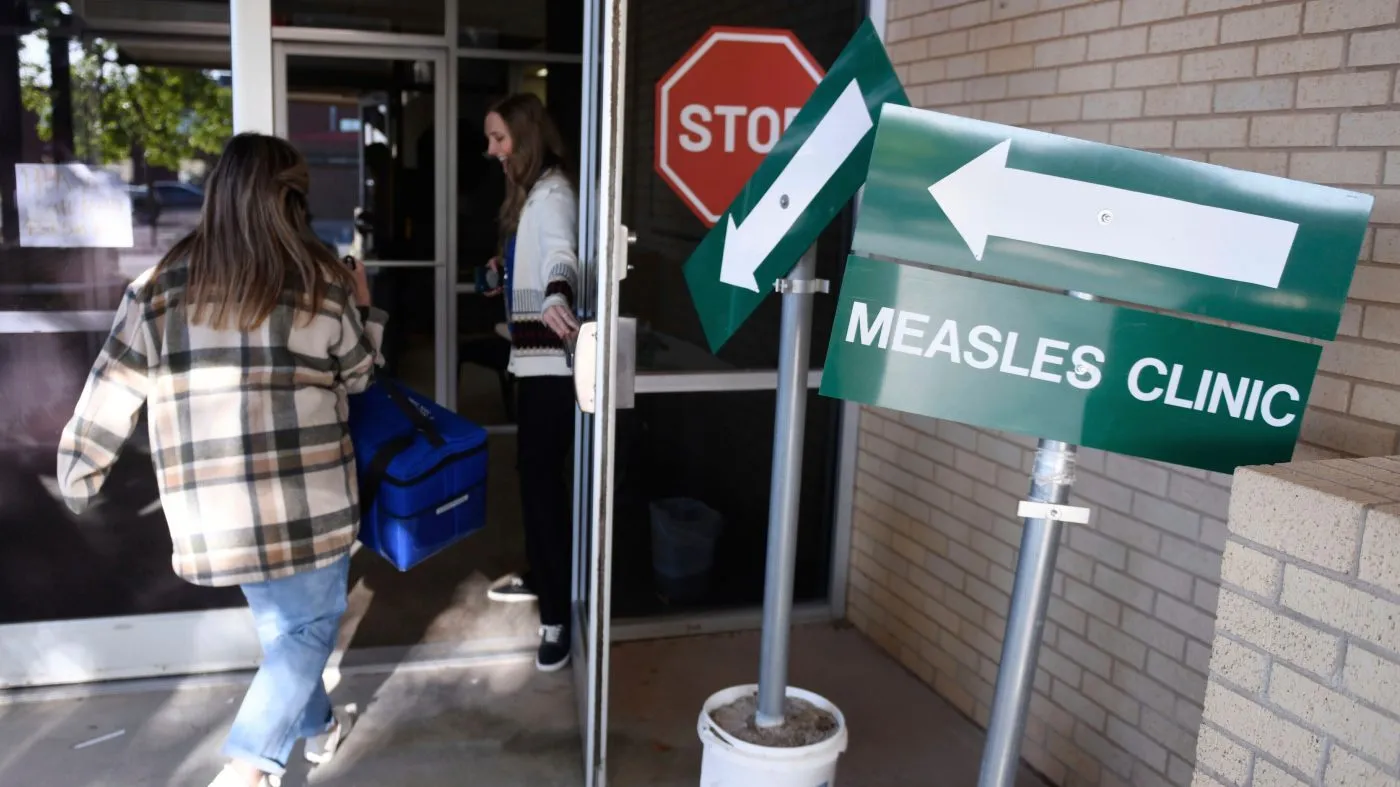
The United States is on the brink of losing its measles elimination status after more than 25 years. Losing this designation would be mostly symbolic, but it marks a step back for public health.
According to the latest release of data from the federal Centers for Disease Control and Prevention, there are more than 5,400 confirmed measles infections nationwide. This total is more than twice that of last year.
New York, Pennsylvania and Wisconsin have all reported their first measles-related deaths in decades this year, with 10 deaths reported by the states. The Centers for Disease Control and Prevention total currently only reflects six deaths, with the agency having switched from relying on states to official death certificate data, which takes longer to confirm.
Elimination status means that there have been no sustained instances of measles transmission for 12 months or more. The rising infections have been driven by declining vaccination rates, and the national measles, mumps and rubella vaccination rate in school-age children reached a new low of 92.4 percent in the 2025-2026 school year, with 39 states reporting rates that fall below the 95 percent target threshold.
To lose elimination status, measles must be spreading for 12 months or more, which passed in January of this year. The United States first achieved measles elimination status in 2000, with infection rates falling significantly after the two-dose measles, mumps and rubella vaccine was adopted at the national level in 1989.
The Pan American Health Organization has been reviewing the nation status this week, and the result is all but certain. Canada lost its own measles elimination status one year ago and has since been working with the Pan American Health Organization on regaining it.
In a statement on Thursday, the Infectious Disease Society of America called the formal loss of the country elimination status a tragedy. The Infectious Disease Society of America stated that the expected loss of America status as having eradicated measles will be a tragedy because it reflects the preventable loss of human lives, adding that it is unthinkable that people in the United States should be dying from measles in 2026.
Background on Measles and Vaccination History
Measles is a highly contagious viral illness that spreads through the air when an infected person coughs or sneezes. Before widespread vaccination began in the 1960s, millions of people were infected annually in the United States, leading to thousands of hospitalizations and hundreds of deaths.
The introduction of the first effective vaccine in 1963 drastically reduced the burden of the disease. In 1989, public health authorities recommended a second dose of the vaccine to ensure long-lasting immunity, which paved the way for the official declaration of elimination in 2000.
Public Health Implications
Public health experts emphasize that maintaining high community immunity protects vulnerable populations who cannot receive vaccines, such as infants and immunocompromised individuals. When vaccination coverage drops below the herd immunity threshold of 95 percent, communities become vulnerable to rapid outbreaks following an imported case.
State health departments across the country are currently working to ramp up outreach efforts and reminder notices for parents ahead of upcoming school enrollment deadlines. Federal health agencies continue to monitor the spread and provide guidance to local medical providers regarding early diagnosis and isolation protocols.