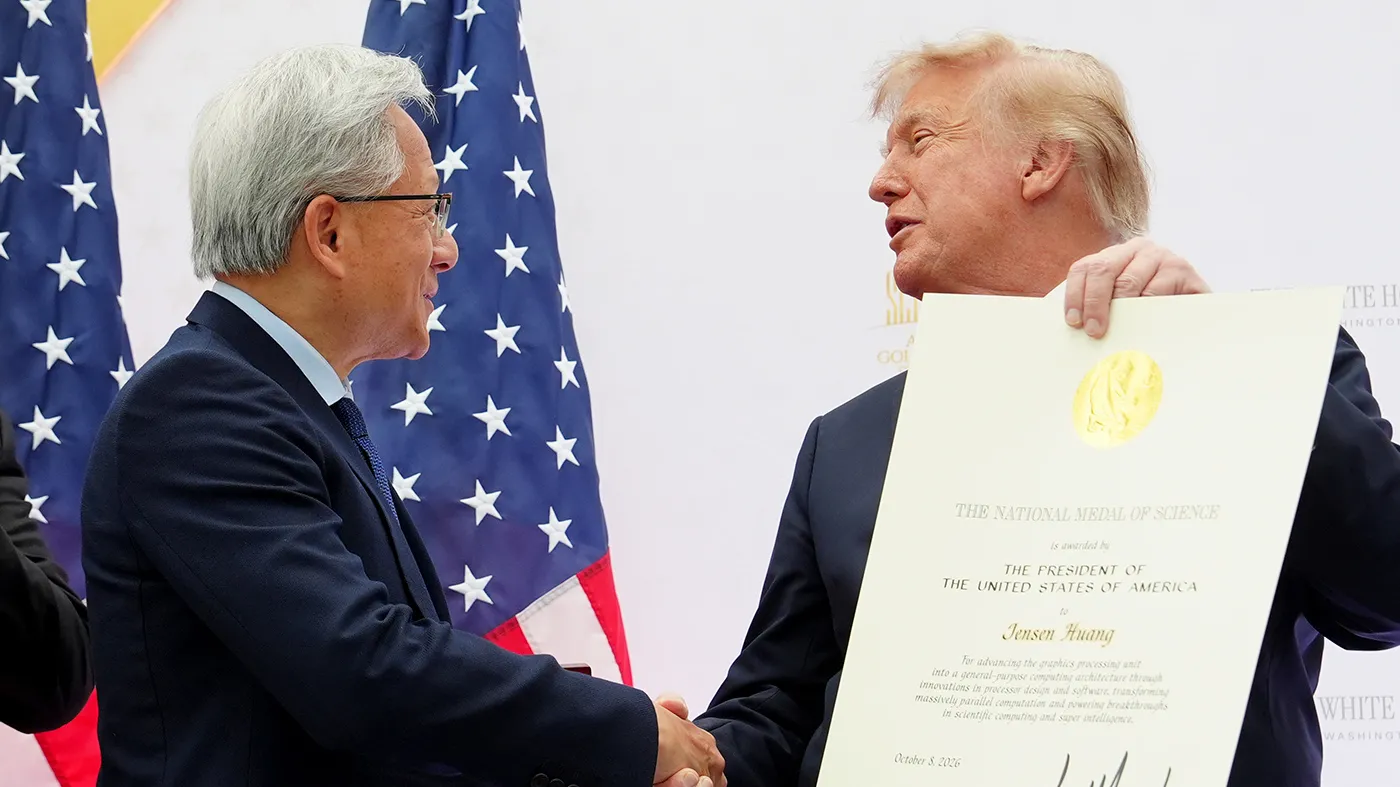
President Trump's recent intervention to reinstate Nvidia CEO Jensen Huang has ignited a looming confrontation between the Republican-controlled House and Senate and the White House over China policy, executive trade authority, and the global AI race. The dispute centers on whether Congress should tighten export controls on advanced microchips that Nvidia produces, a move that could reshape U.S. trade strategy and national security posture.
Who is at the center of the dispute?
Jensen Huang, the founder and chief executive officer of Nvidia, a leading designer of graphics processing units (GPUs) and artificial-intelligence (AI) accelerators, was ousted from the company on November 12 after revelations of extramarital affairs, one involving a Chinese tech executive suspected of being a spy. Trump intervened on Huang's behalf, and the Nvidia board reinstated him on November 23, just 11 days after his removal.
Commerce Secretary Howard Lutnick, a longtime Trump ally, has overseen U.S. export policy and has faced scrutiny for his handling of Nvidia chip sales to China. Senator John Thune, Senate Majority Leader, and Representative Brian Mast, chair of the House Foreign Affairs Committee, are key GOP figures pushing for new export limits.
What are the proposed export controls?
The Senate's amendment to the National Defense Authorization Act (NDAA) includes three bills: the Chip Security Act, the AI Overwatch Act, and the MATCH Act. The Chip Security Act seeks to prevent the smuggling of advanced chips to China. The AI Overwatch Act would require the Commerce Department to notify Congress of pending export approvals for AI chips to adversarial countries, giving lawmakers the power to block sales deemed a national-security threat. The MATCH Act would impose restrictions on semiconductor manufacturing equipment exported to China.
Why is Congress pushing for tighter controls?
Senator Thune stated, "Allowing China to obtain America's most advanced chips creates a significant national security vulnerability. Through vigorous oversight and adoption of strong, bipartisan export-control measures, Congress will do its part to ensure our national security interests are being met." The push is driven by concerns that Nvidia's expanded sales to China could give Beijing a technological edge in AI, potentially undermining U.S. dominance.
What is the White House's position?
Trump and his administration have not publicly commented on the legislation. The White House's stance appears to favor a "go-it-alone" trade approach, exemplified by Trump's tariff policies and a reluctance to cede unilateral control over export decisions. Commerce Secretary Lutnick has been criticized for a "soft-glove" approach that may have benefited his family financially, prompting a House Democratic investigation and a Senate panel hearing request.
What could happen to the NDAA?
The NDAA is typically a bipartisan effort, but the inclusion of export controls could complicate its passage. The Senate has not yet passed the NDAA, while the House version passed in July lacks chip export provisions. Speaker Mike Johnson has expressed support for adding restrictions, but the final bill may face delays if Trump rejects the controls.
How does this fit into the broader U.S. strategy toward China?
China has been a focal point of U.S. national security policy, with the administration seeking to limit the transfer of advanced technologies that could bolster Beijing's AI capabilities. The proposed bills represent a legislative effort to reinforce executive measures and ensure that high-tech exports do not compromise U.S. interests.
What are the implications for Nvidia and the AI industry?
Huang argues that selling advanced chips to China keeps U.S. engineers engaged with American hardware, preventing China from developing its own manufacturing know-how. GOP hawks counter that such sales accelerate China's AI progress at the expense of U.S. security. The outcome of the legislation will affect Nvidia's global sales strategy and the broader semiconductor supply chain.
What is the timeline for the legislative process?
Republicans control both chambers of Congress until the January 2025 transition. Lawmakers have three weeks remaining in the current legislative calendar to pass the NDAA amendments before the Democratic majority takes over. The bills are expected to be attached to a must-pass Pentagon funding bill slated for passage before year's end.
Key players in the debate
Senator Tim Scott (R-SC), chair of the Banking Committee, has asked Lutnick to testify before his panel in December. Representative Brian Mast (R-FL) introduced the AI Overwatch Act last year and has voiced concerns over Huang's alleged affair with a Chinese intelligence asset and the smuggling of advanced chips into China. Speaker Mike Johnson (R-LA) has signaled support for adding chip restrictions to the defense bill.
What does this mean for U.S. trade policy?
The dispute highlights a growing rift between the executive branch's preference for unilateral trade actions and Congress's desire for oversight. Should Congress succeed, it would mark a significant shift in how the U.S. regulates high-tech exports, potentially limiting the country's ability to negotiate trade deals without congressional input.
What is the public reaction?
While the White House has not issued a statement, public attention has focused on the potential impact on U.S. technology leadership and national security. The debate underscores the tension between fostering global trade and protecting strategic advantages.
What are the next steps?
The Senate will vote on the NDAA amendment, and the House will consider adding export controls to the defense bill. The outcome will determine whether Congress can assert control over advanced chip exports or whether the executive branch will maintain its unilateral authority.
Miranda Nazzaro contributed.