A significant majority of professional film editors are incorporating artificial intelligence into their daily workflows, according to new data published following a survey by software company Avid. Out of 120 members of the American Cinema Editors organization surveyed, 77.5% reported using technology tools to assist with post-production tasks.
The survey highlights that professionals are primarily turning to automated solutions for specific technical duties rather than creative storytelling decisions. Transcription leads the use cases at 60%, followed by audio cleanup at 55%, and searching through extensive libraries of footage at 39.2%.
Additional applications include generating specific visual references to help producers understand required shots and tagging detailed metadata for individual clips. Matt Feury, Avid vice president of artist relations, noted that practitioners want to eliminate repetitive administrative burdens.
"Nobody grows up saying 'I dream of sinking dailies one day,'" said Matt Feury, explaining that professionals try to minimize manual media and metadata management tasks. Feury added that the research was initiated to test whether industry resistance to new technology was as widespread as anecdotal reports suggested.
Instead of discovering widespread pushback, the findings demonstrated an eagerness to experiment among industry professionals. Editors have traditionally embraced innovative techniques to solve complex workflow challenges.
"Just by nature, editors are always exploring new avenues, new technologies," said Feury, noting that practitioners remain unafraid to test new capabilities. This trend mirrors a broader industry shift across Hollywood, where production companies and performers increasingly explore automated systems.
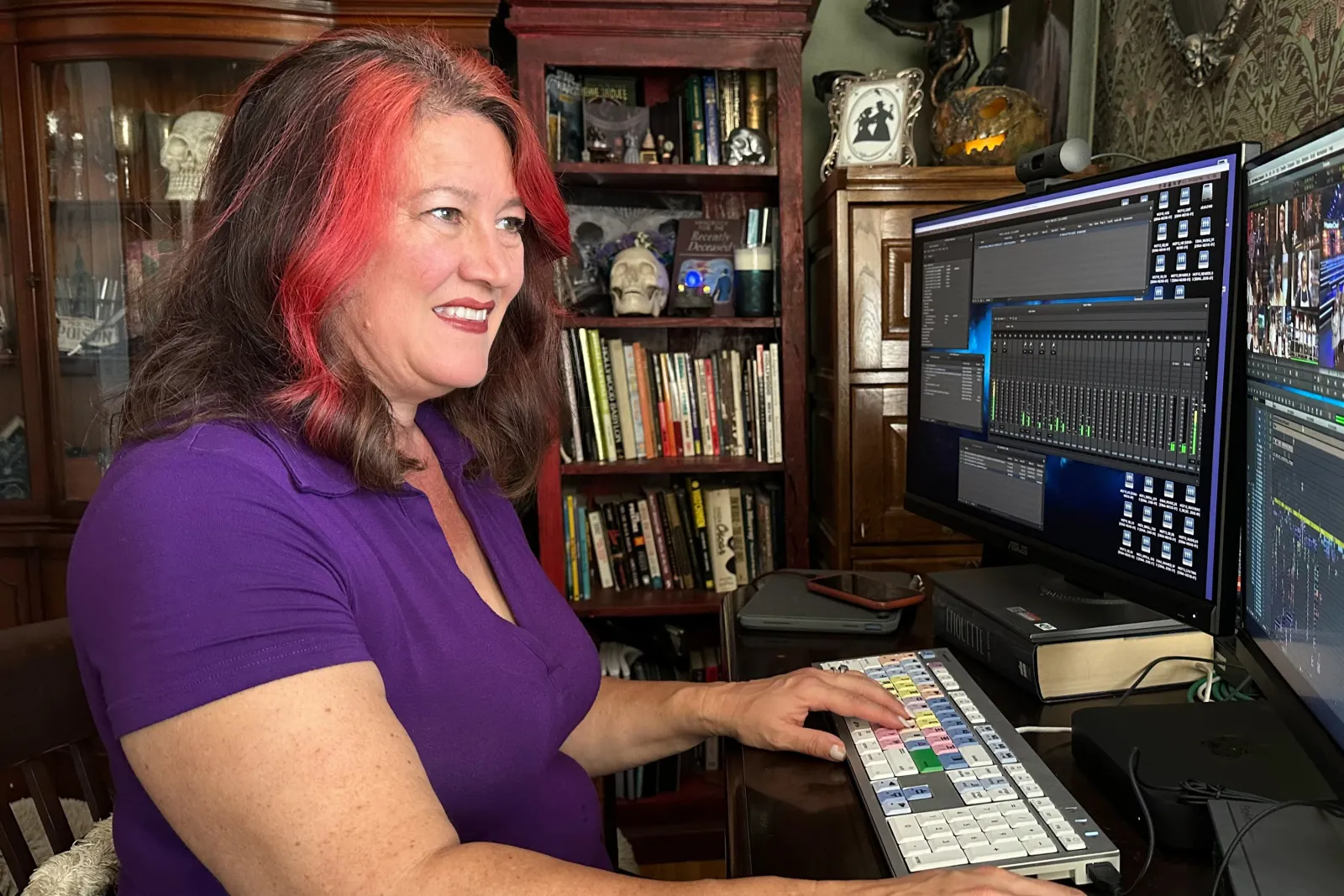
Economic pressures and job scarcity also drive adoption, as professionals seek to remain competitive in a tight labor market. Emmy-nominated editor Molly Shock explained to Variety that staying informed about technological progress is essential for career survival.
"We do recognize it's not going away," said Molly Shock, emphasizing that adaptation is necessary. "You adapt or die. So that's a pretty big incentive."
Practical benefits are already evident on major television productions, including a recent season of MasterChef where production teams accessed automated tools. Locating a specific clip of a contestant checking a watch previously required scouring thousands of hours of material over several hours.
Automated search features now reduce half a day of searching down to mere seconds. Shock stated that the software correctly identifies specific participants when given simple text prompts.
"It's smart enough that it recognizes who the contestants are, and you can just say, you know, 'John does time check,'" said Shock, explaining how the workflow has evolved. She added that the saved time allows for greater focus on creative polish rather than mechanical tasks.
Despite these efficiencies, practitioners maintain clear boundaries regarding automation in the creative pipeline. Nearly 100% of respondents who use these tools daily or weekly believe artificial intelligence should merely support human vision rather than dictate narrative choices.
Only 7.5% of survey participants expressed interest in letting software handle assembly cuts or rough sequences. Meanwhile, ethical dilemmas, copyright questions, and data security accounted for nearly 50% of the reported barriers to broader implementation.
Industry professionals stress the importance of protecting career pathways and professional growth for newcomers. Editors want a voice in how these systems are deployed across major studios and independent productions alike.
"We the editors understand that this AI could be a really cool tool," said Shock. "We just want to make sure we're included in the conversation of how it's going to be used, and we're not just thought of as a button-pusher and, 'OK, we can just replace this person with a program,' because we do so much more than that. So as long as we are being able to be in the conversation, we are very appreciative."
Background on American Cinema Editors and Avid
American Cinema Editors is an honorary professional society of motion picture editors founded in 1950, admitting members based on their professional achievements and commitment to the editing craft. The organization evaluates candidates through a selective application process before granting members the right to use the honorary ACE designation after their names.
Avid Technology is a media technology company established in 1987 that develops digital non-linear editing systems and audio production software. Its flagship products, Media Composer and Pro Tools, became industry standards for film and television post-production throughout the 1990s and 2000s, shaping modern digital workflows.
Evolution of Post-Production Technology in Hollywood
The transition from physical celluloid film splicing to digital non-linear editing systems during the 1990s marked a major technological shift in the entertainment industry. Editors transitioned from physical flatbed editing machines to computer-based timelines, sparking similar discussions about the preservation of traditional skills and the automation of manual labor.
Modern post-production facilities routinely handle petabytes of digital footage captured across multiple cameras during a single television season or feature film shoot. Machine learning algorithms and neural networks have gradually been integrated into professional software suites to help index, transcribe, and organize these massive digital archives.