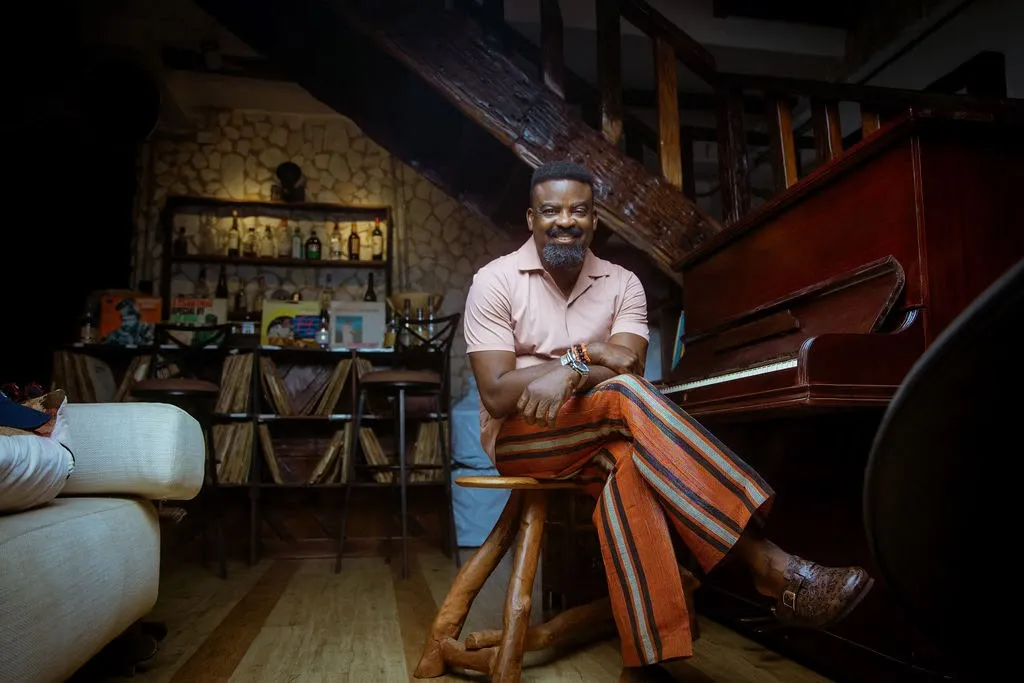
Nigerian filmmaker Kunle Afolayan is building a future for African cinema by focusing on the preservation of its past. Speaking at the fourth edition of the International Salon for Audiovisual Content of Abidjan in Ivory Coast, the director explained that there is currently no dedicated place worldwide to study the history of African cinema despite the continent rich culture.
New Pan-African Initiatives
Kunle Afolayan is preparing to launch two major pan-African initiatives. These include the Museum of African Cinema and the ITAN Screen Gathering and Awards. The inaugural edition of the noncompetitive event will take place in October 2027 at his KAP Film Village and Resort in Nigeria.
Named after the Yoruba word for story and history, the three-day gathering will welcome an anticipated 200 guests. Between eight and 10 films will be screened in an open-air theater during the event. The founder is currently seeking partners for both the museum and the gathering.
Restoring Family Heritage
The motivation for the museum stems from Kunle Afolayan efforts to preserve the cinematic work of his late father, filmmaker Adeyemi Afolayan, who was popularly known as Ade Love. After locating his father films in the United Kingdom, he began pursuing their restoration in 2012 and has successfully restored five films.
Reflecting on the wider state of the industry, he remarks, "You can imagine just how many films have been made in Africa and even the families of the filmmakers don't have access to them. They don't even know where the films are."
Early Touring Experiences
From the age of 12, Kunle Afolayan accompanied his father traveling cinema operation across West Africa. The tours reached from Lagos to Cotonou in Benin, Togo, Abidjan in Ivory Coast, and Ghana.
Describing the experience, he recounts, "It's like an artist going on tour. We'd be showing my father's films in town halls, schools, the cinemas, in open-air venues." Having witnessed the craftsmanship of 35mm and 16mm productions in the 1970s and 1980s, he later grew concerned as economic pressures and digital shifts lowered production standards.
Balancing Art and Business
When starting his own career, Kunle Afolayan committed to merging digital possibilities with high production values. He states, "I'm not going to compromise on sound, I'm not going to compromise on picture and I must tell a story that will have universal appeal."
His father career also highlighted the financial vulnerabilities artists face without business plans, especially as Nigerian currency depreciation made printing films abroad unaffordable. Citing the enduring commercial value of Francis Ford Coppola film "The Godfather", he asks, "Why can't we do that as Africans?" He adds, "I'm an artist, but I balance it with commercial concerns, because I have to make sure my family, my crew are fed. Iwant continuity and I want sustainability."
Developing Infrastructure
Kunle Afolayan has relied on bank loans since 2009 to finance his projects. Government-backed financing later allowed him to acquire the property for KAP Hub in Lagos, which houses a 120-seat cinema, a filmmaking academy, a studio, and hospitality facilities.
His KAP Film Village and Resort in Oyo State, located north of Lagos, features filmmaking facilities alongside 100 guest rooms and welcomes external productions. He observes, "A lot of filmmakers or practitioners in the art space really don't develop or build things that will outlive them outside of the craft. It's not just craft. It's also business."
Intellectual Property Rights
A core pillar of this business philosophy is retaining ownership of intellectual property. Apart from "A Naija Christmas", where Netflix owns the intellectual property rights, all of his collaborations with the streaming giant are co-productions where he retains permanent ownership.
He contrasts the entrepreneurial approach of Anglophone African filmmakers with the reliance on international funding by many Francophone counterparts, stressing the need to protect long-term commercial value. He emphasizes, "These are your assets. This is your future. When you're done using it, pass it down to your children."
Cross-Border Collaborations
Pan-African themes have long shaped his creative output. His 2016 feature "The CEO" was shot across five African countries, while "Citation" took him to Senegal and Cape Verde without formal co-production deals.
A recent partnership with Benin involved a three-month filmmaking residency training participants in Cotonou before completing two short films in Nigeria that now circulate internationally on the festival circuit. Further cooperation with Benin includes infrastructure development and potential co-productions. His return to the International Salon for Audiovisual Content of Abidjan aims to further these cross-border discussions. He says, "I'm all about pan-Africanism", describing the market as a place to collaborate and break down borders.
Upcoming Projects
Beyond seeking international distribution partners for his catalog at the Abidjan market, the director has new projects scheduled. The third season of "Aníkúlápó" is set to premiere in January 2027 following the success of the original Yoruba-language film and subsequent Netflix series. He is also in discussions with MultiChoice for a potential new show.
Concluding his remarks on asserting African ownership of storytelling, Kunle Afolayan states, "I'm going to tell my story from my perspective and I want you to respect it."
Background
Kunle Afolayan comes from a prominent Nigerian entertainment family. His father, Adeyemi Afolayan, was a pioneering figure in Nigerian cinema during the golden age of celluloid filmmaking in the country. The shift from celluloid to digital video formats in Nigeria during the late 1990s and early 2000s, often referred to as the Nollywood boom, dramatically increased output while initially lowering technical standards due to budgetary constraints. Over the years, filmmakers like Kunle Afolayan have worked to elevate production values back to international cinematic standards while distributing through global streaming platforms such as Netflix.
What Happens Next
The third season of "Aníkúlápó" will premiere in January 2027. Meanwhile, preparations continue for the inaugural ITAN Screen Gathering and Awards, which will take place in October 2027 at the KAP Film Village and Resort in Nigeria. Kunle Afolayan continues to seek strategic partners to establish the planned Museum of African Cinema and expand international distribution for his existing film catalog.