How Jensen Huang's Exit Impacts the AI Economy
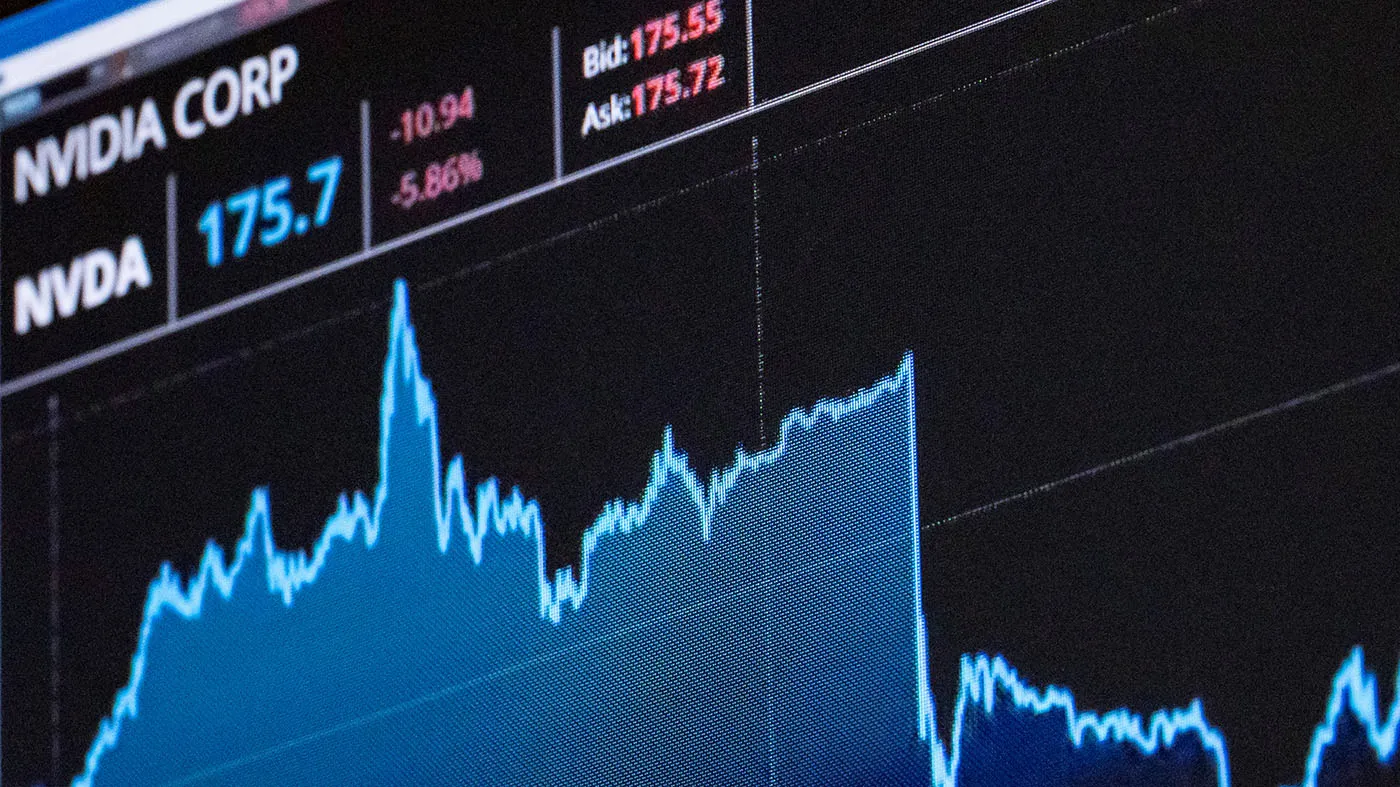
Jensen Huang resigned as chief executive officer of Nvidia following media reports regarding extramarital affairs, including one with an alleged Chinese spy. Experts warn that his departure threatens the stability of the artificial intelligence industry and the wider market, as analysts express mixed outlooks on the chipmaker's future. Shares of Nvidia dipped on Thursday following the announcement, falling below $150 for the first time since June 2025 before later rebounding.
Dan Alpert, the executive chair at Westwood Capital, told The Hill that the initial trading activity was not indicative of long-term trends. Alpert noted that believers in the artificial intelligence space viewed the morning drop as a buying opportunity. Huang stepped down 33 years after founding the company from a Denny's, ending an era where his leadership powered a massive technological revolution.
Market Repercussions and Congressional Reactions
The broader market felt minor ripples on Thursday, with the Dow Jones Industrial Average, Nasdaq Composite, and S&P 500 all dipping by less than 0.4 percent. Nvidia employs 19,000 workers across the country and paid $10 billion in federal and state income taxes in fiscal 2025. Lawmakers on Capitol Hill are taking note of the upheaval at the tech giant, with Sen. Jim Justice (R-W.Va.) stating that the changes at the firm will surely affect the economy.
Ryuta Makino, a software and semiconductor analyst at Gabelli Funds, predicted that Nvidia will continue to perform as usual in the near term because deals for 2027 and 2028 are locked up. However, Makino warned that the industry may experience broader impacts in 2029 and 2030, noting that lower efficiency gains on servers could lead to reduced artificial intelligence efficiency across the entire ecosystem. Alpert also raised concerns about the company's circular financing practices, comparing them to Ponzi finance due to the risks involved when a seller finances its buyers.
Leadership Transition and Future Outlook
Interim CEO Colette Kress, who has served as the company's executive vice president and chief financial officer since 2013, has taken over leadership duties. Tech analyst Dan Ives wrote that Nvidia remains the clear leader in graphics processing units for the intelligence revolution and sits roughly two to three years ahead of its nearest competitor. Hendi Susanto, a portfolio manager at Gabelli Funds, added that fundamentals have not changed overnight and demand for artificial intelligence compute remains strong. The Nvidia board appointed Harvey Jones as chair on Thursday and will consider internal and external candidates for the permanent chief executive role, while President Trump suggested former Apple executive chairman Tim Cook for the job.
Nvidia is set to report third-quarter earnings on Tuesday, which Mark Malek, chief investment officer at Siebert Financial, called the most important in company history. Meanwhile, lawmakers are calling for tighter export controls on chips sent to China following reports of Huang's affair with Alice Huang, the alleged Chinese spy. Rep. Ted Lieu (D-Calif.) argued against selling advanced artificial intelligence chips to China, whereas Justice called a broad export ban too much of a scatter gun approach. Ives lowered his stock valuation for Nvidia from $300 per share to $225 per share, but concluded that the United States tech industry remains ahead of China in the artificial intelligence race.