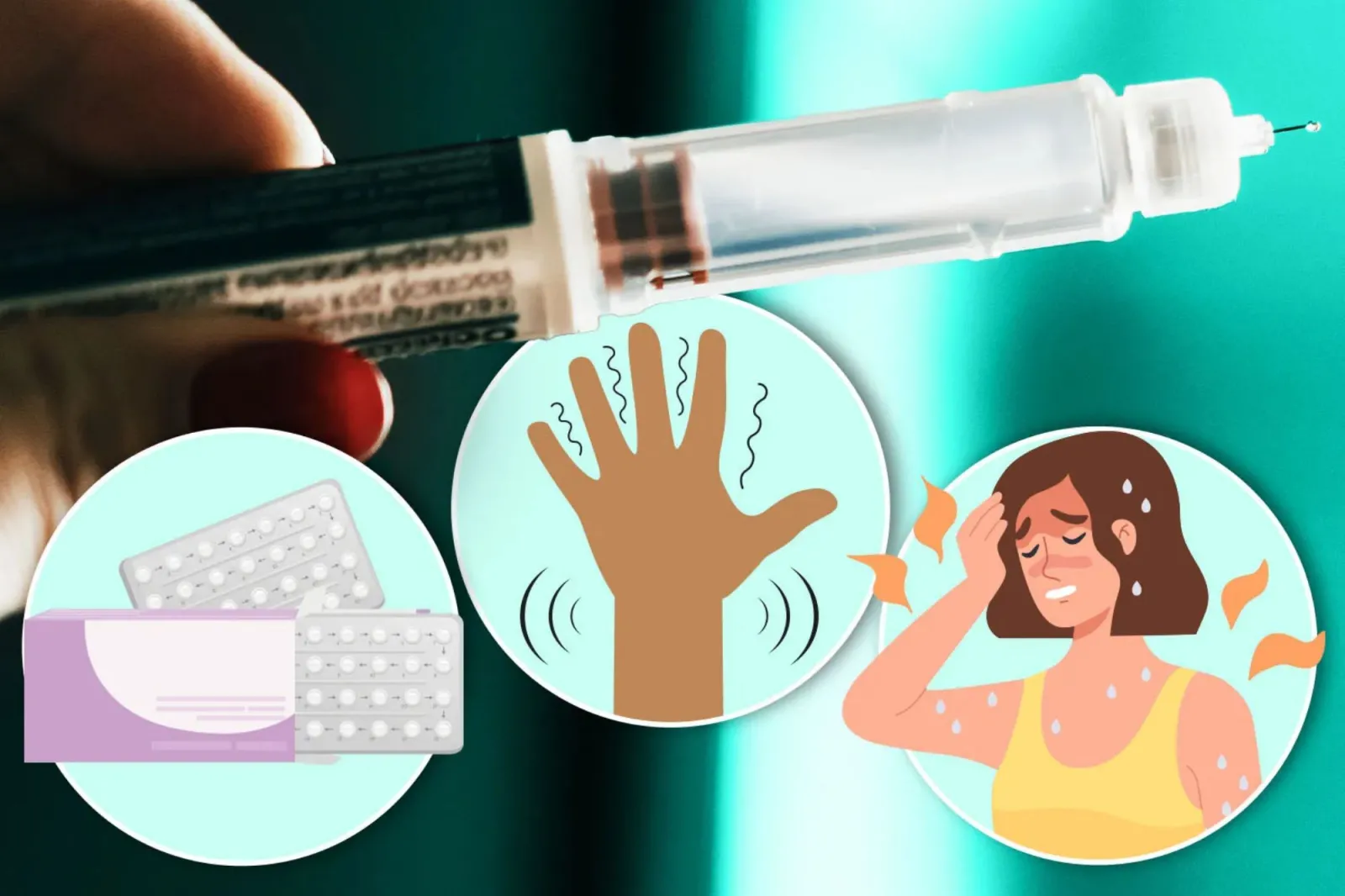
Popular weight loss jabs have taken the weight loss industry by storm across the UK and beyond. From helping Brits to shift the pounds to possibly even boosting heart health, their benefits seem endless, but there are some downsides. Some experience unpleasant side effects while others gain back the weight they have lost after coming off the injections.
And now, early research has shown that weight loss jabs could also stop other medications from working. UK health chiefs warned slimmers last year that Mounjaro could make the contraceptive pill less effective, but it is not the only drug that may be weakened by the popular injections.
Scientists are still figuring out why weight loss jabs may meddle with other drugs, but they think it may have something to do with the way GLP-1s work to curb appetite. Wegovy and Mounjaro have been designed to mimic a hormone the body produces naturally to signal fullness, thus dulling appetite and causing users to eat less, triggering weight loss.
These drugs also slow down digestion, making food travel more slowly through the gut. If pills are mixed into the contents of your stomach, it essentially means they are being held up in traffic. This can turn out to be a problem if they need to be taken on the hour in order to have an effect, and the contraceptive pill is a good example.
It may also be an issue for drugs that only have a short time window to be absorbed, like certain medications for Parkinson's disease. But weight loss jabs do not just hold up drugs in the gut and delay them from entering the bloodstream. They may also make medications weaker.
Dr Simon Cork, a physiology lecturer at Anglia Ruskin University, told BBC Science Focus: "It is the small intestine where most oral drugs are absorbed. If you slow the rate at which things move through the stomach, then drugs might get broken down quicker than they can be absorbed." So by the time the drugs make it to the bloodstream, their impact may have been dulled.
This has been shown in research, with a paper from 2024 finding that GLP-1s affected the timing and peak concentration of medications like blood thinners, statins and contraceptives in the blood. Finally, common side effects from weight loss injections like vomiting and diarrhoea can mean your meds are never absorbed.
Dr Cork said "any oral drug has the potential to be affected". Meanwhile, Prof Giles Yeo from University of Cambridge, said the effect of GLP-1s on other drugs matters most when these drugs need to be delivered in a precise way. Here, we discuss three drugs that may be affected by your weight loss jab.
The pill
It is thought that GLP-1 drugs could reduce the absorption of contraceptives, due to the fact they slow down the emptying of the stomach. The Medicines and Healthcare products Regulatory Agency specifically warns women taking Mounjaro to use a non-oral method of contraception, after studies found the active drug tirzepatide may reduce the effectiveness of oral contraceptives in women who are overweight.
Research from 2024 found that tirzepatide delayed absorption of the pill by up to four hours and reduced the levels of ethynylestradiol, one of the active ingredients, in the blood. Prof Yeo said: "The hormone needs to be delivered at the right place, at the right time, crucially, to have the maximum effect."
That does not mean the pill will stop working entirely, but it will be less reliable at preventing pregnancy. "In other words, you are not going to suddenly become pregnant, but if millions of people are taking it, and millions of women are on oral contraception, you are going to get a lot of unexpected babies," Prof Yeo said.
HRT
Another hormonal drug that may be affected is hormone replacement therapy used during menopause. The British Menopause Society advises women using GLP-1s for diabetes or obesity to use transdermal oestrogen, like HRT patches or creams, instead of pills.
"Semaglutide and tirzepatide result in delayed gastric emptying and gastrointestinal side effects are common," it explained. "The impact of these medications on efficacy of co-prescribed oral hormone medications within HRT are unknown."
Parkinsons drugs
Finally, levodopa, a drug used for Parkinson's disease to stop tremors, may also be affected, "because it requires very quick absorption from the stomach", according to Dr Cork. The Specialist Pharmacy Service describes this drug as a time critical medicine.
"GLP-1 RA use may be an additional factor when assessing the risk of toxicity or loss of efficacy in people taking medicines with a narrow therapeutic window," it advises prescribers. "These people may require additional monitoring."
Background on GLP-1 Receptor Agonists
GLP-1 receptor agonists represent a class of medications originally developed for the management of type 2 diabetes before their profound weight management properties were discovered. These pharmaceutical agents mimic glucagon-like peptide-1, an endogenous incretin hormone released by the intestinal tract in response to nutrient ingestion. By stimulating insulin secretion, suppressing glucagon release, and significantly delaying gastric emptying, these compounds successfully regulate blood glucose levels while simultaneously promoting profound satiety. Major pharmaceutical companies manufacture these treatments, which have seen an unprecedented surge in global demand and widespread clinical utilization.
Oral Contraception and Gastrointestinal Dynamics
Oral contraceptives rely heavily on predictable gastrointestinal absorption to maintain steady hormone concentrations within the female bloodstream. When pharmaceutical interventions alter gastrointestinal motility and prolong gastric residence time, the pharmacokinetic profile of orally administered compounds undergoes substantial alteration. Regulatory bodies such as the Medicines and Healthcare products Regulatory Agency continuously review emerging clinical data to update safety communications regarding potential drug interactions. Healthcare professionals must evaluate individual patient regimens carefully when co-prescribing these metabolic therapies alongside oral contraceptive formulations.
Hormone Replacement Therapy and Alternative Delivery Systems
Hormone replacement therapy provides essential oestrogen and progesterone supplementation to alleviate vasomotor symptoms associated with menopause. Oral administration routes depend on consistent gastrointestinal uptake, which can be compromised by delayed gastric emptying induced by incretin mimetics. Clinical societies recommend alternative transdermal delivery systems, including dermal patches and topical gels, because these formulations bypass the digestive tract entirely. Such clinical precautions ensure that therapeutic hormone levels remain stable despite concurrent metabolic therapy.