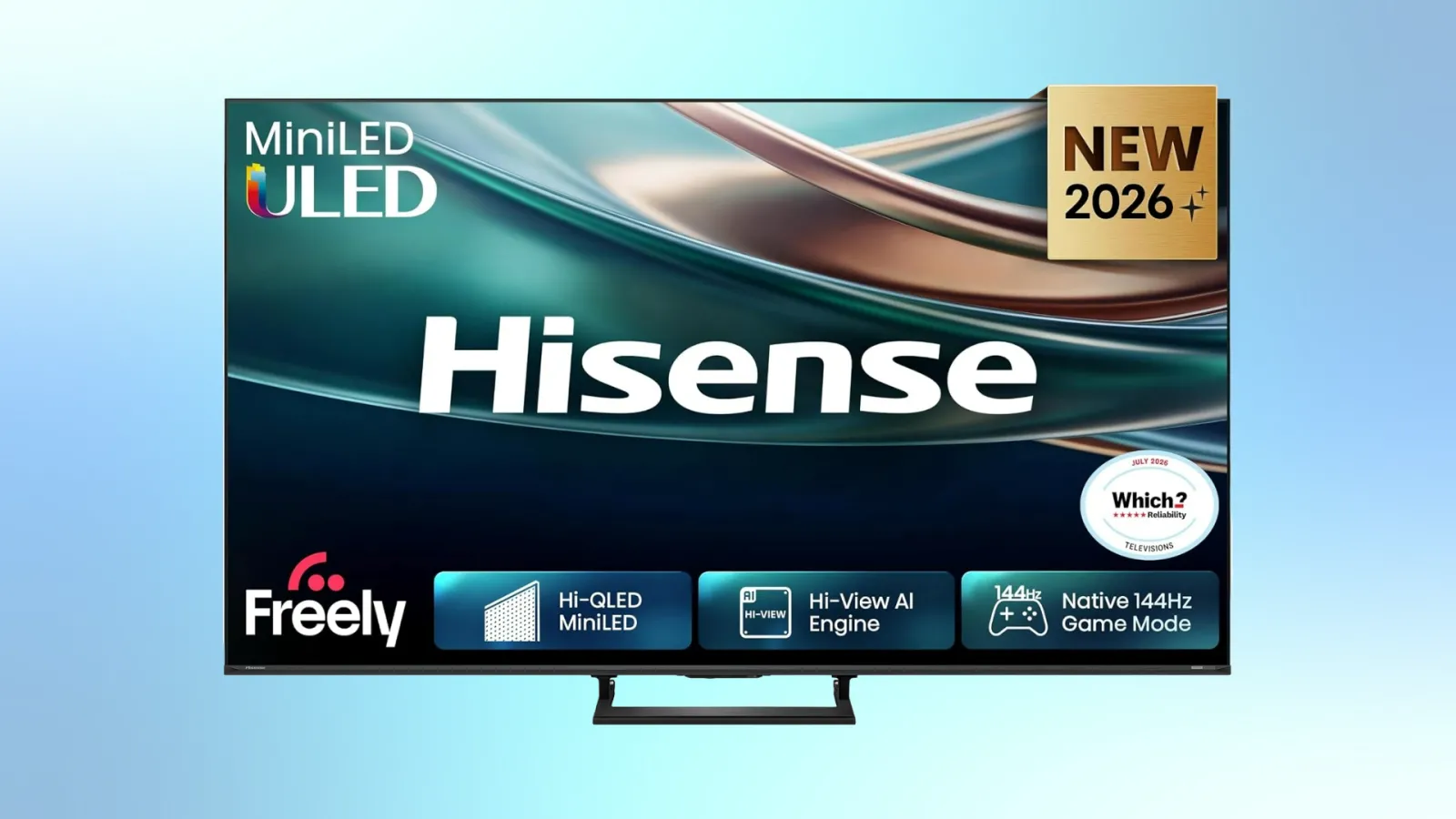
Shoppers are heading to Amazon to nab a Hisense MiniLED TV slashed in the retailer's Black Friday sale. Already described by reviewers as great value, the Hisense 50 Inch 50Q8STUK MiniLED 144Hz 4K Ultra HD AI Smart TV has been reduced from £549 to £509.
Hisense 50 Inch 50Q8STUK MiniLED 144Hz 4K Ultra HD AI Smart TV, £509 was £549 at Amazon. While it might not seem like the most generous deal in the sale, especially with other televisions at Amazon slashed by hundreds, this is one of Hisense's newest models, having only been released this year. In fact, this is the first time we have seen it given a meaningful price reduction, and £509 is the cheapest it has ever been on Amazon.
The deal could not have come at a better time, with plenty of gamers inevitably looking to upgrade their television following the release of GTA 6 Launches as Massive Entertainment Event Aiming for $8 Billion. One of the 50Q8STUK headline features is its 144hz refresh rate, which puts it above many models in a similar price bracket. The effect of that is a noticeable reduction in motion blur and stuttering, making for a perfectly smooth gaming experience.
The audio is impressive for the price too, as a built-in subwoofer alongside twin speakers could provide a noticeable upgrade when watching films or live sport. And Hi-QLED MiniLED technology, another rarity at this price point, packs thousands of tiny backlights behind the screen to deliver deeper blacks and sharper contrast, which is ideal for gloomier movies and series where all the action takes place at night.
The 50-inch model isn't the only size to get a discount. The 55-inch version has been slashed from £649 to £549, a saving of £100, while the mammoth 85-inch version has received a price cut of £200, from £1,499 to £1,299.
Customer Reviews and Other Deals
Although the 50Q8STUK is a relatively new addition to Amazon, shoppers have already left some glowing reviews. One customer wrote that they picked this up as their main living room television, mostly for gaming, and a few weeks in they are really impressed. The picture is the first thing you notice, being a MiniLED panel, so dark scenes actually look dark instead of that grey glow you get on cheaper sets, and the colours are punchy without looking fake, while bright daytime viewing is no problem either.
For gaming it has been brilliant, running at 144Hz and making everything feel noticeably smoother and more responsive than an old television. Sound was the other surprise, with a subwoofer built into the back having proper weight to it for films and games, meaning the buyer was planning to buy a soundbar and has not bothered. Another customer wrote that overall, this television offers outstanding value for money, delivering rich powerful sound, punchy visuals, deep blacks, smooth 120Hz gaming and useful smart features for an excellent all-round experience.
If you are looking for other discounts on televisions, Halfords has slashed the price of a massive 86-inch LG television by over £1,000, while a 55-inch Samsung has been discounted from £649 to £399.
Background on MiniLED Technology and Black Friday
MiniLED technology represents a significant evolution in LCD panel manufacturing by replacing traditional LED backlighting with thousands of microscopic diodes. This allows local dimming zones to operate with much higher precision, drastically improving contrast ratios and minimizing blooming artifacts around bright objects on dark backgrounds. Manufacturers have increasingly adopted this technology to bridge the gap between traditional LED displays and expensive OLED panels. As production efficiencies improve, brands like Hisense have managed to introduce high refresh rate panels into mid-range consumer electronics.
Black Friday originated in the United States as the day following Thanksgiving, marking the unofficial beginning of the holiday shopping season. Over recent decades, the retail event expanded globally through major e-commerce platforms like Amazon, transforming into a massive digital sales period across the United Kingdom and Europe. Retailers routinely leverage this period to clear inventory and introduce promotional pricing on newly released consumer goods, ranging from kitchen appliances to high-end entertainment systems and computer hardware.
Evolution of Modern Gaming Displays
Modern video game consoles and high-end personal computers require advanced display specifications to handle fast-paced rendering and high frame rates. Traditional televisions historically operated at 60Hz refresh rates, which often introduced visual judder during rapid camera movements in action titles. The introduction of 144Hz panels into consumer televisions aligns display capabilities with the technical output of modern gaming hardware. Features like variable refresh rates and advanced motion handling have therefore become central selling points for consumers seeking optimal performance in interactive entertainment.