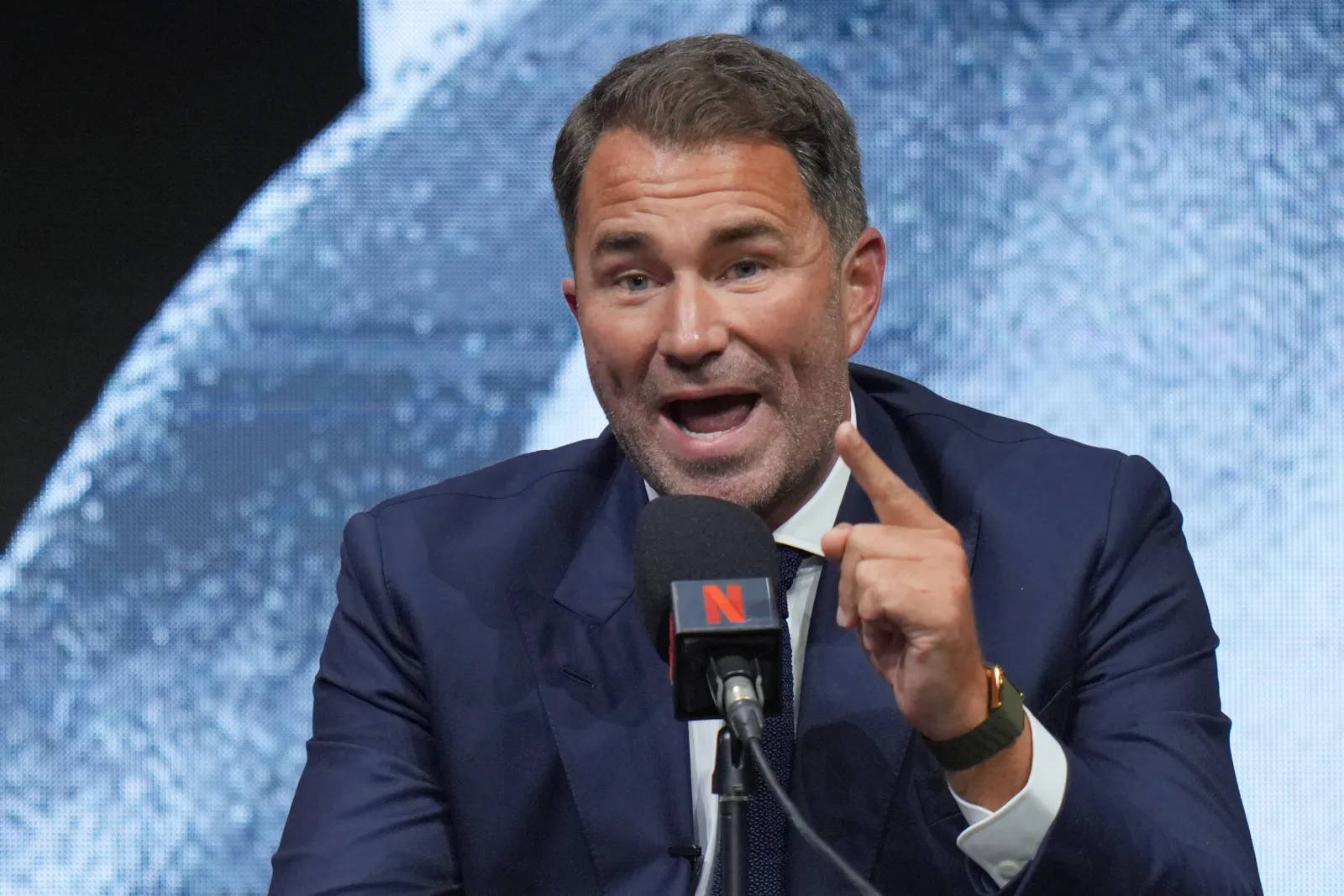
Promoter Eddie Hearn thinks fans on both sides of the Atlantic are being short-changed when Anthony Joshua and Tyson Fury collide next month. The matchmaker was sidelined as Ultimate Fighting Championship (UFC) boss Dana White and World Wrestling Entertainment (WWE) president Nick Khan took roles advising Turki Alalshikh. It has not been smooth sailing, with fight fans slamming the 2:00am ring walk and a weak undercard despite being delighted that common sense prevailed and the fight was set for Cardiff instead of across the pond.
Eddie Hearn admits he was baffled by some of the calls. He said: "I think that I would have done things very differently. But, you know, Netflix are new to this. Clearly Turki has wanted to be advised by Dana and Nick Khan, who don't really know anything about boxing and definitely don't know anything about British fight fans.
"You know, the fight that I had on the undercard wasn't really a fight that I had to get involved with, but I just couldn't believe it. And, you know, I ended up having to go back, after the big fight of upsetting people about getting the fight here, the undercard fight went back and then it upset more people.
"You know, they didn't like my comments on the undercard. You know, it's like you have to kind of distance yourself for a little bit because you don't want to be tarred by those decisions.
"So, look, the fight is going to be massive when it comes around. You know, I don't think come whatever time it is on Saturday morning, you're not going to be going, 'This would have been bigger if the promotion was better because it will be huge.'"
"It will be huge and fight week will be huge. But this is that period, the last couple of weeks where you'd really, and I think a lot comes from the undercard as well, you've got to be building a card that has momentum, especially at that time of night, with people that are going to create an energy and a feeling in that stadium that is just anticipation building for one of the great fights and one of the biggest nights of sport we've ever seen.
"Not a couple of Americans that no one's got any interest in. It baffles me."
Eddie Hearn says that after moving the fight to make it convenient for American fans, the least organisers could have done is advertise it properly. He added: "The other thing is, we want to make this fight big in America. Where's the promotion been in America? Like what is the point in putting the fight on at one o'clock in the morning or two o'clock in the morning for the American fans when you're not even promoting the fight in America?"
Eddie Hearn claimed that UFC chief White is still upset the fight wasn't held in the States. He blasted: "Who has been promoting this fight in America to the American audience? Dana White. They want it to fail. I think Dana White's taking the p*** out of the British fans. Have you seen the undercard? I don't think they want it to be a success because they've got the hump that it's still in the UK."
Background on the Heavyweight Rivalry
Anthony Joshua and Tyson Fury represent two of the most dominant heavyweight fighters of their generation in British boxing. Their long-awaited collision has been years in the making, capturing the attention of sports fans across the globe. Previous negotiations faced numerous hurdles before finally landing on a stadium date in Cardiff, Wales. Promoters and broadcasting platforms have invested heavily in staging what is expected to be one of the highest-grossing pay-per-view events in combat sports history.
The Role of International Advisors
The involvement of non-boxing executives in major fight promotion has become increasingly common with the entry of deep-pocketed international investors. Dana White brings decades of combat sports promotion experience from the mixed martial arts world through the Ultimate Fighting Championship. Nick Khan offers extensive media expertise from the professional wrestling industry through World Wrestling Entertainment. Their advisory roles on major boxing cards reflect a broader trend of cross-promotion and entertainment convergence funded by global stakeholders.
Broadcasting and Timing Challenges
Global sports events frequently face logistical hurdles when trying to satisfy viewing audiences across multiple time zones. Streaming platforms entering the live sports broadcasting market must balance prime-time viewership windows in North America with traditional match schedules in the United Kingdom and Europe. Scheduling main event ring walks for late night or early morning hours remains a contentious issue among traditional local supporters who attend live stadium shows.