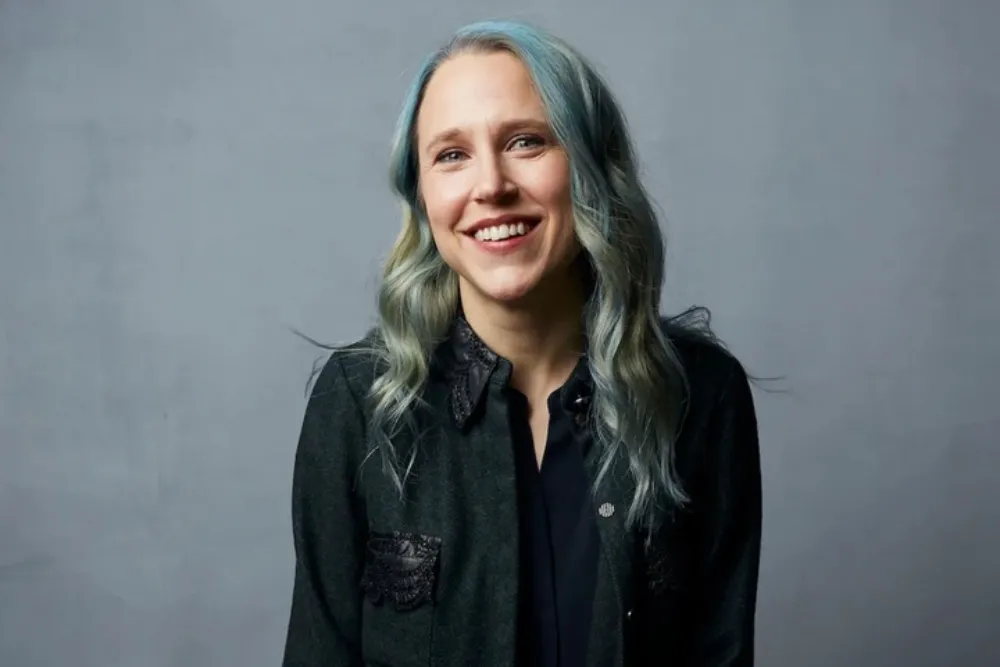
Director Josephine Decker recently stated that modern filmmaking feels lonelier than ever while speaking with Variety. The filmmaker discussed her career, her creative process, and the struggles facing independent creators during an interview tied to her latest work.
Receiving the Indie Star Award at the Tauron American Film Festival
Josephine Decker received the Indie Star Award at this year’s Tauron American Film Festival. Previous recipients of this notable honor include Jesse Eisenberg, John Waters, and Christine Vachon.
Festival director Urszula Śniegowska spoke about the recognition by stating, “Her stories and protagonists, mostly female artists, illustrate Josephine’s own struggles as a woman in a changing art world. This retrospective has been a long time coming, and the new film provided the perfect opportunity to celebrate her complete body of work.”
Directing Chasing Summer with Iliza Shlesinger
The acclaimed director recently completed the project “Chasing Summer” alongside star comedian Iliza Shlesinger. The collaboration came about because the lead performer wanted to explore a more artistic cinematic style.
Explaining her approach to the project, Josephine Decker recalled, “I think Iliza was interested in working with me because she wanted the film to feel artistic. I was thinking: ‘What’s an art comedy?’ ‘Punch-Drunk Love’ was the only one I could think of, so I watched it a bunch of times. It was fun to push myself in that way. I don’t always do that.”
Building Communities and Making Movies Without Scripts
The acclaimed filmmaker is adamant that a sense of community is vital when the industry struggles. She envisions creating a special residency program dedicated entirely to unscripted cinematic projects.
“I have this crescendoing dream of creating a residency for movies without scripts. That’s how I made my short ‘A Stable Marriage.’ We basically had one paragraph, and then we spent a whole day improvising together. It was so much fun and so refreshing,” she told Variety.
She added regarding her creative habits, “I don’t write alone. I either write with a community or build stuff with actors. Of all my films, ‘Madeline’s Madeline’ is probably closest to my heart because I never felt like the idea was totally mine. It emerged from many people and many minds, not just one.”
Early Influences and Artistic Upbringing
The director grew up watching ambitious films, often exposed to complex material at a very young age. Her father worked as a poet and a film buff who introduced her to international cinema early in life.
“My father is a poet and a film buff. I just remember watching esoteric Mongolian cinema with him when I was 11. One of the first films he showed me was ‘Andrei Rublev,’” she laughs.
Logistical habits during her childhood also shaped her unique perspective on narrative structure and editing. Because her family frequently arrived late to screenings, she developed a distinct view of how stories unfold.
“The other thing that really informed my filmmaking is that my mum is a mother of three, and my dad was traveling a lot. Every time we went to the movies, we were late. I missed the first 10 minutes of pretty much every movie in my childhood. My concept of cinema was that you were sculpting a narrative out of something you don’t totally understand.”
Challenges Facing Independent Cinema Today
The difficulties of financing and distributing independent projects have increased dramatically over the past two decades. Corporate consolidation and the dominance of streaming services have drastically narrowed the commercial marketplace.
“It’s harder than it has ever been in my 20 years of working in this industry. It’s crushing for young folks trying to get started. So many industry players have not been able to make money because the streamers control everything, also because of all these consolidations and mergers. What shocked me when I took my film to Sundance this year was realizing that there are now only three buyers in the American market: HBO, Netflix and Amazon.”
Political shifts and corporate caution have also affected what kind of content receives funding. Studios and financiers lean toward safer projects that avoid controversy.
“Since Trump came into office, it has become much harder. The first time he was elected, everyone’s integrity was still intact. But America is pretty much run by corporations and they now know how vindictive he is. Everyone has bowed to him in different ways. It’s just survival in a capitalist society,” she noted.
“The things that are getting funded are very safe and appeal to his audience, or ensure they don’t piss his audience off.”
Finding Joy in the Creative Process
Despite commercial hurdles, independent creators continue finding innovative ways to produce work. Successful low-budget releases demonstrate that audience demand for original storytelling remains strong.
“Take films like ‘Obsession,’” she says, referencing Curry Barker’s horror feature produced for just $750,000 that became a major box-office success.
Reconnecting with the collaborative joy of production offers a remedy to the isolation felt by modern artists. Emphasizing the value of shared artistic exploration helps creators sustain their passion.
“Filmmaking is lonelier than ever, probably just because the world is lonelier than ever,” she observes.
“We put all this pressure on ourselves to get our movie made because we think it’s going to ‘save our souls.’ Art won’t save you. But the process [of making it] could.”
“At a time like this, when it’s hard to get things made, it’s important to think about the parts of the process that we love, adore and crave. Making work is really fun. So, so fun! Instead of sitting alone in a room desperately sending your script to everyone in the world, you’re with your friends, writing in community.”
“I’ve never really given this advice before, but find the process you love. Then, hopefully, you’ll eventually get to apply it to cinema, but maybe apply it to your life first.”
Background on Josephine Decker and Her Filmography
Josephine Decker established herself as a distinct voice in American independent cinema through visually striking, psychological dramas. Her breakthrough feature “Madeline’s Madeline” premiered at the Sundance Film Festival in 2018, earning widespread critical acclaim for its immersive editing and intense exploration of identity. She followed this success by directing “Shirley,” a biographical drama starring Elisabeth Moss as author Shirley Jackson, which premiered at the Sundance Film Festival in 2020 and won a special jury prize. Her earlier directorial efforts include experimental narrative features such as “Butter on the Latch” and “Thou Gild’st the Even,” both of which established her reputation for blending improvised performance with poetic visual aesthetics.
The Tauron American Film Festival and European Retrospectives
The Tauron American Film Festival, held annually in Wrocław, Poland, focuses on independent and auteur-driven American cinema. The event provides a platform for both established filmmakers and emerging voices outside the mainstream Hollywood studio system. Retrospective screenings at the festival highlight complete bodies of work, allowing European audiences to trace the evolution of distinct cinematic artists. Receiving the Indie Star Award places Josephine Decker alongside a celebrated group of independent producers, directors, and actors who have shaped contemporary art-house cinema through uncompromising creative choices.
Shifting Economic Realities of Independent Distribution
The landscape of film financing has undergone radical transformation due to the rise of subscription video-on-demand platforms and major media conglomerates merging. Independent producers frequently cite the reduction of traditional theatrical distributors as a primary barrier to reaching audiences outside major festival circuits. While micro-budget features occasionally achieve breakout theatrical success through unconventional distribution methods, mid-budget auteur cinema faces severe funding deficits. Industry analysts note that streamers prioritize global subscriber retention metrics over theatrical box-office performance, altering how independent films are evaluated, acquired, and marketed to the public.