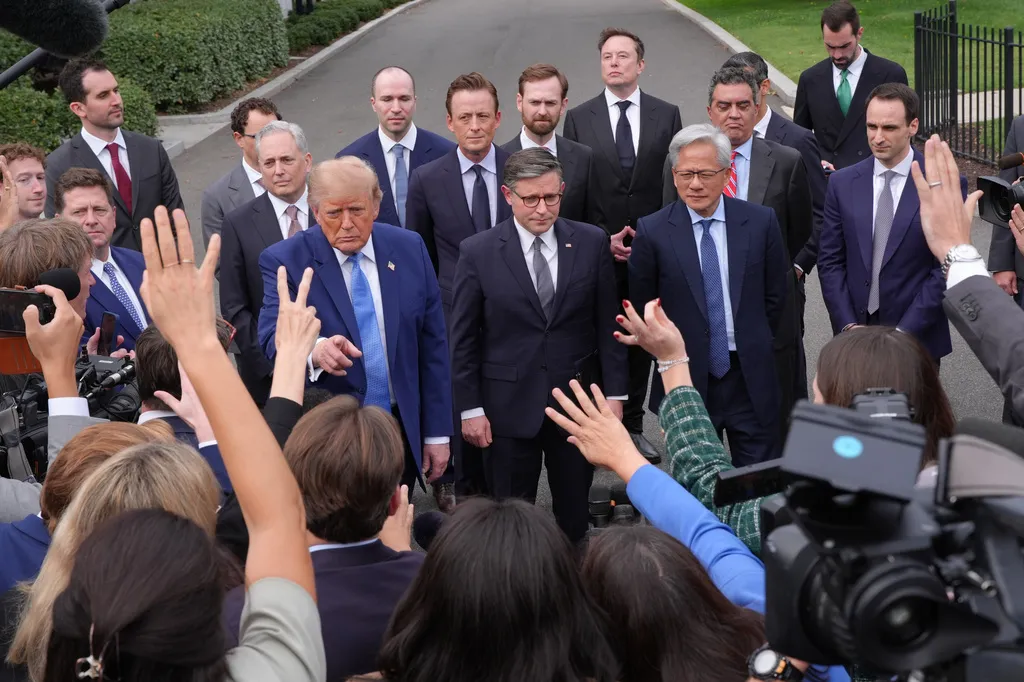
Pulverized by the blue wave, President Trump hinted at several policy volte-faces when he spoke with Ross Douthat on 60 Minutes last Sunday. He would work with Democrats on artificial intelligence safety, for one. Summoning his inner Bernie Sanders, he turned tough guy on the AI barons. We had a situation where somebody was reported to us to be doing something bad with artificial intelligence, Trump remarked, adding that they called them very strongly and warned them to get ready to go to jail while telling them to give their wife a kiss good night.
So much for self-policing, the formula he had been offering mere weeks earlier. It is possible that the unnamed AI baron was Jensen Huang, as The New York Times reported Trump was briefed on the matter a year before the story broke, though there is no evidence to establish the connection. Days after the recording of the interview came revelations over the Nvidia CEO's alleged indiscretions, where Huang apologized for cheating on his wife amid reports of a fling with Alice Huang, a former executive at Megaspeed, a Singapore-based Nvidia customer, whom United States intelligence reportedly believes to be a Chinese spy. Trump, no stranger to the sex scandal, is sympathetic, calling Huang an honorable guy.
The political fallout might yet give him something concrete to latch onto as he reassesses technology policy. What better way to persuade the president than a vivid example? This may be the turn in the weather for which the right's advocates of artificial intelligence regulation have been praying.
Background on the Political Debate Surrounding Technology Regulation
In the run-up to Election Day, Steve Bannon relished the prospect of prying Trump loose from the tech donor class. Much of the campaign cash that came in at scale late was from the oligarchs, he said, noting that they will demand their pound of flesh and that is when the real fight begins. The oligarchs, he added, are rightly enormously unpopular.
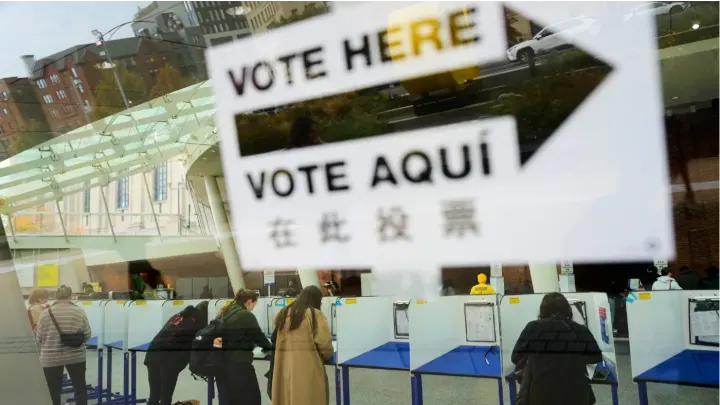
Last week's shellacking of Republicans gave Bannon and his allies much to work with, with artificial intelligence being one of several key issues Democrats used to appeal to voters. In Texas, Democrat Gina Hinojosa hammered Republican Gov. Greg Abbott for promoting the state as the epicenter of artificial intelligence development, and his belated turn against data centers could not save him. In South Carolina, Democrat Annie Andrews upset Sen. Darline Graham after branding her Data Center Darline.
The Legislative Push and Populist Pressures
Elements of both the right and the left are now, at full throttle, moving toward data center moratoria and public ownership stakes in artificial intelligence. Agreement on those measures, though, leaves considerable room for disagreement about their purpose. Bannon described bans on Chinese nationals working at frontier artificial intelligence labs and receiving student visas as the next data center and Flock camera fight. His vision of technological competition with China sits uneasily alongside the argument of Democrats like Texas Rep. Greg Casar, that the artificial intelligence arms race is not a race that you win.
Of the arguments available for bringing the companies to heel, the populist right's America First pitch seems best suited to Trump's instincts. It casts the labs as reckless custodians of the national interest. James Fishback, the failed longshot populist Republican candidate for Florida governor earlier this year, captured its blend of economic anxiety and nationalism when he told me in July that we are interested in middle class fears now that they may not have their jobs in a couple years, either because of artificial intelligence or the other artificial intelligence known as arrogant immigration.
National Security and Future Policy Directions
The national-interest argument, though, cuts both ways. At Stanford's buzzy DEFCON national security conference, one prominent military official spoke of the relationship between founders, funders, and fighters as having to be closer now than it ever has been before. Artificial intelligence barons could hardly ask for a better invitation to present themselves as indispensable, as a president persuaded that national security requires bringing them to heel might just as easily be persuaded that it requires giving them free rein.
Expect this strain of right-wing regulation to gain a louder hearing as the stars align for its move into the mainstream, even if it remains unclear how far Trump might intend to go beyond tougher vibes and support for select bipartisan legislation. Stephen Miller's chief of staff appointment does little to clarify where the administration is headed. His wife Katie, an ardent accelerationist, had worked for SpaceX and held shares in the company, requiring him to recuse himself from artificial intelligence policy, though she has since left SpaceX and sold her shares, freeing her husband to shape policy as he takes up his new job.
The core of Trump's theory of regulation, though, is well established and unlikely to change. The only guardrails the technology needs, he wrote on Truth Social in September, are a strong and smart high IQ president. Nothing in the Douthat interview suggests he has lost faith in his chosen regulator.