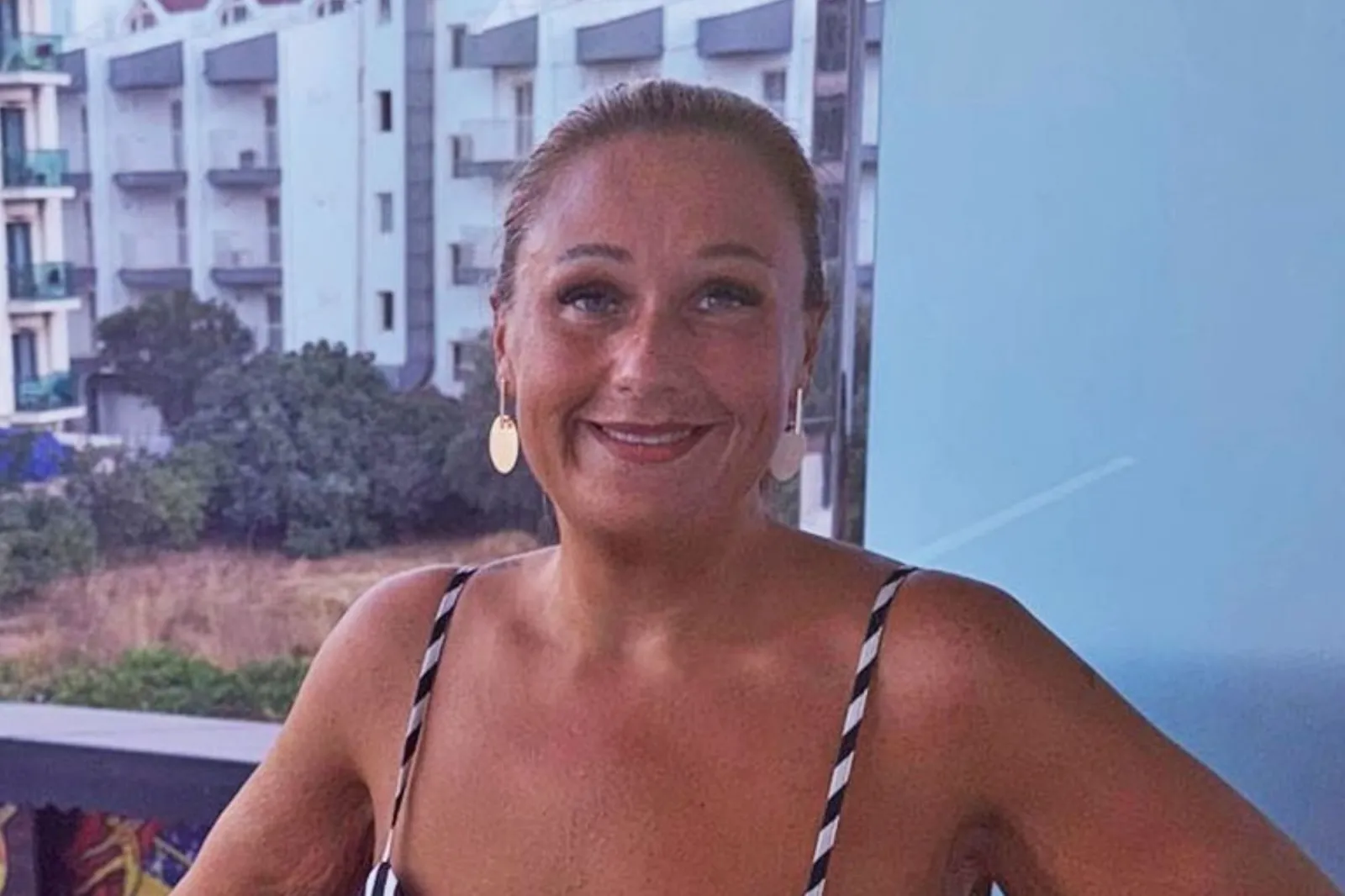
Claire McKeown lives in Glasgow with her husband Robert, 47, and son Jack, 21. Here, she shares her incredible weight loss story, which saw her lose over half her body weight and drop from a dress size 32 to a svelte 12.
Carer Claire, 41, says: Popping the tablet into my mouth, I washed it down and hoped for relief from the agonising pain in my joints. Weighing 26st, I was reliant on the powerful prescription painkiller Tramadol to get me through the day, as my body was under so much strain from the weight I was carrying.
I can not remember a time I was not overweight. From childhood, being big was who I was.
Food was a crutch in difficult times, and was how I celebrated the good moments, too. I was the jolly fat friend, upbeat and seemingly not bothered by my size.
Inside, though, I was anxious about my looks, depressed and my self-confidence was at rock-bottom. By the time my son Jack was born in 2005, I was a size 22, aged 20.
In 2014, I met Robert through a friend, and we married two years later, with me in a size 26 gown. Naturally slimmer, Robert did not care what size I was, as he loved me for me, but I felt self-conscious on my wedding day and hated photos being taken.
As the years passed, I only got bigger. At least five days a week, I would eat a large McDonald's meal for lunch, then for dinner I would have a takeaway, like kebab and chips.
I drank litres of full-fat fizzy drink, and instead of one biscuit I would eat two packets in a single sitting. Robert went to the gym and ate more healthily, but I craved greasy Chinese food and rarely cooked from scratch.
A carer's work is very physical, and the heavier I got, the more gruelling it became. I was breathless, struggled to bend and kneel to help dress people, and I ached all over.
Some days, I would need four prescription painkillers to cope, which was the maximum my GP allowed.
I tried several times in my 20s and 30s to lose weight, joining slimming clubs and counting calories, but I was so disheartened by just how much I needed to lose, it felt impossible.
Then, one day in November 2024, I finally realised I could not face the thought of another day in pain, feeling paranoid about what people thought of me and unable to function without painkillers.
I was turning 40 the following year and that milestone felt like a wake-up call, because if I did not do something about my weight, who knew how many more birthdays I would have left?
So, I joined my local Slimming World group. Before my first group meeting, my greatest worry was that the scales would not be able to register my weight because I was so heavy.
Seeing 26st was a shock, but I decided to think about losing weight in small increments and not worry about a target weight that would feel unachievable.
My first goal was to drop three sizes to reach a size 26. Using the support and advice from my class, I overhauled my lifestyle. I made sure my cupboards were always stocked with healthy foods, and I bought a slow cooker to stop me ordering takeaways.
Being weighed weekly kept me accountable, and I felt determined in a way I never had before. Robert continued to love me no matter what size I was, but he was proud I was doing this for my own health and happiness.
The weight loss was slow but steady, and within a year I was able to come off the painkillers under medical supervision. By summer this year, I had reached 12st 3lb and a size 12.
I have kept the weight off, and recently I was presented with an award by my Slimming World consultant, Audrey, for losing more than half my body weight.
For the first time in my adult life I am able to walk into a shop and choose a stylish, fitted outfit. It feels amazing, and I still have moments when I catch my reflection in a mirror and can not believe it is me.
While I was losing weight, GLP-1s grew in popularity, but as Slimming World was working for me, I decided to carry on as I was. People assume I have used fat jabs and are surprised when I say I did it by myself.
Two years on from my decision to lose weight, I am half the woman I used to be. I feel happier and confident, and I know I have added years to my life.
Understanding Obesity and Weight Management in the United Kingdom
Weight management remains a major public health focus across the United Kingdom, where millions of adults deal with overweight or obesity conditions. Public health organisations provide guidance on balanced nutrition, physical activity, and structured community groups to help individuals achieve sustainable weight loss. Clinical research shows that carrying excess weight places significant physical stress on joints, organs, and the cardiovascular system, often leading to chronic pain and conditions such as osteoarthritis. Medical professionals frequently monitor patients who rely on prescription painkillers to manage joint discomfort caused by severe weight strain.
The Role of Community Support Groups and Dietary Changes
Community weight loss organisations, such as Slimming World, operate across towns and cities in Scotland and the wider UK to provide weekly meetings, dietary advice, and group accountability. Members typically follow food optimising plans that encourage home cooking, portion control, and the reduction of high-calorie convenience foods, fast food, and sugary drinks. Gradual lifestyle modifications are widely recognised by dietitians as a sustainable method for reducing body mass index over extended periods without resorting to restrictive crash diets.
Medical Supervision and Reducing Prescription Medication
Healthcare guidelines stipulate that patients reducing their body mass must do so under proper medical supervision, particularly when altering dosages of strong prescription analgesics like Tramadol. As physical strain on the musculoskeletal system decreases, doctors can safely supervise the reduction and eventual cessation of heavy pain management drugs. Medical experts emphasise that achieving a lower weight can drastically improve mobility, respiratory function, and overall physical wellbeing for individuals working in demanding occupations such as care work.