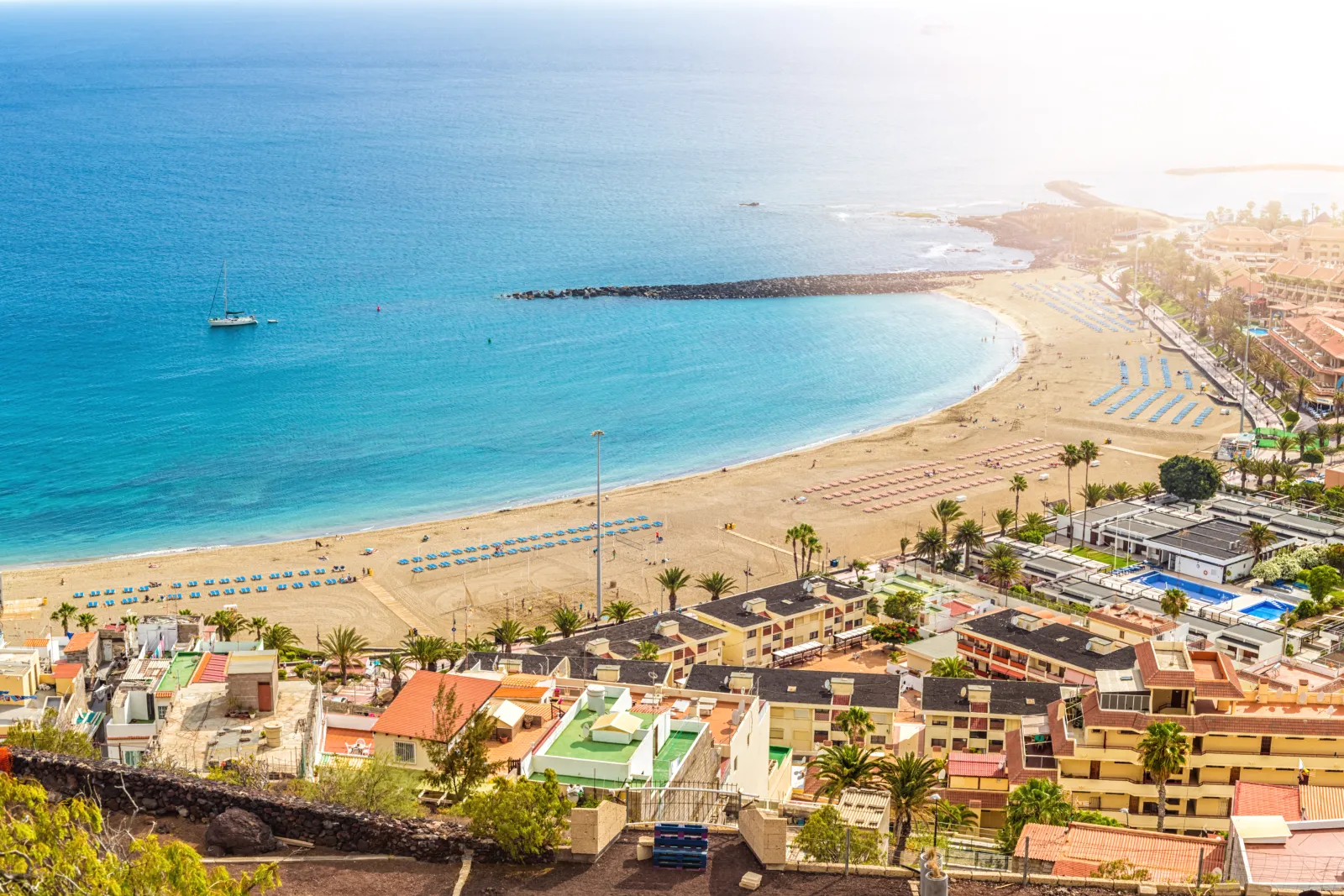
Millions of Brits face pricier holidays to Spain under Andy Burnham's Brexit deal, according to details revealed by the press. Flights to the Atlantic holiday isles will be slapped with new green charges from 2028 after Labour agreed to axe a post-Brexit exemption. Specifically, flights to Tenerife, Lanzarote, and other Canary Islands hotspots face these upcoming green charges from 2028 following the removal of the exemption.
Airline bosses expect holidaymakers to shoulder most, if not all, of the extra costs through higher fares. Carriers could even switch flights to Turkey and Egypt to escape the charges. Meanwhile, Brits jetting off to the Portuguese islands of Madeira and the Azores also face being hit by these adjustments.
Julia Lo Bue-Said, chief executive of Advantage Travel Partnership, Britain's largest independent travel agent network, warned that holidaymakers should be under no illusion that any increase in airlines' costs ends up in the price of a ticket. She added that adding carbon charges to flights to the Canaries, Madeira, and the Azores from 2028 will almost certainly push fares up for British families on some of their favourite winter-sun routes. If these destinations become too expensive, she noted that people will look for better value outside the European Union in places like Turkey and Egypt, causing airlines to follow the demand.
The changes were buried in Government documents published after the Prime Minister's summit with European Union chiefs in Brussels earlier this month. Flights from Britain to the islands are currently exempt from the United Kingdom's emissions trading scheme, which forces airlines to pay for the carbon their planes pump out. The islands have historically benefited from exemptions because of their remote location and reliance on air travel. Britain retained its exemption after Brexit in 2021, but Labour has agreed to ditch it as part of plans to link Britain's carbon market with the European Union's carbon market.
Aviation experts previously estimated similar charges introduced by Brussels in 2024 could add €10 to €12 per passenger to ticket prices. Airlines UK, which represents British carriers, also stated that rising costs are putting airlines under real pressure, and ultimately it is passengers who pay. The organisation emphasised that policy should ease that burden and keep the United Kingdom a competitive, affordable place to travel from.
Political opposition leaders strongly criticized the move. The Conservatives blasted Labour, with Shadow Transport Secretary Richard Holden telling reporters that British holidaymakers are the latest victims of Andy Burnham's drive to push Britain back into the European Union at any cost. He added that families already struggling with Labour's cost of living crisis and collapse in job opportunities now face soaring flight costs to the Canary Islands as Burnham signs up to every measure to cosy up to his European Union comrades. Reform deputy leader Richard Tice branded the Prime Minister a holiday Scrooge, adding that this is yet another holiday tax that Burnham is forcing Brits to pay.
More than 6.3 million British tourist visits were recorded across the Canary Islands last year, with Tenerife alone accounting for 2.7 million, according to official figures from the Canary Islands Statistics Institute. A Government spokesperson defended the policy by stating that they expect the impact on ticket prices to be negligible and that this agreement will cut red tape and reduce costs over time. The spokesperson added that airlines will benefit from streamlined rules, a single point of administration, and access to a larger and more stable carbon market, providing a cheaper route to decarbonisation.
Understanding the UK Emissions Trading Scheme
The United Kingdom Emissions Trading Scheme operates as a mechanism to cap greenhouse gas emissions while allowing businesses to buy and sell allowances. Established following the country's departure from the European Union, the domestic system requires energy-intensive industries and aviation operators to account for their environmental impact. Historically, remote territories dependent on long-haul connectivity received specific carve-outs to protect their tourism-driven economies from sudden financial shocks. Linking domestic markets with international counterparts involves complex regulatory harmonisation, which often alters long-standing exemptions for specific geographical routes.
The Economic Importance of Canary Islands Tourism
Tourism serves as the primary economic engine for the Canary Islands, supporting hundreds of thousands of local jobs across hospitality, transport, and retail sectors. British travelers consistently represent the largest single international demographic visiting the archipelago annually. Because these islands sit in the Atlantic Ocean far off the coast of mainland Africa, maritime transport is impractical for mainstream tourism, making uninterrupted and affordable aviation access essential for local livelihoods. Local business associations frequently monitor policy shifts in London and Brussels closely, as any sudden increase in travel expenses directly impacts visitor numbers and regional revenues.
Broader Trends in European Aviation Taxation
European aviation policy has increasingly focused on environmental compliance through mandatory carbon pricing and sustainable aviation fuel mandates. The European Union expanded its own emissions trading regulations to cover more international flights, prompting parallel policy reviews within non-member nations aligned with European frameworks. Industry analysts note that compliance costs for commercial airlines have risen steadily over the past decade. Carriers often pass these regulatory expenses down to consumers through ticket surcharges, altering travel patterns and encouraging passengers to explore alternative holiday destinations that remain free from similar environmental levies.